

Shoes Getting Moldy In Your Closet? Here's Why (And How To Fix It)
We may receive a commission on purchases made from links.
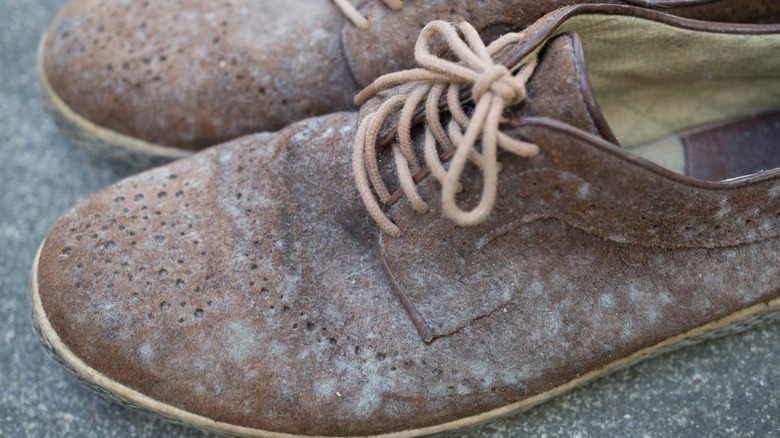
Shoes are so much more than mere accessories — they are an extension of who we are. From sneakers to stilettos and everything in between, every pair tells a story. While there are plenty of shoe racks that will make your mudroom more organized, many people choose to store their shoes in their closet for convenience. This tends to be a great option, since it keeps your collection tucked away and protected from dust and other dirt that accumulates in high-traffic areas. However, there's one potentially damaging problem you need to be aware of before putting your prized shoes in your closet to stay — mold.
Mold needs three factors to survive and grow — stagnant air, moisture, and organic food. Storing your shoes in your closet is the perfect scenario for these elements to collide. For example, most closets have naturally poor air flow since they're enclosed spaces with tightly sealed doors. Without any circulation, any existing humidity has little chance of escaping — it'll linger and condense on the surfaces of your belongings. Pair the stagnant air with any residual moisture on or in your shoes (think of sweat from a workout or snow from a winter walk), and you have created the ideal breeding ground for fungal spores. Finally, when you consider what your shoes are made of — natural materials like leather, suede, and even canvas — this provides the organic food source that mold needs to thrive and spread. The result? Shoes that are covered in unsightly patches, develop unpleasant odors, and may even suffer permanent structural damage.
An in-depth look at how to store your shoes to avoid mold
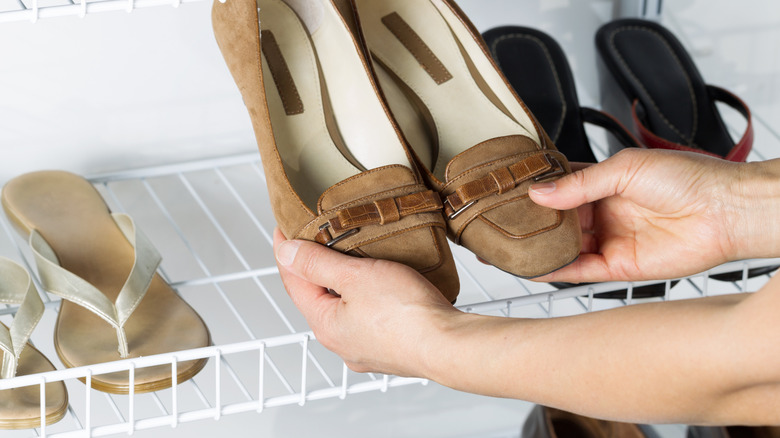
The potential of mold shouldn't stop you from storing your shoes in your closet — you just have to know how to do it properly. There are some simple tips for successful long-term shoe storage to follow to ensure nothing becomes damaged by harmful mold spores. First and foremost, never put shoes in the closet immediately after wearing them. Let them "breathe" in a well-ventilated room for a full day to ensure any sweat and moisture have fully evaporated. To further help eliminate moisture from your closet, place a moisture absorber (like DampRid) inside to trap humidity before it can settle on your footwear. You can also try to avoid wearing the same pair two days in a row to give the material time to dry out completely between uses.
Another idea is to use wire racks instead of solid wood shelves in your closet to maximize air movement around your collection, if possible. This helps promote consistent ventilation, allowing fresh air to reach every part of the shoe, including the soles. If this isn't possible, there are many budget-friendly ideas for organizing your closet that will help you keep your shoes spaced apart and off the floor.
It's undoubtedly easier to prevent moldy shoes than it is to restore them once damage has set in. However, if you do happen to find mold spores in your stored shoes, don't panic. First, take them outside to brush off loose mold with a soft-bristled brush or a dry cloth, then wipe the entire shoe with a mixture of water and white vinegar. Allow to completely dry, preferably in the sun to utilize natural UV rays to kill any remaining spores.