

The Old-School Driveway Design That Deserves A Comeback (It's So Durable & Versatile)
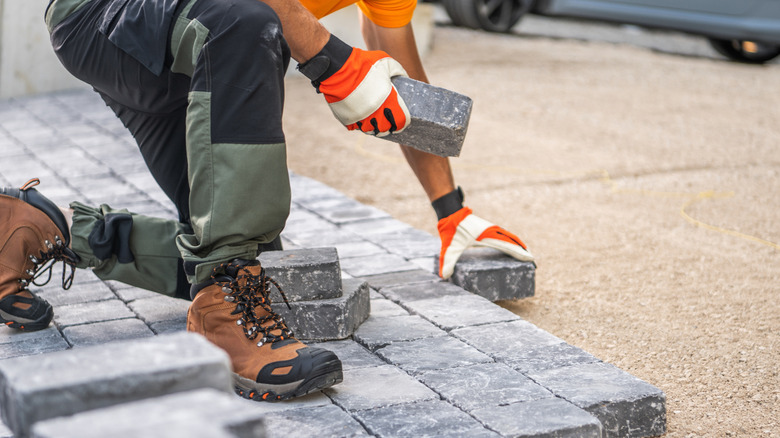
Gone are the days when you could pour some concrete in front of your house, park your car, and call the space your driveway. Nowadays, driveways have become an extension of your home's decor, significantly increasing its curb appeal. While there are a number of modern options to go with, it's about time you shun the outdated driveway design trends and revive the good old ribbon driveway. Considering the benefits ribbon driveways offer in terms of high-end aesthetics, long-term durability, and flexibility, installing this type is more than worth the investment.
Ribbon driveways were born out of necessity in the 1920s. The wheels of newly-commercialized vehicles would create grooves in lawns in front of houses, making the space muddier the more they pounded on them. Paving tracks for the vehicles to tread on was a sure-shot way to avoid this problem altogether.
Ribbon driveways consist of two main parts — an unpaved strip sandwiched between two paved parallel tracks (or ribbons). The tracks are usually concrete, but they can also be made from mortar-set stone, brick, or turf pavers. These tracks are about 2 feet wide, while the unpaved strip between them (which can be grass or gravel) is about 3 feet wide. However, depending on your vehicle's width, you can adjust these measurements. While the design of a ribbon driveway looks stunning and gives your space a more landscaped aesthetic, it is also highly functional and durable.
Ribbon driveways offer sustainability and versatility

Since the central strip of the driveway is permeable, the ribbon driveway is also extremely eco-friendly. You can help replenish the groundwater reserve by allowing infiltration as stormwater seeps through the ground beneath the driveway. While this is good for the planet, you also solve the problems of runoff water damaging your property. In comparison, a completely impervious concrete driveway may take up to 300 square feet of area on your property, if the driveway is 30 feet in length and about 10 feet in width. On the other hand, having a couple of 2-foot concrete ribbons can save up to 60% of the permeable area for water to pass through.
While the design of a ribbon driveway is quite consistent, you have a range of options in terms of materials for creating the paved tracks, as well as the central strip. Materials such as asphalt, concrete, gravel, and permeable pavers can all be used to build the tracks, depending on your budget and the climate in your region.
You can use crushed gravel for the strips. It's also possible to use other unconventional options for the driving tracks, such as cobblestones or oyster shells. Cobblestones can be a little on the expensive side, but they look strikingly beautiful. Cobblestones are also durable and can withstand the weight of heavy vehicles. While you have flexibility in choosing materials, ribbon driveways are also great at offering clever driveway layouts that adapt to most spaces.
Ribbon driveways are highly durable and low-maintenance
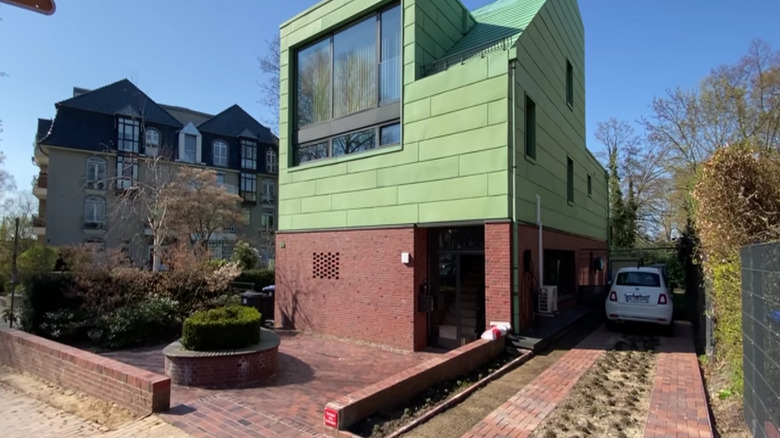
Ribbon driveways are more equipped to withstand damage from freeze-thaw cycles, which helps if you're living in a region that faces such issues. With a concrete or asphalt driveway, water often finds its way into the gaps between the concrete. Once the temperature falls below the freezing point, the water freezes and expands, damaging the driveway. This can lead to cracking, frost heaving, and the possibility of holes in the driveway. A ribbon driveway, on the other hand, allows more room for the concrete to expand because of the presence of an unpaved center, which helps resist cracks. Furthermore, since vehicle tires only come into contact with a limited area, ribbon driveways naturally experience less wear and tear over time.
If you want to save some time on maintenance, you can also install pervious concrete as the central strip. This will keep the area from getting muddy, reduce the need for mowing, and maintain the driveway's permeability.
Having said all that, you should keep in mind that the type of material you use for your ribbon driveway would eventually affect maintenance requirements. For instance, if you're using gravel, you may need to set aside some time to keep it from scattering all over the place. Grass and other plantings may require weeding and mowing, especially during the summer. However, the fact that renovating or replacing your ribbon driveway is also a breeze (way more convenient and less expensive) can more than make up for these little maintenance blips.