

13 Home Building Styles From The Last Century, And How They've Evolved
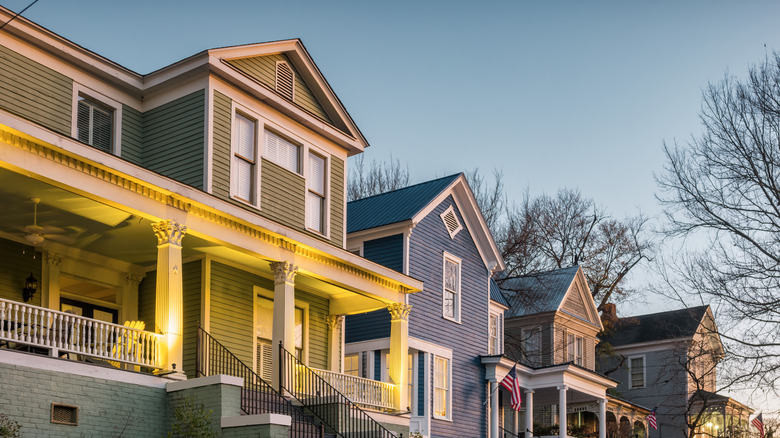
Middle-class American homes have changed radically since the start of the 20th century. Of course, technology had a lot to do with those changes. So did trends, taste, lifestyle, the economy, and historic events.
At the start of the 1900s, the Industrial Revolution was its peak. Urban tenements and slums were common, and city life was not what it used to be. Meanwhile, commuter railways, trams, and light rail became increasingly common in cities like Philadelphia, New York, and Boston. As a result, more families fulfilled what we now think of as the American Dream by building homes in what would later be called the suburbs.
Back in the early 1900s even middle-class families had servants — so extra rooms and back stairs were needed. Styles leaned grand and ornate, but baby booms, economic depressions, World Wars and more had their impacts on architecture. Stripped-back, modernist building was birthed, while styles protesting mass production also arose — as well as kit homes, revivals, and postmodern movements. In short, the 1900s was a highly interesting period when it comes to architecture, and these are some of the hallmark styles that sprang into being.
Queen Anne homes marked the culmination of the ornate Victorian era
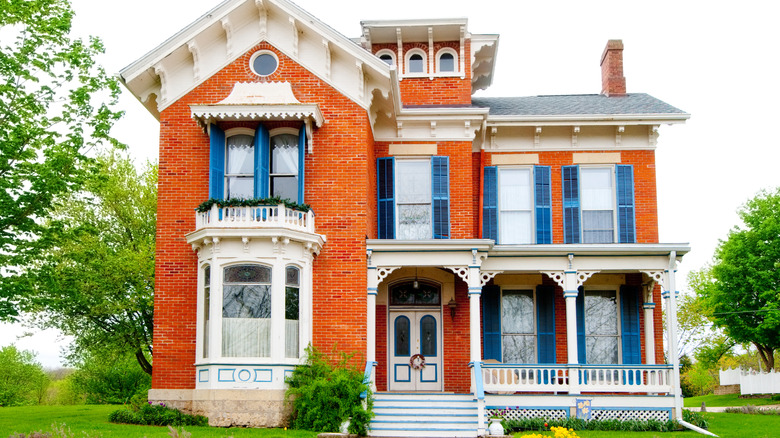
Victorian homes took their cue from the British Victorian style, which took its cue from the late, great Queen Victoria. Queen Victoria ruled for over 60 years, which means that Victorian architecture had plenty of time to evolve and change. There were many different sub-types of Victorian style houses, but for many, Queen Anne is the hallmark Victorian style of the later part of this period. Queen Anne homes rose to popularity during the late 1800s, and by the turn of the century, were a reigning home style in the US. Queen Anne homes feature a wealth of detail, such as intricate trim and latticework, as well as wraparound porches and turrets.
Victorian styles had many influences, but perhaps most important was a desire to show off wealth through maximizing ornament, size, and color. This was all possible because so many people were making so much money through industrial growth. Middle and upper class Americans could make a lot of money, fast, and income tax was not yet part of the American experience. However even those on a tighter budget could channel some ornate style into their home's façade with premade details like spandrels and pediments. This led to a further sub-style, known as the Folk Victorian. These were simple National Folk type homes, that were dressed up with some ornate, but affordable premade detailing.
As fashionable as the intricate and fussy Victorian homes were, with their turrets, bay windows, built-in features with hand-carved details, the pendulum abruptly swung. By 1910, Victorian architecture was on the decline, as tastes shifted to simpler styles, and economic changes made the high cost of cleaning and upkeep (imagine doing roof repairs on a turret) prohibitive.
Neoclassical homes became very popular in the early 1900s
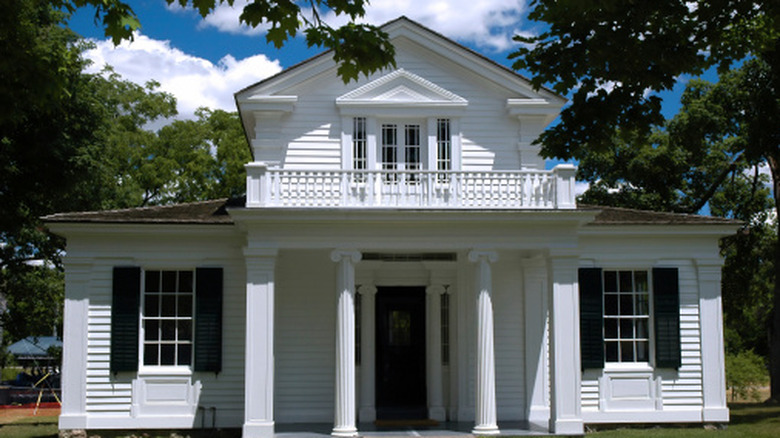
If you've ever seen Thomas Jefferson's home, Monticello, you're familiar with Federalism — an 18th-century architectural style that evoked the elements of Greek and Roman buildings. Federalism was a reaction against the complexity of Georgian design, and it saw a big revival around 1900. The newer, Neoclassical Revival style incorporated many of the features of Greek and Roman temples, such as porticos and columns. It also featured clean lines, big windows, and lots of large, comfortable balconies and verandas.
Neoclassical Revival homes were attractive and light-filled — and sported a symmetry that was probably quite refreshing after the proliferation of Queen Anne style homes. Although inspired by the Beaux Arts, Neoclassical Revival homes were simple and stripped back. This simplicity lent the style flexibility, which allowed it to be translated to various types of buildings, including both public and residential ones across the U.S.
Craftsman and Prairie homes pushed against the Victorian era
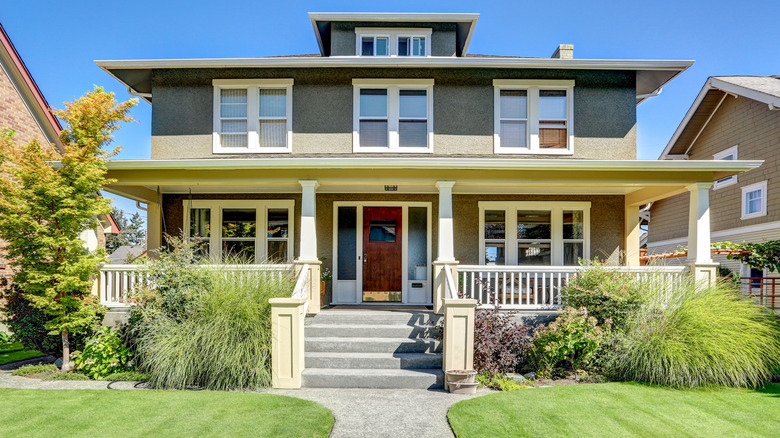
Craftsman and Prairie-style homes – related styles that were popular up until the 1930s — were a huge departure from Victorian styles. These homes were an outgrowth of the Arts and Crafts movement of the late 1800s to early 1900s, and featured individualized, hand-crafted, artistic work as opposed to factory-produced products. While the Arts and Crafts movement originated in Britain and spread to the United States, Craftsman and Prairie homes were distinctly American.
Both Craftsman and Prairie homes have a similar aesthetic. They have simple lines, lots of wood, and a natural feel. Craftsman homes feature low-pitched, hip-style, gabled rooflines, wide overhanging eaves, and exposed roof rafters. By contrast, Prairie homes are flatter with an open floor plan and lots of smaller windows. Popularized by Frank Lloyd Wright, Prairie homes were intended to represent the unique simplicity and Craftsmanship of America and American artisans. Some of Wright's most famous designs, including the iconic Robie House, are Prairie homes.
Craftsman and Prairie-style homes were beautiful, but they could be expensive to design and build. Craftsman bungalows were a response to a public desire for sturdy-feeling, well-crafted homes, but the expertise and materials needed to execute things like stained wood trim, recessed cabinet doors, built-ins, etc., meant that these beautiful homes couldn't remain mainstream. However, their 20th-century proliferation means it's still relatively easy to find a Craftsman-style bungalow in most parts of the United States.
Kit homes by mail order
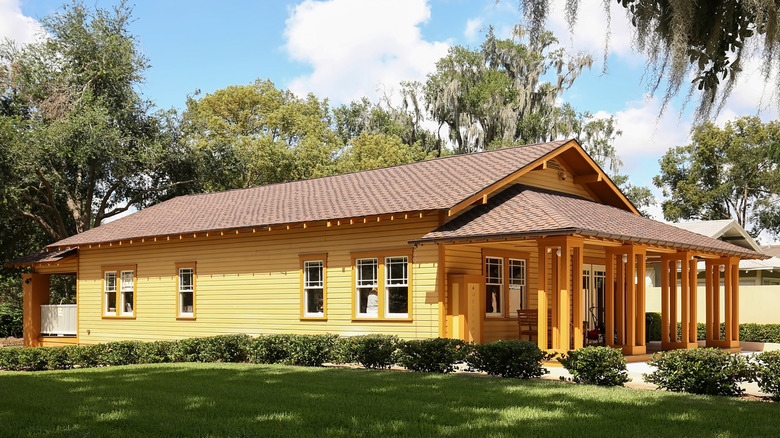
You're not wealthy, but you want your own home. So you buy a cheap plot of land and order up your home — from Sears! Kit homes were available even in the 1800s, and they're still available today, but the heyday of the kit home was the first half of the 20th century. Between 1908 and 1940, Sears sold over 75,000 kits from their Modern Homes catalog. Impressively, these kits weren't limited to simply little cottages: They ranged all the way up to full-scale suburban houses with multiple stories and even modern conveniences like central heating, high-end cupboards, and more. They also came in a range of styles, including Craftsman, bungalow, English cottage, Dutch Colonial, and Colonial. Sears wasn't the only kit manufacturer, but they were the biggest. Some other manufacturers included Aladdin and Montgomery Ward.
When Sears sent you your kit, it was all-inclusive — and could even include a loan to make your new home affordable. In addition to plans, you got every scrap of material you needed for your dream home. Lower-end homes cost about $650 in 1908 (about $23,000 today), while higher-end homes topped out at $2,500 (about $90,000-$200,000 today). There were three levels offered: Honor Bilt, Standard Bilt, and Simplex Bilt. While the Honor and Standard lines were full-scale houses, you could also buy a Simplex kit to construct a cottage, garage, or other outbuilding. All told, Sears sold as many as 100,000 homes between 1908 and 1840, and many of those homes are still standing.
Tudor revival and storybook homes for fairytale enthusiasts
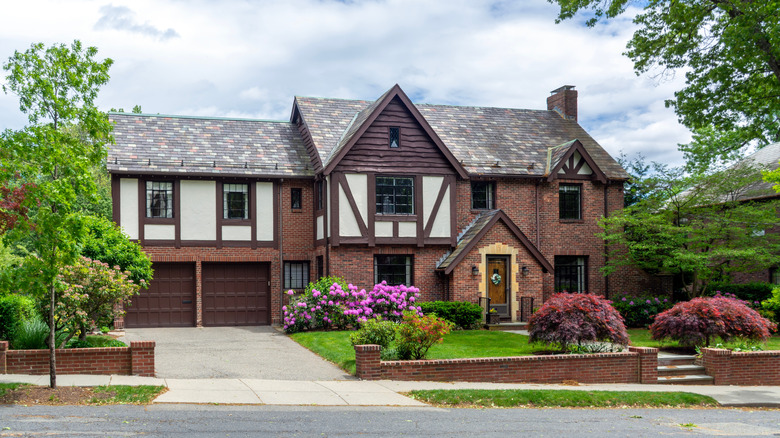
Some Americans loved their sleek all-American prairie homes and kit bungalows. But others yearned for the lost elegance of Europe. Tudor revival homes, sometimes referred to as "storybook" homes, were throwbacks to the time of Shakespeare, but built with modern materials for 20th century families.
Imagine living in a home that looks like it comes straight out of a classic town in Renaissance England. The stucco exterior is covered with ornamental half-timbering. The steep roof is picturesque. You might even have a rounded, turret-like element at one end of your home. It's almost like living out your very own fairy tale!
If you've ever imagined actually living in Hansel and Gretel's cottage, or the English Cottage from the movie The Holiday, you'd be drawn to these adorable structures that were particularly popular in Hollywood. Charlie Chaplin actually commissioned four Storybook cottages for stars like Judy Garland and John Barrymore. The stars stayed in their cottages while filming at Chaplin's adorable Storybook studio. Of course, these homes required fairy-tale-like gardens, complete with giant mushrooms and gnomes, to complete the picture.
Post World War II Colonial Revival Style and Cape Cod homes
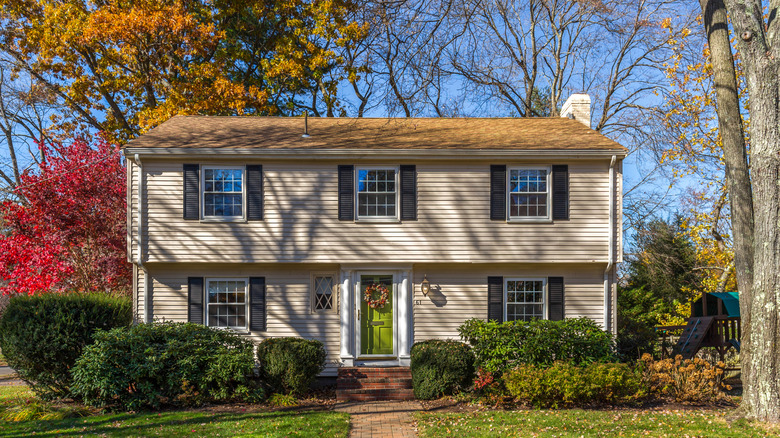
World War II had a tremendous impact on architecture. With the GI bill, hundreds of thousands of young men and their wives needed small, easy to manage, functional homes — quickly. Developers bought up big tracts of land, designed small, basic homes, and built them rapidly and inexpensively. With the availability of low-cost cars, plenty of jobs, and a booming economy, the suburban lifestyle was invented.
One style that emerged from this was the Cape Cod home, a simple structure based on early and charming American colonial style homes. Cape Cods were about 750 square feet and 1 ½ stories with a steep roof, dormer windows, and two bedrooms. Colonials (also referred to as Colonial Revival Style Homes) were two-story structures, designed with symmetry in mind.
Many of these houses were built assembly style with non-union labor; their work was sponsored, in part, by the U.S. government. One of the biggest developers of these homes was Levitt and Sons. Most Levitt homes featured white picket fences and a small plot of land — the "American Dream" home. It's important to note that Levitt's many communities were specifically segregated: Only White families were welcome to his particular version of the American Dream.
Simple, easy, plain ranch homes came on the scene in the '30s and '40s
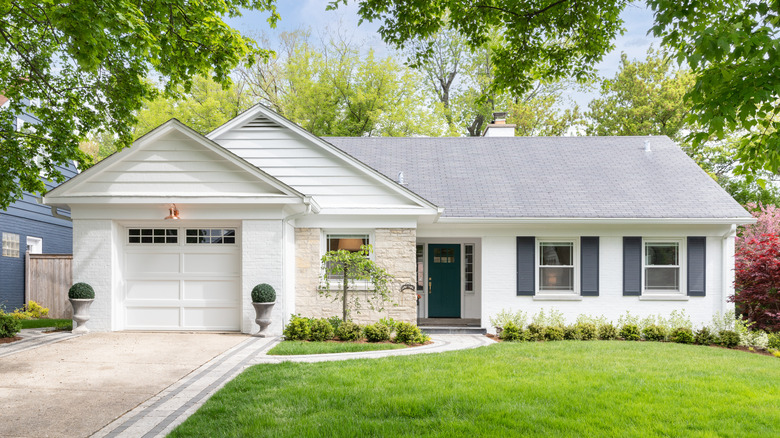
Another post-World War II style that transformed American architecture was the "rancher," a small house with just a single floor. Single-floor homes, of course, are easier and less expensive to build than multi-story homes. These 1930s and 1940s ranch homes, also intended for young families, were typically built with "carports" or breezeways. These utilitarian homes were low cost, functional, and easily produced in large numbers in the new housing "developments" that emerged after the war.
Today, almost any single-story house may be described as a ranch-style home. But the original concept was more specific. Ranch homes were originally conceived of as open-concept houses with patios, long, low-pitch rooflines, and large picture windows. Early ranch homes were rectangular. While many were built on slab foundations, others featured basements that would later be converted into "rec rooms."
In addition to being inexpensive and easy to build, ranch homes were also convenient. Gone was the need to climb a flight of stairs just to make a bed or tuck in a child for the night! This convenience continues to make ranch homes popular across the country. It also allows older people to age in place without the barriers created by tricky staircases.
Split-level homes: the coolest kids in the housing development
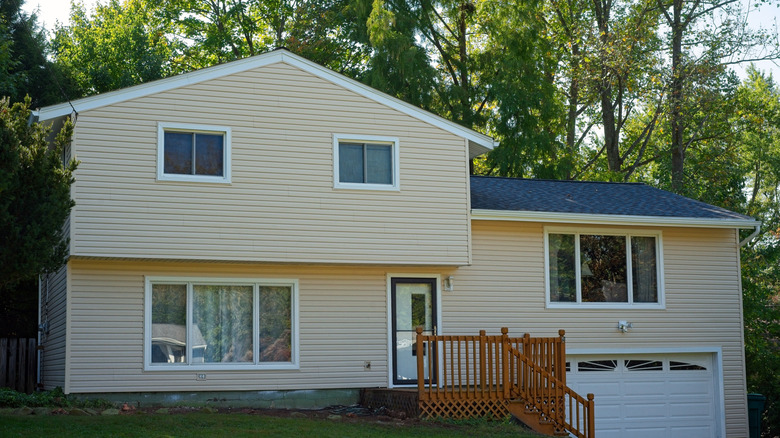
Many of us grew up in split-level homes. These mid-century homes took advantage of simple, modernist lines but added an element of surprise by featuring short staircases to upper and lower stories. Split-levels yielded more division with smaller, segmented living areas — but maintained the easy living of ranch-style homes. Split-level homes were included in many post-war suburban developments, giving a similar modern appeal to young families, while offering more living space in the same footprint.
There are a surprisingly large number of split-level floor plans, including the standard split, with stairs heading both up and down from the main floor; the side split with three levels visible from the road, and the stacked split which features at least four levels. While mid-century split levels are no longer a popular style (it started to decline in the '70s), the main pro of split-level floor plans still remains: You get a more distinguished floor plan, while retaining an open plan layout.
The iconic mid-century modern home
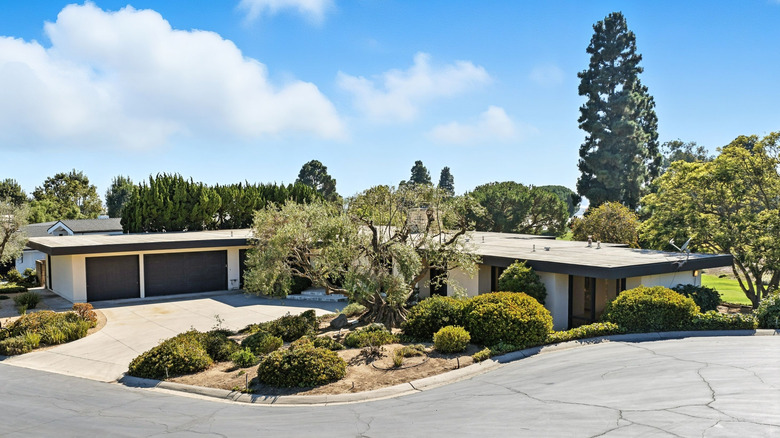
Mid-century modern, a style associated with the 1950s, is yet another post-war American invention. Focused on simple, clean lines, mid-century modern homes are often open-concept, light-filled, and free of ornate decoration or detail. The focus is on modern materials and integration with nature.
Mid-century modern architecture is the logical outgrowth of earlier modern styles. Mid-century modernism built on the foundations of the previous modernistic principles, but also softened them by incorporating organic forms and materials. Following the post World War II boom in affordable housing, architects could put together all the pieces to create attractive, efficient, modern homes that incorporated new materials such as plastics and plywood. MCM homes are still popular: Not only are they classics of an earlier era, but they also incorporate some contemporary ideals, such as open design and connection with the natural world, which is one of the reasons why mid-century modern designs will likely never go out of style.
From minimalist modern to maximalist postmodern
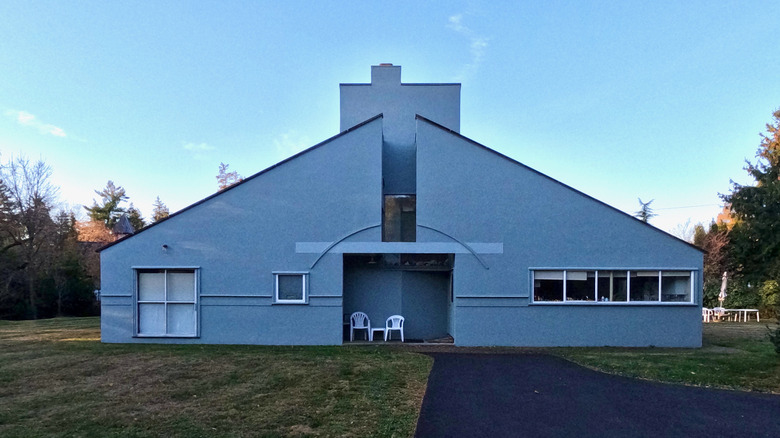
Modernist homes were sleek, bare-bones, and minimalist. Not surprisingly, some people found this simple style rather boring. Enter the much more playful, complex postmodern architectural style. Popular between the 1970s and 1990s, postmodernism was a maximalist response to earlier, drabber, more utilitarian forms. While it was a lot of fun — and postmodern decor and design was a massive trend — there aren't that many homes that sport this quirky style. That's partly because each postmodern home is unique and therefore relatively expensive. But it might also be that the designs were simply too out-of-the-box to appeal to the average homeowner.
Postmodern homes don't look like classic houses. They're asymmetrical, colorful, and surprising. They incorporate elements of multiple styles without settling on just one. They may use almost any type of building materials, from broken glass to wood to concrete. Some of the great postmodern architects, such as Michael Graves and Frank Gehry, took their ideas to extremes. If you run across a house that includes oversized shapes, crazy color schemes, and unique windows with surprising ornaments, chances are it's postmodern.
Brutalist architecture was for those who thought modernism too aesthetics-focused
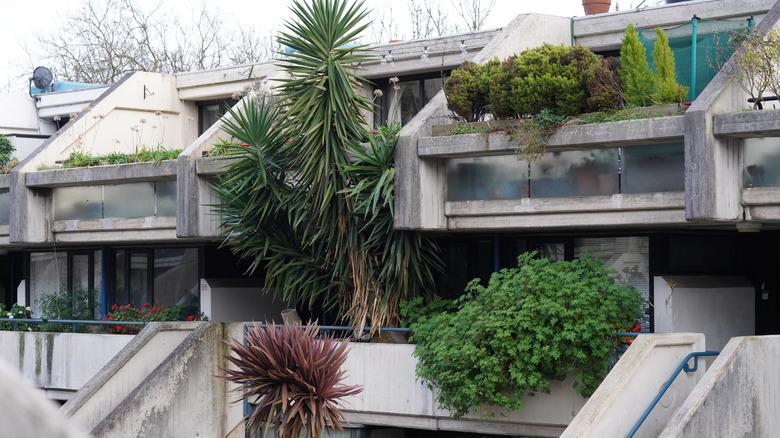
As its name implies, brutalist structures are made of cast concrete. They have simple forms, big windows, and absolutely nothing in the way of nooks, crannies, or natural materials. Brutalism officially got its start in the mind of Le Corbusier, a French architect who couldn't get enough of concrete. Brutalists, like other modern architects, believed in simple, efficient, open design, lots of light, and minimal decoration at a reasonable cost.
While postmodern architecture was a reaction against the somber austerity of modernism — brutalism leaned even harder into the severity of stripped-back materials and the "function-over-form" ethos. In fact, the early brutalist school of thought actually eschewed the international modern movement as too aesthetically focused! After gaining momentum in Europe, by the time brutalism had fully made its way across the pond, the U.S. was in urgent need of more Federal office buildings. Federal planners were encouraged to embrace the most contemporary designs of the time. Besides being of-the-moment, brutalism's heavy use of concrete made it an efficient and cost-effective choice for public buildings.
Brutalist homes aren't a super common sight, and the style is more commonly associated with institutional structures. While institutional buildings could be cast in concrete for a reasonable cost, there was never a movement for creating prefab brutalist homes. If you wanted an individual home built in the brutalist style, and some high earners did, you'd have to hire a specialized architect and engineer to build you the cast-concrete dwelling of your dreams. Therefore, many brutalist houses tend to be highly upmarket homes, rather than something you'd see in a regular suburb.
If you've got it, flaunt it: the rise of the McMansion
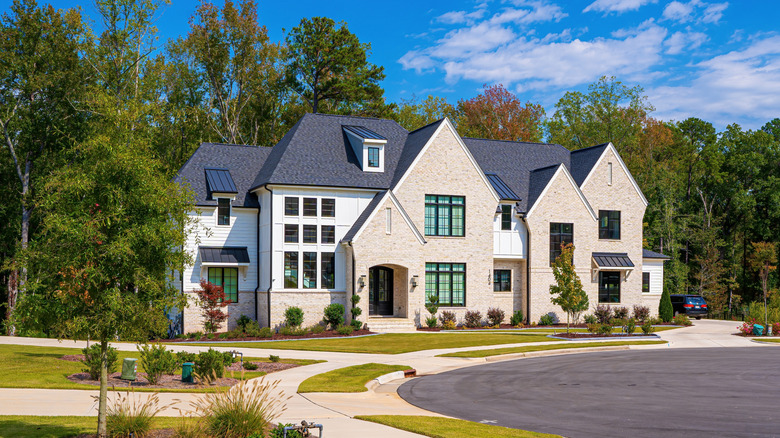
The 1980s and 1990s were a time of growing wealth and a desire to flaunt it. The McMansion was a developer's answer to that desire. Like McDonald's, builders served huge numbers of buyers with mediocre products. Unlike McDonald's, however, buyers paid high prices for their homes. Of course, no one called their own home a McMansion, but thousands of these huge, architecturally, ah, eclectic structures were built in brand-new, upscale housing developments.
McMansions generally mixed and matched dissimilar styles — such as Mediterranean and Georgian — to create impressively large homes with vast garages, foyers, and spaces dedicated to home theaters and gyms. Despite their huge size (often 5,000 square feet or more) and their apparent opulence, McMansions are usually poorly made and are considered to be architectural disasters.
Some of the worst features of McMansions were the many odd spaces that were added on simply to increase square footage. The result was huge, useless foyers, tiny "living" rooms with only one route in and out, and inaccessible "dining rooms" that were used only twice a year when the in-laws visited. In a nutshell, the reason why McMansions were not mansions is because they consisted of poorly-built homes that developers mass-produced, rather than actual luxury residences built from quality materials and intentionally designed by architects.
Tuscany comes to America in the 1990s
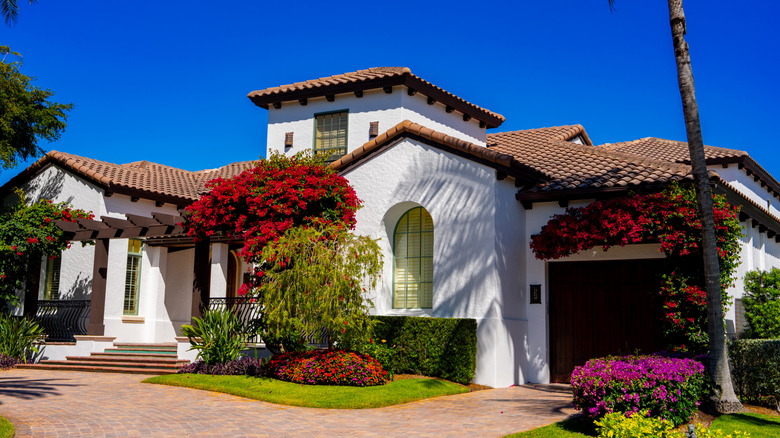
After stark modernism and quirky postmodernism, it seems people were ready for a touch of old-world country romance. This came in the form of a rash of Tuscan-inspired new builds late in the '90s. Tuscany is a region of Italy, known for its fabulous food, wines, and classic homes. The quintessential Tuscan home is a villa made of stone and situated on a hillside overlooking a vineyard. In contrast to modern and mid-century styles, Tuscan homes are rather ornate. They include wrought-iron features such as artistic gates and railings, and may even have marble mosaics built into their floors.
American architects began emulating this Tuscan (or Mediterranean) architectural style. Similar in some ways to the Mediterranean Revival style of the early 1920s (think Disney's Tower of Terror), it featured terra cotta toned roof tiles and stone or stucco exteriors. Another warm-inspired weather feature is the inclusion of outdoor spaces, including patios and interior courtyards, which explains why they were popular in developments in California, Florida, and the Southwest. Fast-forwarding to the 2010s, the Tuscan home trend felt highly dated — but a few decades ahead we might classify it as another historic revival.