

18 Ways To Repurpose Kitchen Items For A Second Life In The Garden
We may receive a commission on purchases made from links.
Garden accessories sprinkle little bits of personality among your blooms and veggies, and some of those items, like potting benches and insect hotels, also help your plants grow. But filling your garden with new decorations, support systems, and accessories can add up quickly. Plus, those mass-produced garden gnomes and plant stakes can look a little too cookie-cutter if you want to create a one-of-a-kind, whimsical garden in your backyard. With a little creativity, you can craft your own garden items with things you already have in your home. This time, we're focusing on old kitchen items, from worn silverware to that excess mug collection.
Why kitchen items? Well, maybe you're remodeling your kitchen, and you're replacing all of your dishes, utensils, and pans to match. Or perhaps your kitchen is getting a little too crowded, and it's time to follow the ultimate guide to decluttering your kitchen so you can get rid of some of those worn-out or duplicate items that never get used. If you don't want to use anything from your kitchen, you'll likely find lots of inexpensive options at thrift stores — it's still a money-saving way to decorate your garden, support local wildlife, and help your plants flourish.
Turn old silverware into plant markers
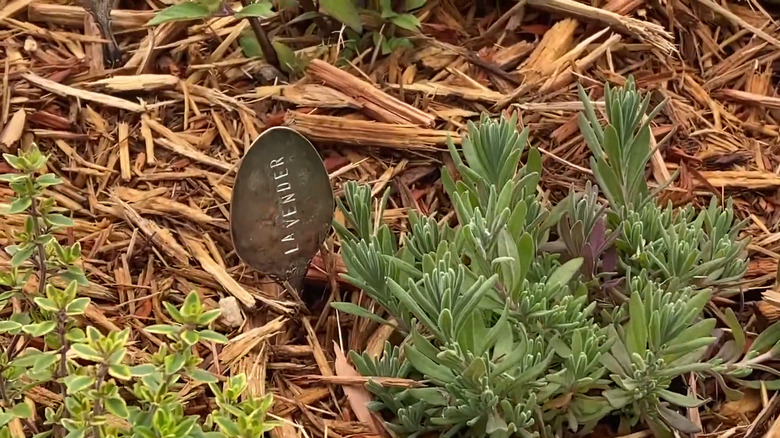
Turn old silverware into plant markers by stamping names into the metal. You can grab a kit, like this Owden Metal Stamp Set, to press the letters into the metal. Spoons work well because of the large, smooth surface on the bowl portion — it helps to flatten the bowl with a hammer first. You can also stamp plant names onto a smooth section of a fork or knife handle. Plant stakes are also a creative way to repurpose wooden spoons in your garden — paint or burn the plant names on the wooden utensils using a wood burning tool.
Plant herbs in a Bundt pan for a rustic planter
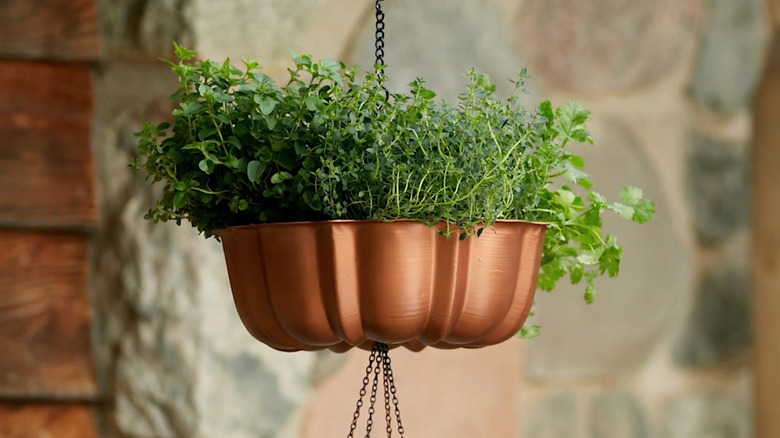
Looking for ways to repurpose a Bundt pan once its cake-baking days are done? Turn it into a small tabletop or hanging planter — it's perfect for flowers or herbs. Leave the pan as-is, or give it a coat of spray paint to change the look. Drill a few holes in the bottom for drainage before planting in the pan. For a tabletop version, slide a patio umbrella pole through the pan hole to keep it in place on a patio table. Or, make your own macrame plant hanger to suspend your Bundt pot.
Display everlasting flower decorations made from old dishes
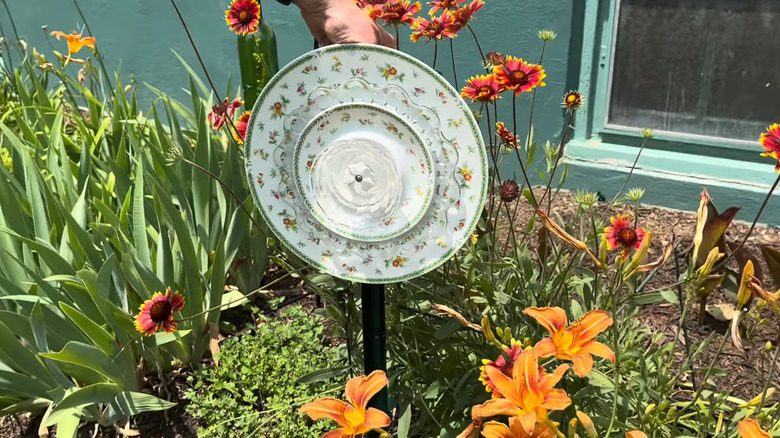
This flower project is one way to upcycle thrifted glassware into beautiful, bespoke DIY garden decor. To start, choose three or four glass dishes of different sizes that stack well together and create a flower-like look — a combination of plates and bowls works well. Use an epoxy adhesive to glue the pieces together into a flower stack, and attach a spoon to the back to insert into a hollow pole for the stem.
Plant flowers that need good drainage in a colander
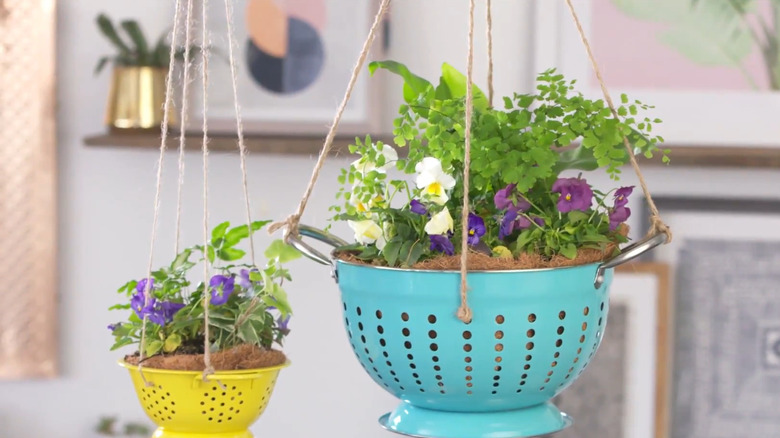
Of all the smart ways to reuse an old colander in your garden, this hanging planter adds style and is versatile. The holes offer natural drainage. Simply place a coir liner inside to keep the soil from falling out — these ZeeDix Coconut Liners are designed for hanging pots, so they will fit the rounded colander shape well. Once you add your soil and plants, tie on sturdy twine or use a chain plant hanger to suspend the planter. You can place it on the ground or on a tabletop.
Add sound to your garden with a metal tea kettle wind chime
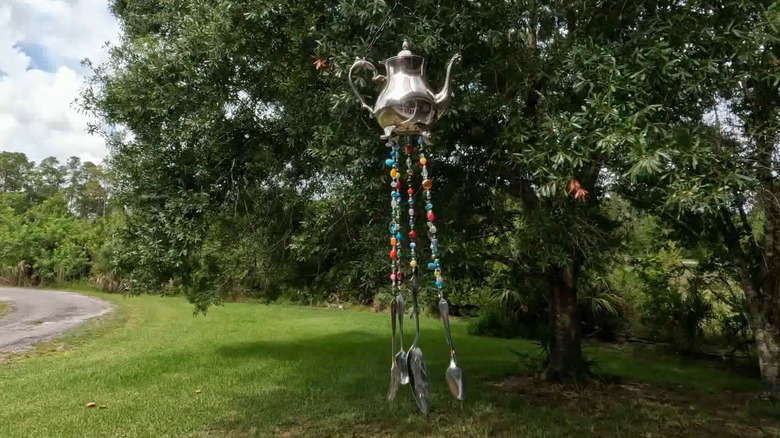
Microwaves, Keurigs, and electric kettles have made old-fashioned tea kettles nearly obsolete. Give an old tea pot a new life as a DIY windchime. For the chimes, get creative — old silverware and metal measuring cups are other kitchen-related items that work. Leave the strings bare, or add beads for color. You can hang the chimes from the bottom, or hang the pot at an angle, and let the chime strings pour out of the spout. It creates a whimsical tea-party-in-the-garden vibe while adding soothing sounds.
Grow a vertical garden with hanging mug planters
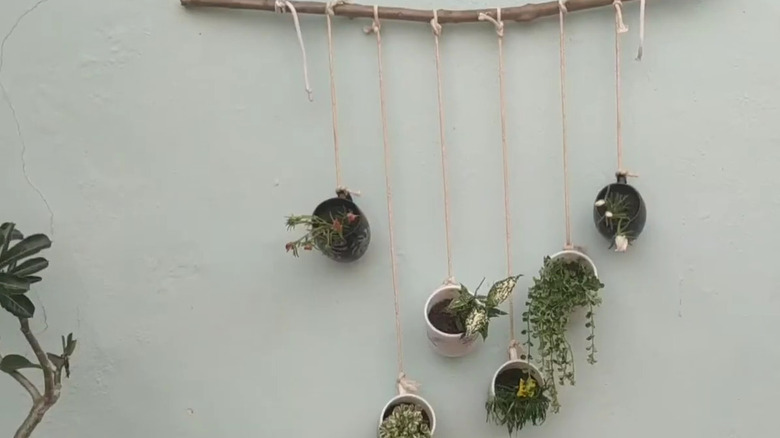
custom DIY planter hanger, like hanging planters. For a natural look, grab a thin branch, and tie multiple mugs along the branch using thick twine. Placing the knot at the top of the mug handle helps it hang at an angle to keep the soil and plants inside. Or, use the pieces of twine to tie several mugs in one vertical column. Another option is to make a custom DIY planter hanger to accommodate mugs held vertically in the compartments.
Decorate a branch with a cheese grater owl
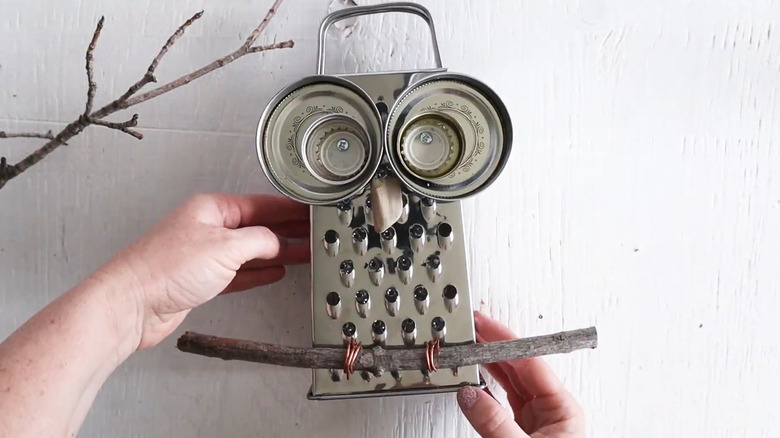
Use a cheese grater as the body for a metal owl garden decoration. The holes make it easy to attach cute eyes with screws — make a stack of old canning, bottle, and jar lids to get the look you want. For the beak, use wood or the bowl of a spoon. Using wire to attach a thin stick at the bottom gives the look of owl talons. Hanging this decoration might not be one of the best tips for attracting owls to your yard, but it will add a conversation piece.
Grow a garden in an old kitchen table chair
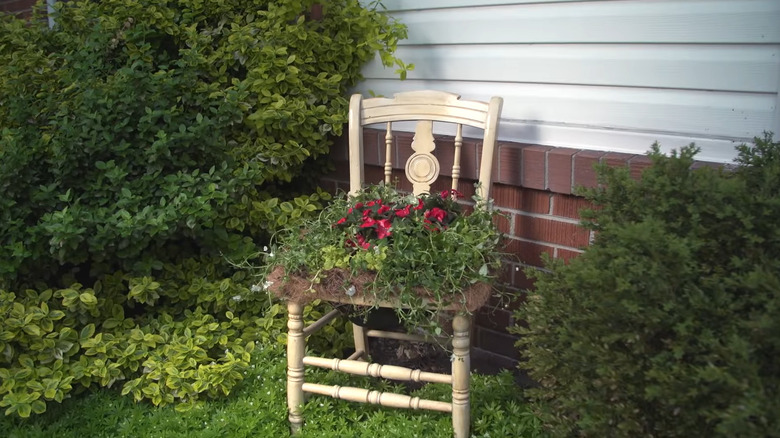
Don't pass over thrift store dining room chairs — use them in the garden as rustic planters. There are different ways to do this, but you'll either need to remove the seat or cut a hole in the center of the seat to make room for the plants. If you size the opening correctly, you can put a potted plant inside. Or, staple a double layer of window screen around the edge of the opening to create a sturdy planting pouch. Add a coir liner, followed by soil and plants.
Light a garden path with upcycled glass jar lights
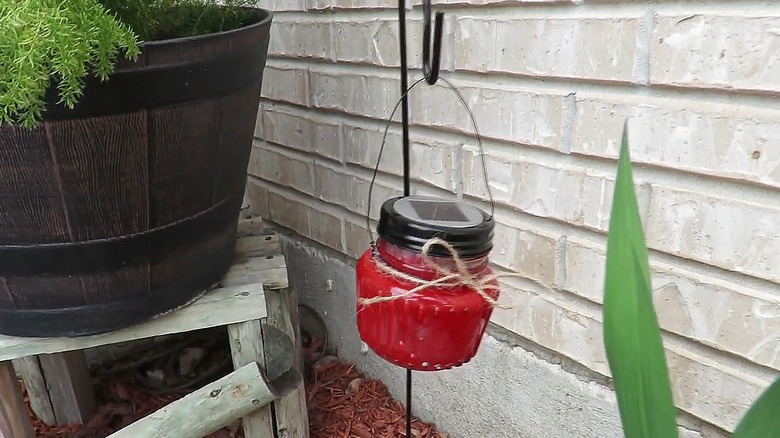
Save extra jars from the kitchen to make decorative solar lights — a mason jar with a ring works well. If you want colorful lights, paint the inside of the jar with Mod Podge mixed with food coloring or paint. Or, coat the inside with glass gel stain. Grab inexpensive solar stake lights, and remove the posts from them. Then, glue the top to the ring from the mason jar, or glue it to the rim of a jar with a smaller opening. Add a wire hanger to display it.
Upcycle disposable plastic food containers into seed starters
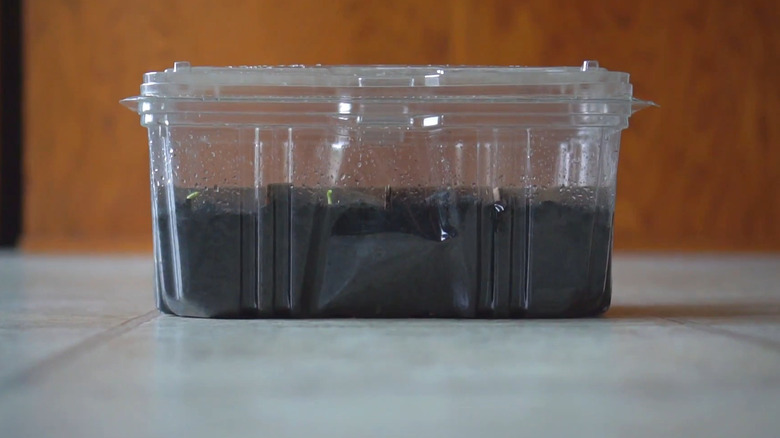
Save money on specialty plant-starting kits by reusing plastic food containers from your kitchen and following the best way to start seeds indoors. Rectangular clamshell-style lettuce containers work well, or use take-home food containers with clear lids. The lids create a greenhouse effect, and the clear plastic allows sunlight to reach the growing seedlings. Add a few drainage holes in the container if it doesn't have any openings, and remove the lid once the seedlings get tall enough. Add pieces of cardboard to section off the seedlings for easier planting.
Invite beneficial bugs to stay in a bug hotel made from tin cans
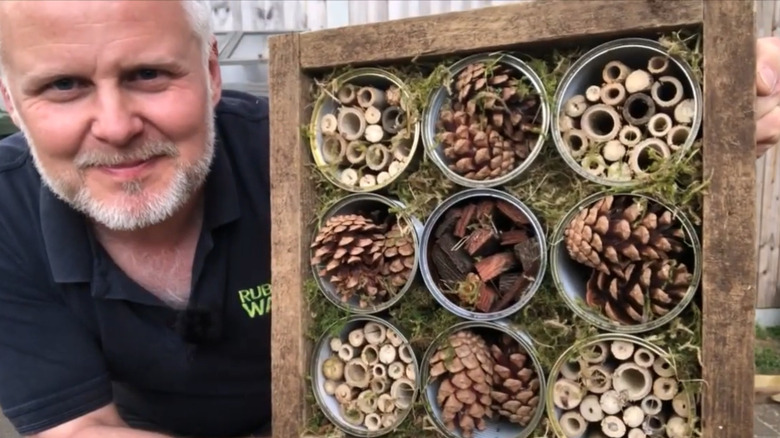
Reuse common household items to make your garden a pollinator heaven — this tin can bug hotel is a good start. The inspiration for this project uses nine tin cans in a wooden frame, but you can use a single tin can. Clean the can before stuffing it with twigs, moss, pinecones, bamboo, and other natural materials. You can also paint the outside of the can — bee stripes or ladybug dots are cute. Hang it horizontally with two pieces of twine or wire — one near each end of the can.
Create perfect holes for planting with an old muffin tin
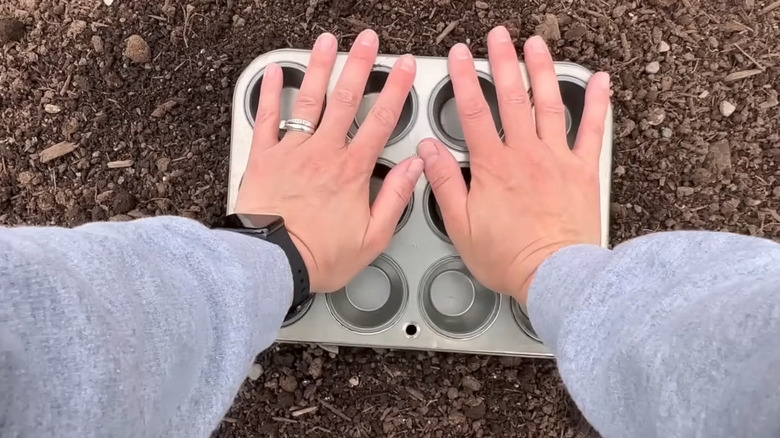
The rounded cups on an old muffin tin make the perfect planting holes for the seeds you sow directly into the garden. Simply press the pan into the prepared soil until you reach the desired depth, based on what you're planting. Then, place the seeds in the depressions, cover them with soil, and water. Mini muffin pans work for smaller holes, or use full-size muffin tins. You can also use the tins as seed trays — sort out your seeds into the cups as you prepare to plant.
Transform a baker's rack into a potting bench
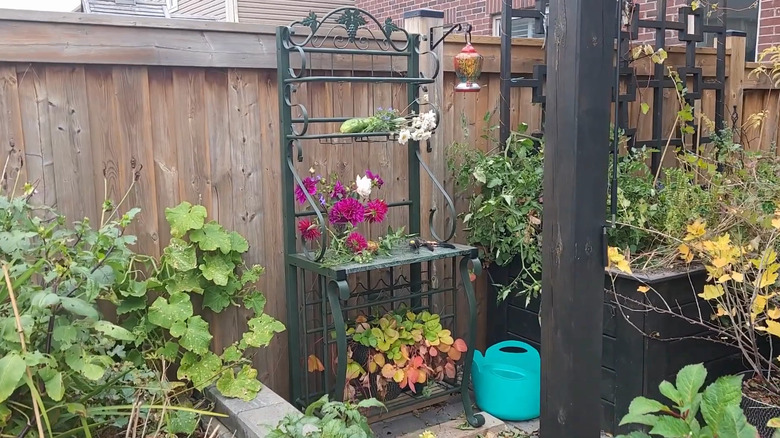
Free up space in the kitchen by moving that old baker's rack to the patio as a potting bench. If the rack is in good condition and has a sturdy work surface, you can use it as-is. A fresh coat of paint or sealant to protect it from the outdoor elements is also an option. Or, build a new work surface by connecting boards for a simple wood top. You can also add hooks for garden tools and storage containers to hold the items you want to store there.
Turn old kitchen cabinet drawers into planting boxes
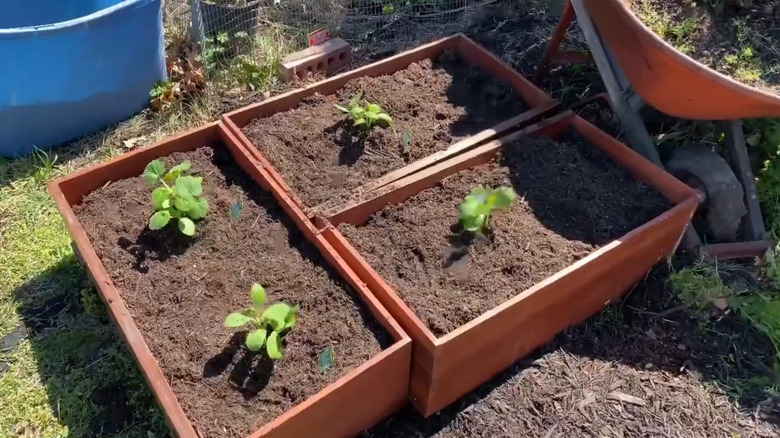
After a kitchen remodel, you can keep the kitchen drawers to use as planting beds. Apply a coat of paint or sealant to protect the material from moisture and outdoor elements. Drill holes into the drawers, and position them on the ground for simple raised beds for your vegetables. For a decorative container garden, paint the drawers in colorful hues, and stack them creatively to create a taller planter. This is one of many brilliant ways to upcycle old drawers into something beautiful for your garden.
Supply water to feathered friends with an upcycled glass bird bath
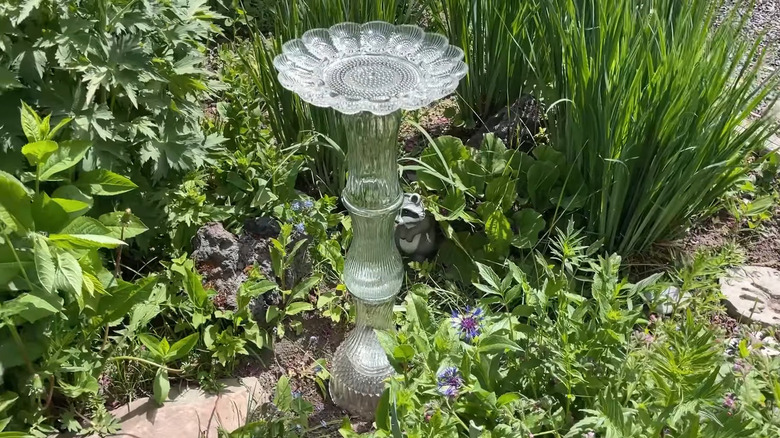
If you have lots of extra glassware (or hit the jackpot at a thrift store), piece it together for a DIY bird bath. For the top, you'll need a glass serving tray with edges or a very shallow, wide glass bowl — it should only be about 1 to 2 inches deep. Make sure the glass is lead-free, as lead can leach into the water and harm birds. For the pedestal, a series of wide vases work well. Use clear, two-part epoxy adhesive to secure the vases and the top plate.
Feed the birds with a DIY platform feeder made from glassware
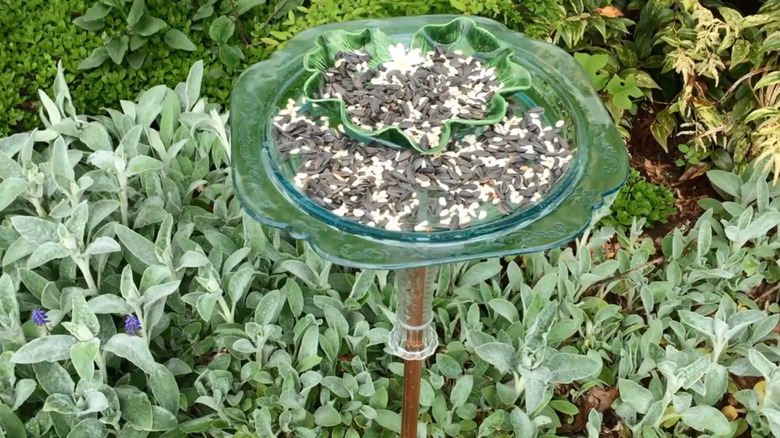
Roll with the glassware theme by crafting a platform bird feeder. Choose a lead-free glass platter to hold the bird seed. To add two types of food, attach a small bowl on top of the platter. You can place the platter on the ground — sparrows, doves, and other birds prefer ground-level feeding. For elevated feeding, epoxy a bud vase upside down to the bottom of the plate. Then, put it over a pole or pipe that's just slightly narrower than the vase neck.
Protect your plants with hose guards made from old kitchen drawer pulls
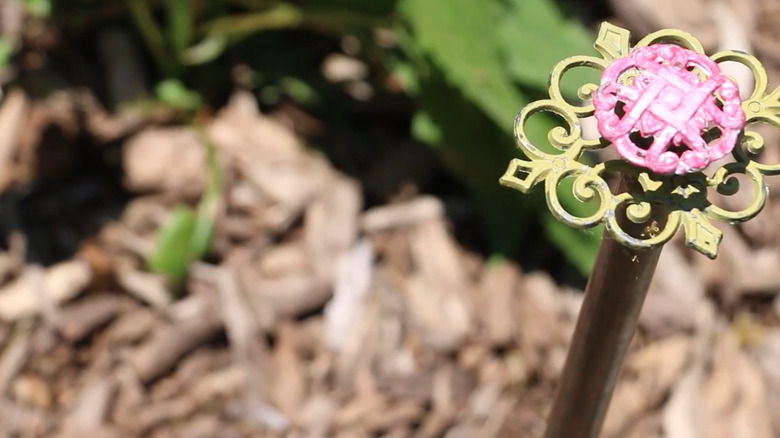
An old kitchen drawer pull creates a decorative top for a hose guard to keep your hose from crushing plants in your garden. For each stake, you'll need a 2- to 3-foot ½-inch copper pipe, a ½-inch copper pipe cap, and an old drawer pull. If you have a drill, make a hole in the center of the cap. Thread the bolt for the pull through the hole to secure it to the pipe. You can also use two-part epoxy adhesive to glue the knob to the cap.
Decorate your garden with bowl and vase mushrooms
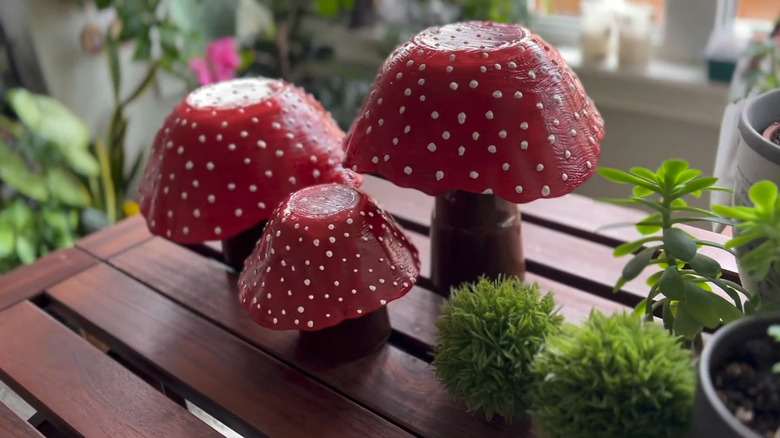
Grab an old vase with a wide base and an old glass bowl to create a decorative, oversized garden mushroom. A bowl with wavy edges adds a whimsical touch to the mushroom, but any bowl will do. Paint the two sections in your preferred color, with any details you want, such as subtle stripes or dots. Secure the two pieces together, with the bowl turned upside down, using epoxy. A layer of sealant helps protect the look in the elements. Add a string of battery-powered fairy lights inside for a subtle glow.