

Tips For Finding Quality Thrift Store Rattan Or Wicker

Rattan or wicker is like the linen of furniture: lightweight, subtle, and so classic that it fits in with nearly every decor style. But these pieces aren't always budget friendly: New rattan chairs can start for around $100 apiece. That doesn't mean you need to kiss your dream of owning a wicker sofa or rattan coffee table goodbye. You can actually find quality rattan or wicker hiding in plain sight at the thrift store; all you need is to know what you're looking for.
One of the most important tips is knowing the difference between wicker and rattan (and yes, there is one). The words are often used interchangeably, but rattan is a cane used to build lightweight, sturdy furniture, while wicker is a weaving method that uses different materials, including rattan. Both are generally handmade to create long-lasting, durable pieces that fit with many (dare we say all?) decor styles.
But finding quality rattan or wicker isn't as simple as picking up the first one you see at the thrift store. Without the proper care, genuine decor is susceptible to damage from moisture or intense sunlight that may be hard to see under the thrift store lights. There also may be synthetic rattan and wicker hiding among the genuine treasures. But with a few tips under your belt, you'll know exactly how to uncover a true rattan or wicker piece for less.
Trust your senses to thrift real rattan pieces
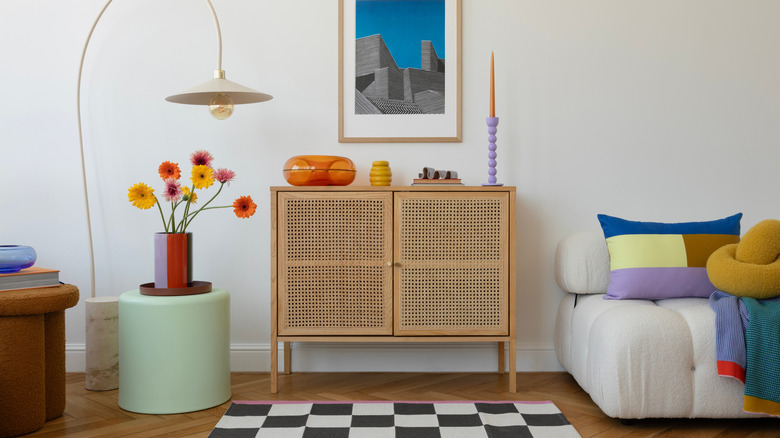
So, you found a stunning woven rattan chair hidden in the back of the thrift store and, with rattan furniture coming back in style, you know it'll look perfect in your living room. But how do you know if it's worth taking home? Well, start with what you see. Pieces made with real rattan cane will often change in color tone. Skip any pieces painted brown or red; this is often used to camouflage burn marks (used to make the material bendable) and often means a lower-quality piece. Next, check the cane for fractures, distortion — that may mean water damage — or other major signs of wear, then check the weave itself to ensure it's taut.
To make sure the rattan is genuine, lean into sound and possibly smell (yes, really). Run your fingers over the piece. The rattan cane should feel good, like slightly polished wood with a little grit from the cane itself. Rap your knuckles lightly on the cane, and if it's genuine and undamaged, it will sound like knocking on a piece of hollow wood. Knock on any places that you feel might be damaged; if the sound is the same, the piece should be good to go. Finally, give it a good sniff. Rattan is known to have a natural, almost dirt-like odor that will help the genuine cane stand out from imitations. However, anecdotal evidence suggests that rattan takes on the smells around it, so use this tip with a grain of salt.
How to discover well-made wicker in the thrift store

Anyone who has taken a quick stroll through the basket aisle knows that wicker is everywhere in the thrift store. But finding quality items that are worth your hard-earned dollar? That's a different story. This ancient weaving technique uses everything from reed and rattan to vinyl and even PVC to create baskets, furniture, and decor, among other things. Making sure you select a quality piece starts with how it looks. Substandard wicker will typically fall apart in one way or another over time, so check the piece for torn wicker, holes, or wear in the weave.
Also, look at the texture of the woven material itself. Lower-quality, plastic-looking materials — commonly glossy, even reflective — will likely not have the same longevity as natural materials, like rattan or willow. Then examine the weave. A taut, even weave is a must-have for any wicker item you're thinking about taking home. Why? Simply put, a tighter weave is far more durable than wicker created with slack or mismatched weaves. If you're picking up a piece of wicker furniture, make sure to check the frame of the item too. This is key to thrifting wicker furniture that is durable enough to last. Along with a sturdy weave, the piece needs a strong frame, ideally wood or metal treated to last, especially if you're planning on placing the item outdoors.