

The '90s Called And Wants Its L-Shaped Kitchen Back: Here's How To Fix The Look
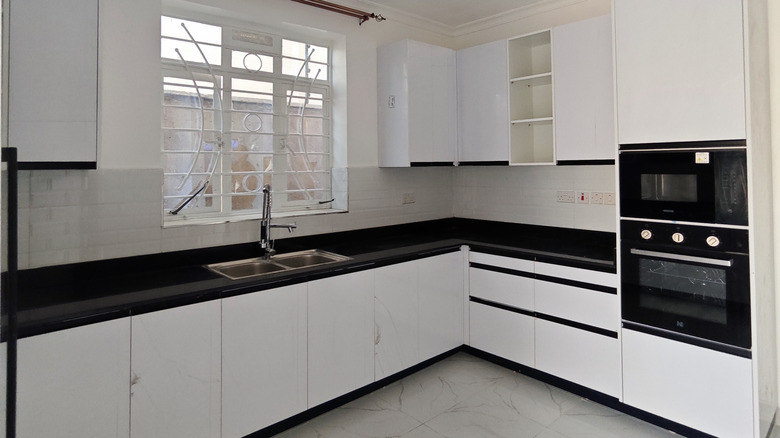
If you live in a home that's been around for a few decades, you might be frustrated with certain design elements, such as some of the hidden downsides to an L-shaped kitchen layout. Having purchased and remodeled a few older homes over the years, I know that kitchen layouts can be significant sources of frustration. After all, it's often difficult to make major changes to the layout without removing walls and significantly driving up the cost, perhaps beyond $70,000.
If you have a 1990s home, you probably have an L-shaped kitchen design, as this layout was especially popular in homes built a few decades ago. The L-shaped design has some drawbacks, such as cabinets in the corner of the "L" that are difficult to reach and having workspaces and appliances that are spread out. If you're frustrated with it but don't have a nearly six-figure budget to completely transform the layout to something resembling a U-shaped kitchen, you can make minor changes to make it work better. Removing some of the awkward corner cabinets and installing an island with appliances can make the space more efficient and modern.
The L-shaped layout involves two walls of cabinets and appliances that create an "L" when the room is viewed from above, which does work nicely in smaller kitchens. But rather than wrestling with the hundreds of ideas for a kitchen remodel that might be going through your head, consider using a couple of cost-effective tweaks that I like to use to modernize the L-shaped kitchen without needing a huge remodeling budget.
Create a more open feel by removing some upper cabinets
When you have upper and lower cabinets spread throughout the L-shaped kitchen, you maximize your storage space. However, if you have too many cabinets, the space might feel closed in, potentially making it less enjoyable to spend time in the kitchen.
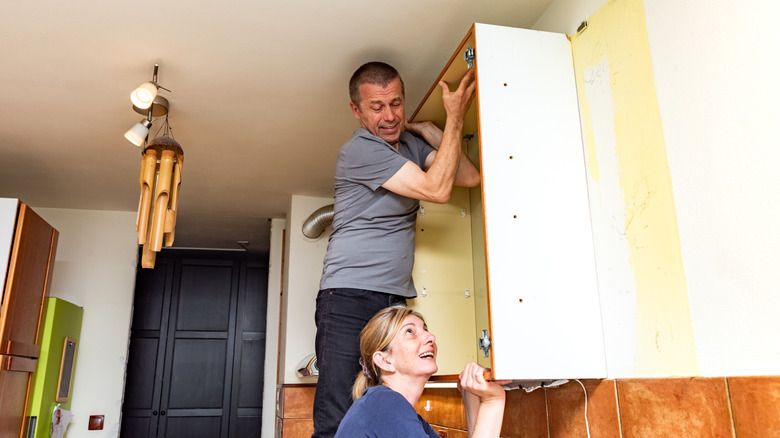
To make the area seem more open, I'd recommend removing the upper cabinets built in the corners that are difficult to reach. When removing awkward corner cabinets, you need to work carefully to avoid damaging adjacent cabinets. I start by closely inspecting the interior of the cabinet for any screws, which may anchor it to the wall and to adjacent cabinets. Always remove all the screws connecting to adjacent cabinets before removing the wall anchor screws, starting at the bottom and working upward. Have a second person available to hold it in place as you remove screws. Some cabinets might be glued to the wall, too. Use a pry bar to carefully pull it loose after taking out the anchor screws. I know from experience that taking extra time with the pry bar saves time in making repairs later.
If you hate to give up that much storage space, I'd suggest adding floating shelves near the corner for storing rarely used items or displaying knick-knacks. I like floating shelves that have a metal bracket or pegs with a high-end wood sleeve that fits over the bracket. Make sure to mount the shelves to studs so they can support plenty of weight. I don't mind using staggered or asymmetrical shelves for an eye-catching design that accommodates kitchen gadgets of varying sizes.
Add an island to simplify access to appliances
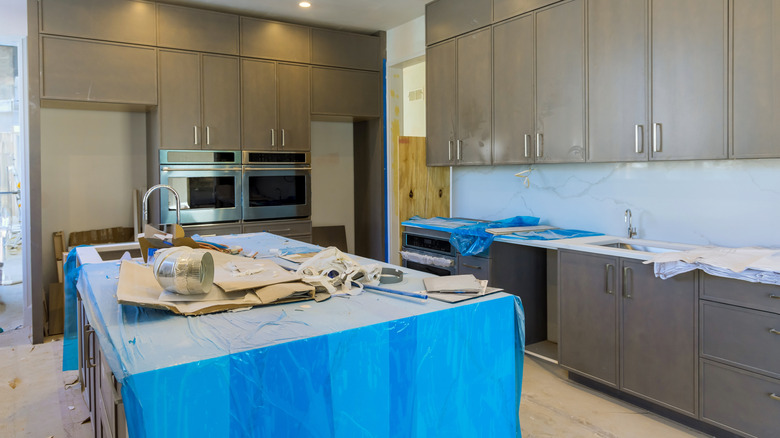
If you dislike the way appliances are spread throughout your L-shaped kitchen design, leaving you wasting time walking back and forth, adding an island in the middle of the design increases access. It's usually better to make the island's position the first feature you decide on when designing a kitchen. You need to be certain you have enough open floor space to make the island useful and not "in the way" when working in this space. However, you can add an island to an existing L-shaped kitchen with careful design work. I'd recommend at least 36 inches of clearance on all sides. Try to leave more clearance if multiple people regularly work in the kitchen at the same time.
When adding an island in an L-shaped kitchen design, I like adding a sink and dishwasher. When you're working on the countertops across the L shape, making a quick turn to the interior of the room to deposit dishes allows for efficient movement. If your plumbing layout doesn't allow this, placing an oven and cooktop inside the island is convenient for many of the same reasons.
Unless you have quite a bit of DIY experience, I would recommend hiring a designer or contractor to install the island. If you are adding a sink or oven, you'll need a plumber or electrician to install the appliances. In most places, it's not legal for unlicensed novices to run or move electrical wiring or plumbing. The designer will ensure the island matches the rest of the L-shaped kitchen and gives it a modernized feel.