

13 Creative Ways To Repair Your Cracked Or Broken Vase

We may receive a commission on purchases made from links.
Who can resist a gorgeous vase? Whether you fill it with fresh flowers or artificial blooms, or use the vessel as decor on its own, there are plenty of creative ways to decorate your home with vases. So it's a sad day when one of those prized vessels cracks or breaks. The most common fix is to use an adhesive like super glue and work the pieces back together like a puzzle. But the cracks might still show, especially on a glass vase.
That doesn't mean you should toss the vase, though. There are plenty of ways to hide those repairs with other materials or with unique design ideas, such as air dry clay, decoupage, plaster, or even mosaics. Keep in mind that you might not be able to use your vase like normal after repairs. While some types of glue make the container once again watertight, others might not hold up as well. In that case, there are lots of fun ways to repurpose vases around the house instead of using them for fresh flowers. You'll be able to salvage your vase, keeping it out of the trash and possibly creating an even more beautiful piece than you had before. Get inspired below to turn a repaired vase into a one-of-a-kind decor item.
Cover the entire vase with air dry clay
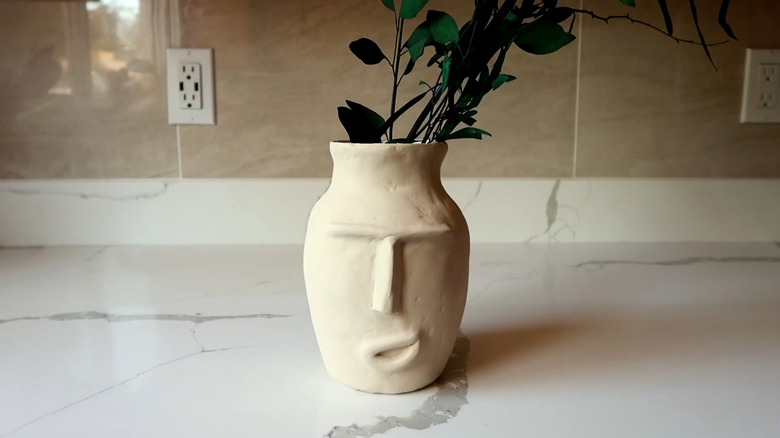
If your cracks are showing after gluing a simple vase back together, cover them with a layer of air dry clay — Activa Supreme White Clay is a good option. Roll it out with a rolling pin if you want a smooth cover, or flatten the clay roughly with your hands if you want a textured, rustic look. Use Weld Bond to hold the clay onto the vase if needed. You can make indents or texturing in the clay for extra detailing — or even roll out more clay and apply it to create patterns or motifs like the one pictured above. When it's dry, paint the clay to customize the vase.
Decoupage for texture and add decorative accents
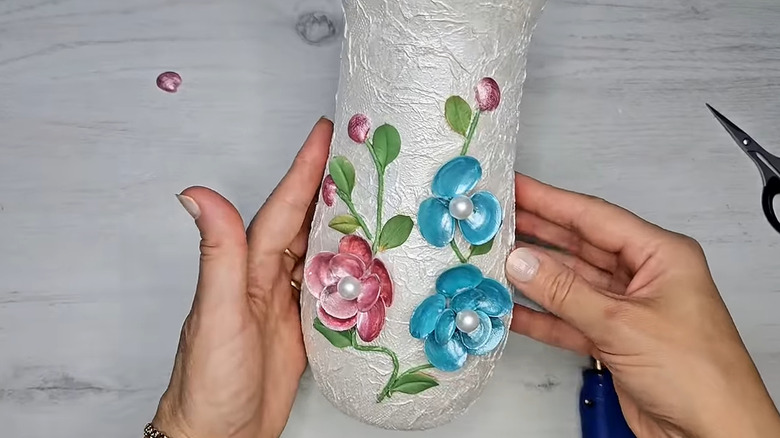
Looking for creative ways to use decoupage in your home? Another way to cover up hairline cracks or repairs is to decoupage over the vase to give it texture. Plain white napkins (or another color, if you prefer) work well for decoupage. Brush a little Mod Podge onto the vase, and press the napkins over it, bunching them up a bit if you want extra texture. Go back over the napkins with another layer of decoupage glue to seal it in. To finish, paint designs or add embellishments onto the vase.
Fill the gaps with a golden adhesive mixture in the Kintsugi style
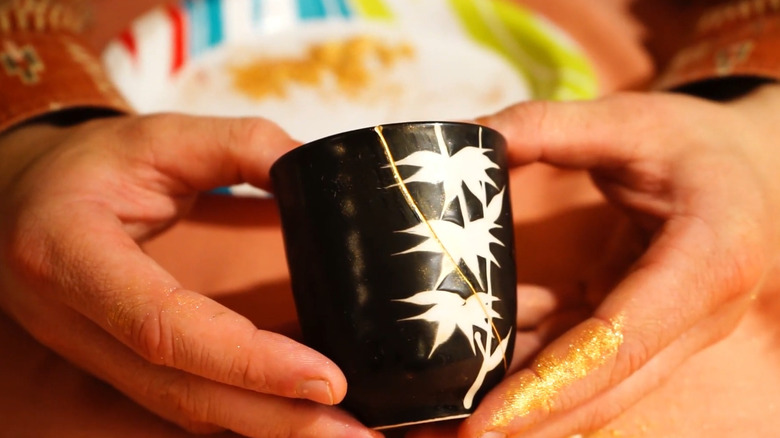
Instead of hiding cracks, embrace the art of kintsugi and how you can use it to fix broken vessels. This repair method uses a gold filler along the cracks — the idea is to make them beautiful and celebrate the imperfections instead of hiding them. This 1DFaul Kintsugi Repair Kit (and others like it) provides the supplies you need, including the repair medium and the gold-toned powder. Or, mix one part mica powder to two parts clear ceramic adhesive to repair the cracks. You can use liquid gold leaf on the lines for additional emphasis.
Superglue the pieces and cover the cracks with plaster
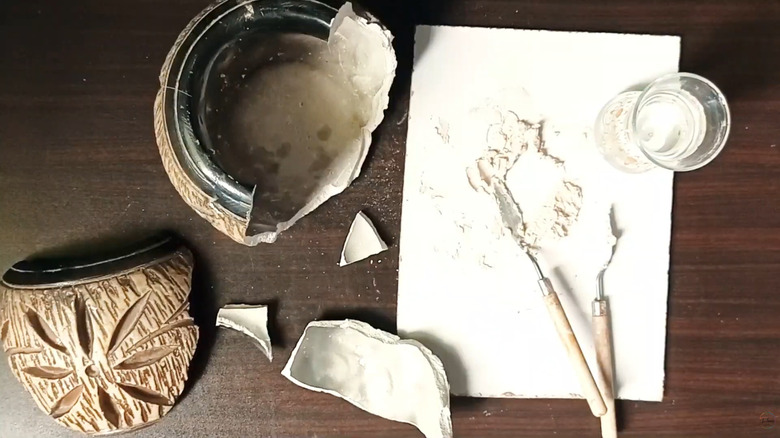
A broken ceramic vase can be repaired with a little super glue and some plaster (like DAP Patching Plaster). Glue the broken pieces back together, and allow the glue to dry fully. Then, smooth some of the plaster over the cracks to help disguise them. Sand the dried plaster to get a smooth finish, and wipe away the dust. If the plaster happens to be the same color as the vase, you're done. Otherwise, paint the vase to help the new plaster coating blend in.
Paint over the vase with a baking soda and paint mixture to hide cracks
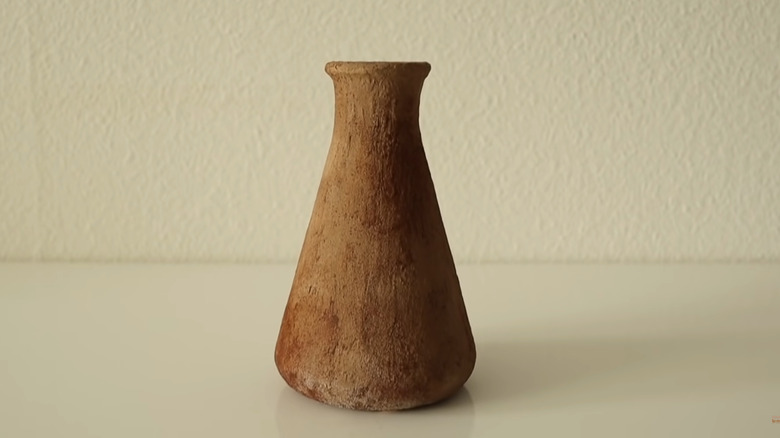
To cover up cracks, try this baking soda painting technique for a textured-matte look. Start by gluing the pieces back together. Then, mix baking soda with paint in the color you want the vase to be. Start with just a little baking soda, and add more, depending on how thick and textured you want the finish to be — a general recommendation is one part baking soda to two parts paint. Mix the baking soda and paint together well. Apply the mixture to the entire vase. You can play up the aged, organic look by working cinnamon, nutmeg, coffee, or even pepper into the finish.
Cover cracks with plaster of Paris
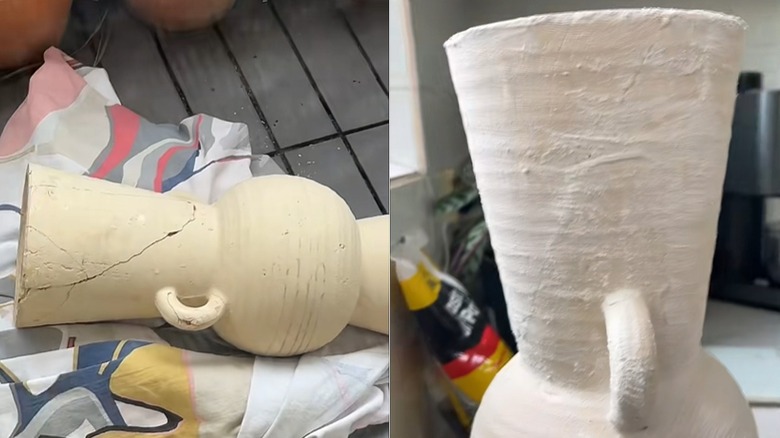
Another solution to hide cracks in a ceramic vase is to cover the whole thing with plaster of Paris. First, you'll want to reassemble the broken vase by gluing the broken pieces together. Wait until the adhesive is fully dried, using the package instructions as a guide for the time. Then, mix up plaster of Paris and apply a thin coat over the entire vase. Add texturing however you want. You may need to apply a second coat for good coverage. Once it's dry, you can paint it or add embellishments to the vase.
Plant succulents in a missing chunk of a vase
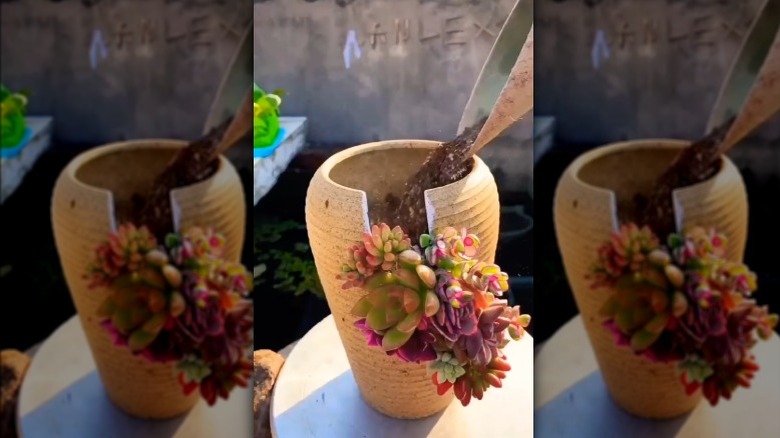
Grow cute succulents with this DIY upcycle for broken vases — it's an alternative to repairing and restoring the vase. This works best on a larger vase where a section of one side is missing. Start with a little soil in the bottom of the vase, adding succulents into the lowest part of the missing section. Add more soil as you go, positioning more succulents to fill the opening. When you fill the broken section, continue to cover the top opening of the vase with succulents.
Make a replacement top and add two side handles with air dry clay
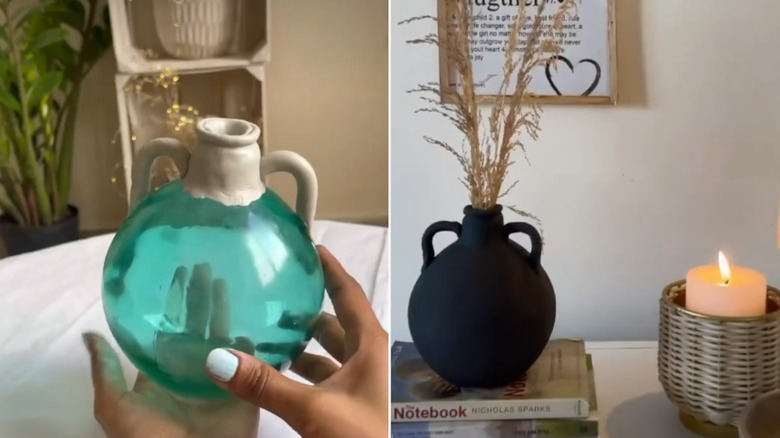
If the top of a vase breaks off into lots of little pieces, it can be difficult to glue them back in place. An alternative is to model a replacement top out of air dry clay. While you're at it, consider adding little decorative handles on either side of the spout. Shape the clay components however you want to customize your vase. Once the clay hardens, give the entire vase a coat of paint to make it seem like the spout and handles were always there.
Make replacement parts with clay, paint, and add clay accents
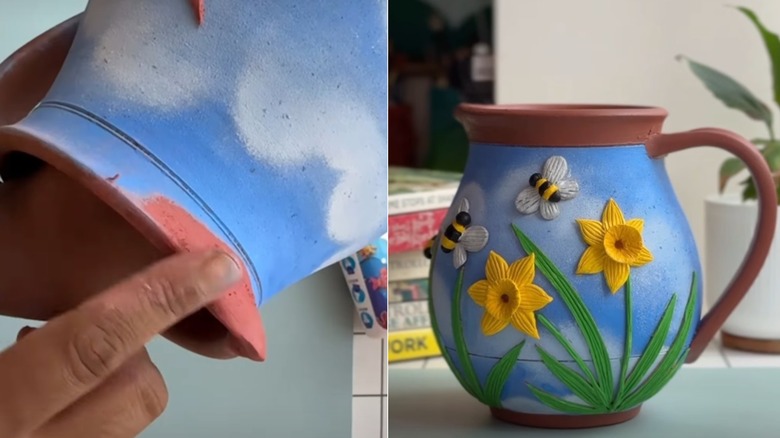
This inspiration project completely revamps a pitcher-style ceramic vase after molding a replacement spout for it. Mold clay to replicate the missing section, whether it's a spout, the top rim, or a side piece. Then, use additional clay to mold or cut out three-dimensional accents for the sides of the vase. Adhere those pieces to the vase, and paint them if desired. These elements can also cover cracks on the vase that you've repaired with super glue.
Replace a broken-off pedestal vase stand with wood
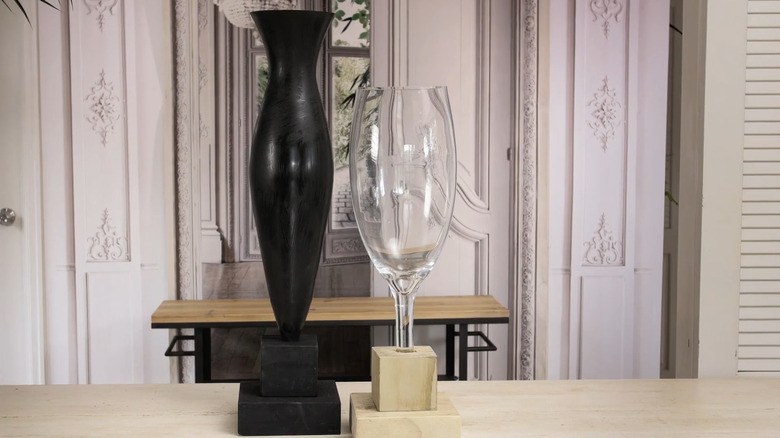
If the base of a pedestal-style vase breaks off, craft a new base from wood. Make the bottom piece wide enough to keep the vase steady. Use one thick block, or attach a slightly smaller block on top of a square base. Then, create a hole in the wood that's slightly larger than the stem of the vase. Squeeze glue in the hole, insert the broken vase, and let it dry. A coat of paint over everything creates a uniform look, and you can accent it with decals, artificial flowers, or other embellishments.
Mold a wide lip out of clay over a broken top edge
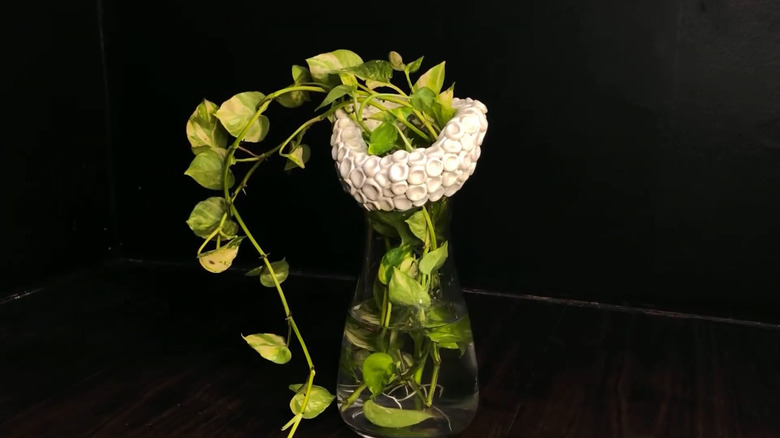
If the top edge of the vase breaks off in a random way, create a new, more dramatic lip using clay. Following the new shape of the top, press and smooth the clay over the edges, making it the shape and thickness you want. You can also add additional pieces of clay, like balls or flattened circles, to create an interesting texture. Leave the clay as-is, paint it a different color, or paint the entire vase, including the new lip, in a single color.
Use a resin pour technique to hide repaired cracks
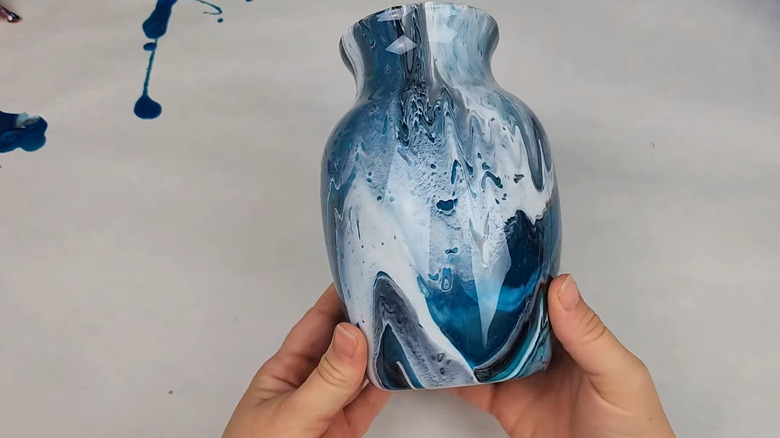
Here's a new way to incorporate resin art in your home while fixing your broken vase. Once you glue the pieces back together, use the resin pour method to cover the vase and the cracks with color. You can swirl together multiple colors to create a unique abstract design over the vase. If you're not comfortable using resin, try the acrylic pour method. Choose paint designed for the technique, like Abeier Metallic Acrylic Pouring Paint. Pour the paint directly on the vase to create desired designs, or layer the colors in a cup and pour it on at once.
Cover the cracks with mosaic pieces
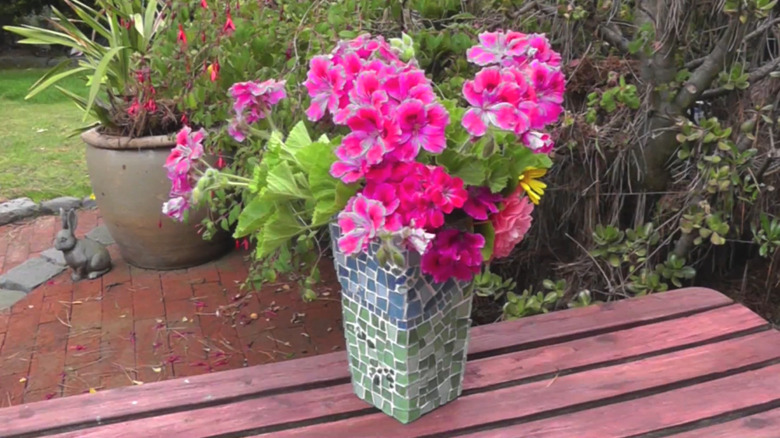
Looking for crafty and creative ways to repurpose broken glass? Piece it together into a mosaic design for the vase. Once you glue the pieces of the vase back together, start covering all of the sides with the broken glass pieces. You can also use broken decorative plates, beach glass, gemstones, river rocks, tiles, and similar materials. Once the pieces are in place, fill the gaps to finish the mosaic vessel. A vase with straight sides is often the easiest for mosaic applications, but small pieces also work on rounded vases.