

All The Kitchen Trends You'll Be Seeing In 2026
We may receive a commission on purchases made from links.
In this House Digest exclusive, we spoke with top designers to discover what their clients can't stop asking for more of, and where they predict these kitchen trends will lead. The answer is bold, accessible kitchens that suit clients' personal lifestyles instead of just chasing showroom-quality perfection. People want homes that reflect how they actually use the space.
Overall, the basics of kitchen design are shifting away from presenting one of the most popular rooms in the house as an industrial, stark workspace. Instead, things are moving toward styling kitchens as warm, inviting rooms that encourage the social side of things. There are plenty of kitchen remodel trends that homeowners are obsessed with in 2026, but none more so than the high-tech kitchen dotted with nostalgic callbacks. Modern kitchens are the perfect place to add personality to your home, and these 2026 trends are a great way to start.
Sculptural kitchen islands as bold statement pieces
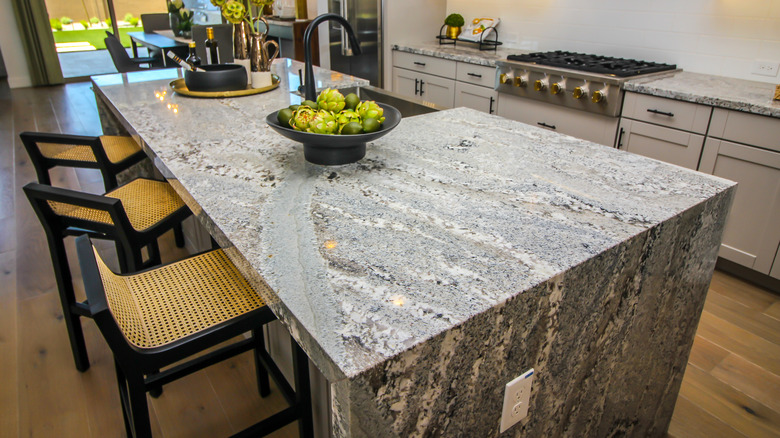
More counter space in the kitchen always feels like a good thing, and in 2026, this is about more than just making dinner easier. "Kitchen islands are becoming statement pieces rather than simple work surfaces. Designers are experimenting with curved forms, waterfall edges, fluted stone, and dramatic natural materials like onyx or marble with bold veining," Cara Woodhouse, founder and principal designer of Cara Woodhouse Interiors, tells House Digest. "The island is increasingly treated like a piece of furniture that anchors the entire room." If you have a smaller kitchen and still want to hop on the trend, Woodhouse says it's possible. "Even in smaller kitchens, choosing a distinctive stone slab or adding subtle curves to the island can elevate the entire space," she advises.
Yet incorporating this look into your kitchen might feel like quite the expensive undertaking. To save some money without sacrificing style, consider choosing a bold-veined quartz or marble-look surface to mimic high-end stone without the cost. And while the island being visually bold is part of its overall appeal, you also want to anchor it within the kitchen so the room feels unified. To do this, echo just one element (like the type of stone or waterfall edge) elsewhere in the kitchen so everything still feels intentional and not mismatched.
Warm wood cabinetry to create a lived-in feel
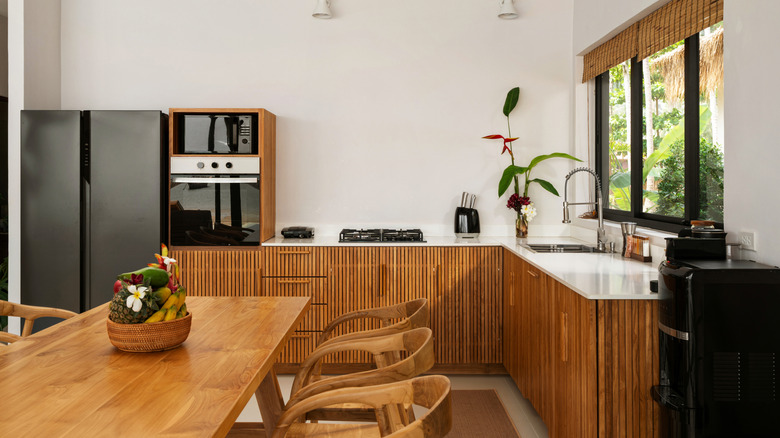
We spend a lot of time working and gathering in the kitchen, so it should feel cozy and welcoming instead of like being in a showroom. Because of this, our experts have noticed that warm wood cabinetry will be used a lot more in 2026. "After years of white cabinets, homeowners are craving spaces that feel more natural and full of character. Wood cabinets come in a variety of finishes and bring a feeling of warmth to the space instead of feeling overly stark or sterile," Craig Gritzen, founder and principal designer at Curated Style Collective, tells House Digest. "I think this trend is increasing in popularity because homeowners want a space that feels inviting and lived in while looking well designed."
If you think that warmer-toned wood feels a bit too '90s farmhouse for you still, Gritzen recommends "balancing natural wood uppers with painted lowers or an island in a deep, earthy tone like green." You can also do this in reverse. Unlike black or stark white, leaning into greens reinforces that organic, lived-in look designers are aiming for. One of the Behr 2026 Colors of the Year is Hidden Gem. Described as "smoky jade," it fits the bill for anchoring a kitchen in this way. That said, swapping out cabinets can still be expensive. "If replacing cabinetry is not in the budget, natural wood tones can still be introduced through shelving, artwork, and decor," Gritzen continues.
Layered lighting adds ambience instead of pure function
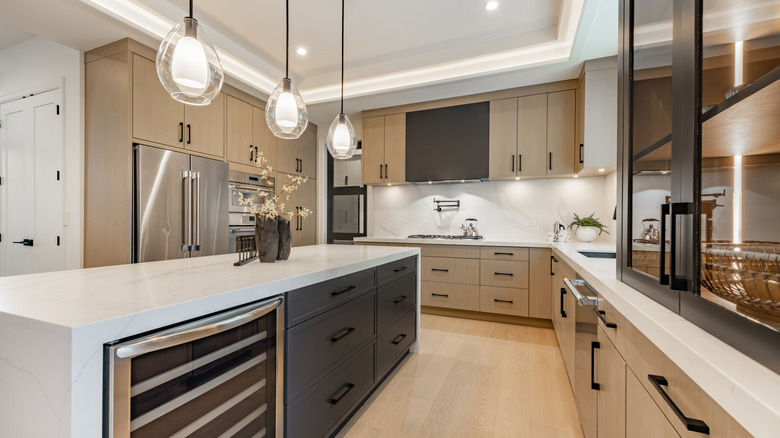
In 2026, kitchen design is shifting to highlight the room as a gathering space and social area of the home, instead of just a place to work. "In the past, kitchen lighting was strictly approached from a functional perspective, but more homeowners are requesting lighting to be layered in the space," says Craig Gritzen. He continues by reminding readers that in the past, architectural recessed lighting and pendants seemed to be the only two options used to illuminate the space. Yet in today's climate, things are going much deeper. "Homeowners are incorporating a mix of sconces, task lighting, and sculptural pendants that incorporate natural materials," he says. "This helps create a kitchen that feels warmer, inviting, and character-rich."
To recreate this look at home, Gritzen recommends aiming to maintain balance through plenty of layers. "There should be a balance between overhead, task, and decorative lighting ideally on dimmers," he says. If you already have these, adding a dimmer like the Bestten 2 Pack Dimmer Light Switch is an easy swap to modernize your space. Plus, "adding under-cabinet lighting, sculptural pendants, or a pair of sconces can completely change the feel of a kitchen without a major remodel," he continues. Under-cabinet lighting can also be as simple as the McGor 10-inch Rechargeable Motion Sensor Light, which doesn't even require an electrical connection, making it quite flexible.
Open concepts are shifting to more defined living areas
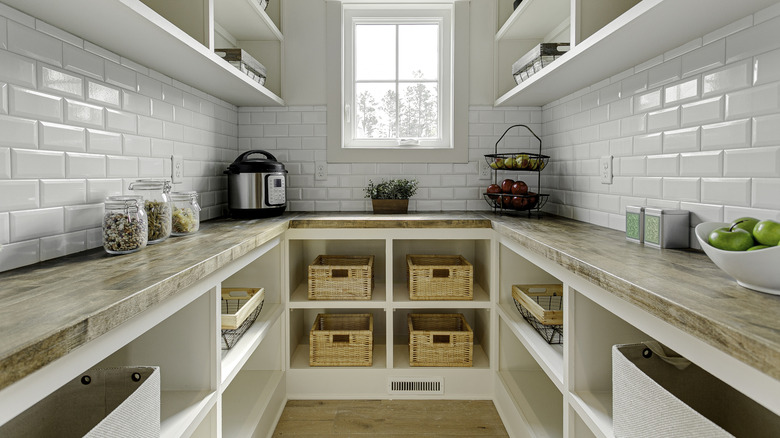
There has been plenty of chatter in the design space that open kitchens should move over, as other layout trends are making a resurgence. Craig Gritzen agrees. "Another trend I see gaining momentum is the shift away from fully open-concept kitchens toward purposeful zoned living with functional areas," he shares. He is noticing that homeowners are requesting closed-off areas that are specifically for food prep — known as back kitchens — more often. "I'm also seeing an increase in requests for appliance garages or built-in appliances for both new build and remodel projects," he continues. "These features both reduce visual clutter in the kitchen and make the space feel high-end."
For a no-construction-required approach, create visual boundaries with accessories instead of actual walls. You can use area rugs to visually define where the kitchen ends and the living/dining begins. Rugs can also help create smaller niches within the space: For instance, you could use a round rug to offset a table and create a breakfast nook. If you have the space, you can further visually break things up by adding a mobile kitchen island, like the Homestyles Mobile Kitchen Island Cart with Wood Top and Dropleaf Breakfast Bar. This gives you more counter space for prep, mimicking the spirit of a back kitchen without the price tag of a remodel.
Personalized kitchens that reflect lifestyle and habits
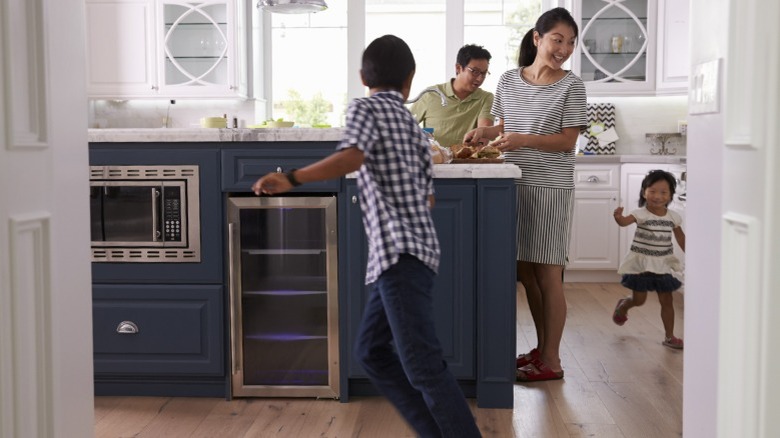
Modern kitchens are extremely multi-functional, and our experts think your space should reflect this. "It's not just a place to eat, it's where kids do homework, where Mom works remotely, and where families naturally gather throughout the day," Kim Gordon, founder of Kim Gordon Designs, tells House Digest. "Designing for that flexibility is key, especially for growing families." When setting up your dream kitchen, consider how your family specifically will get the most out of the space, not just what you think a kitchen is supposed to be.
Cara Woodhouse agrees. "Kitchens are becoming more tailored to how people actually live," she says. "Designers are incorporating features like coffee stations, wine storage, hidden charging drawers, and integrated electrical outlets within cabinetry and medicine cabinet style storage so everyday tools like electric toothbrushes, razors, or small appliances can charge discreetly out of sight." And you don't need a full remodel to capitalize on this shift in thinking, either. Simply adding more personalized storage solutions can really make your kitchen work for you. If you're a coffee fiend and never seem to have what you need, something like the Furologee Kitchen Bakers Rack with Power Outlet can go a long way toward making your kitchen work better for you. Overall, the best tip is to "think about the routines that happen in your kitchen each day and design storage around those habits rather than following generic layouts," Woodhouse says.
Deep, muted colors are favored for kitchen seating
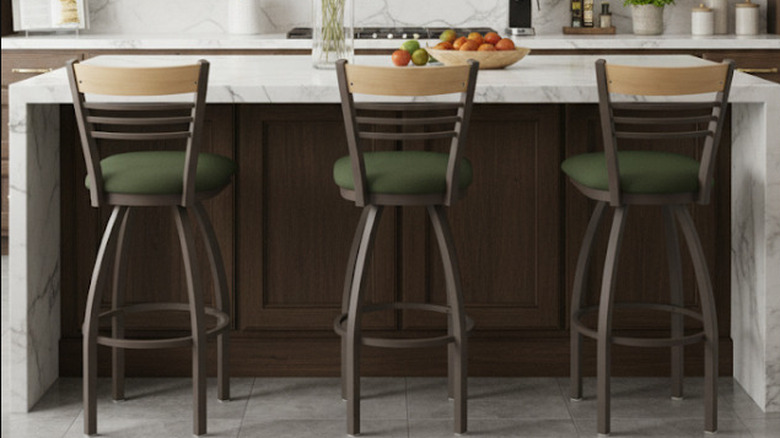
A kitchen that is warm and inviting doesn't automatically translate to a chipper, bright color palette. Instead, deeper colors can accomplish the same thing. And in 2026, they are more popular than ever. "One detail we're seeing gain momentum in 2026 is the move toward deeper, more muted fabric colors in kitchen seating," Deborah Bertha, co-founder and design consultant of Barstool Comforts, tells House Digest. "Instead of brighter upholstery tones, homeowners are leaning into shades that feel warmer, richer, and easier to live with over time." It's true that darker colors tend to hide stains better. In a high-use space like the kitchen, this can give you more peace of mind rather than babying something lighter and stain-prone.
Luckily, your favorite color likely comes in a deeper hue, so you don't have to give up your preferences for the sake of staying on trend. "That means burgundy over bright red, hunter green over more vivid greens, and softer off-whites or textured neutrals instead of stark white," Bertha continues. "We're seeing this especially in dining chairs and bar stools, where these more grounded fabric choices help the space feel warmer and more inviting." If you have a breakfast bar in your kitchen, use the same fabric on the seats as the dining chairs so there is still a sense of unity and nothing feels too hodgepodge.
Induction cooktops to create a streamlined look
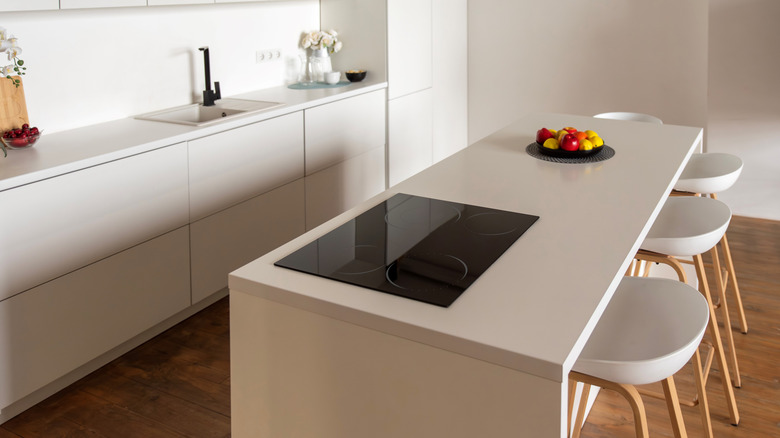
The inviting nature of 2026 doesn't mean that you have to forgo the effectiveness and ease of modern creature comforts. Recent trends show that homeowners are choosing to work smarter, not harder, in the kitchen. "Induction is increasingly becoming the default cooking technology in kitchens, with induction ranges replacing gas and dual-fuel setups as the main cooking workhorse," Jay Jeffers, founder and interior designer at JayJeffers Inc., tells House Digest. "Induction can also now be fully integrated into the countertop so it almost disappears when not in use. The result is a kitchen that feels quieter and more streamlined overall."
Induction stoves are the cooktop trend that's making kitchens safer and more efficient in 2026. They are safer because of how induction inherently works. The cookware heats up, but the stove itself doesn't feel hot, so you reduce the opportunity for burns. They are also efficient as food cooks faster! Plus, you'll use about 10% less energy, which is great if you'd like to be more eco-conscious. Induction stoves also sit flush with the countertop, so they're much easier to clean than traditional cooktops (especially when food spills under the coils or grates).
Bullnose and ogee countertop edges create classier profiles
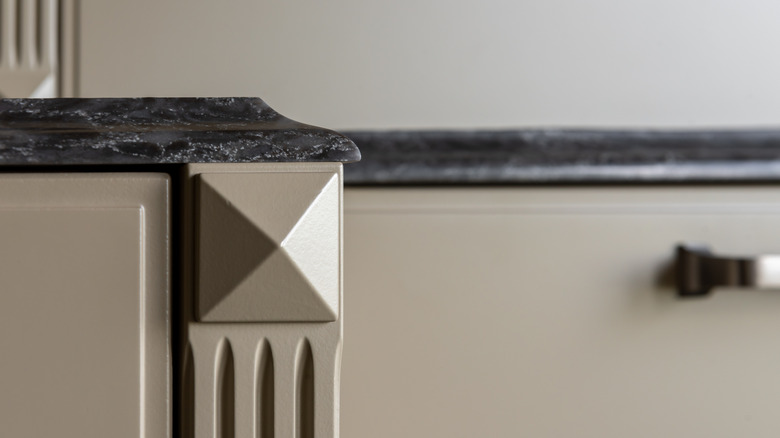
2026 kitchens are finding unique ways to play with spatial texture and add detail in unexpected ways. One of these places is along your countertop edges. "For years we have only seen square modern edges," Michelle Accetta, principal designer at Michelle Accetta Home, tells House Digest. "Now that we are moving to warmer designs we are starting to see more play, style and warmth brought into kitchen design by simply changing the countertop edge profile."
She is excited about the change and the real visual playfulness this switch-up in style can bring to kitchens. "Gone are the days of the square countertop edge profile," Accetta continues. "We are starting to see more rounded kitchen countertop edge profiles. She lists the rounded-edge bullnose profile, as well as the traditional ogee edge (which is a double-stepped option), as ones to watch. To pick the best edge for your kitchen, consider the material of your countertop. Ogee edges might work best with a harder stone, like granite, marble, or quartz, while bullnose styles tend to work with any countertop material.
Patterned kitchen floors are so back
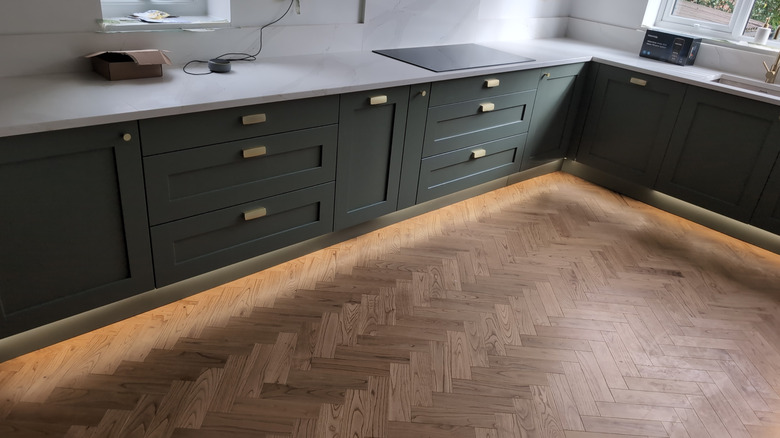
Choosing the best flooring options for your kitchen can be a difficult decision. It's one of the most high-traffic rooms in the house, so you have to strike the perfect balance between style and function. "In recent years, the more minimalist the floor, the better," Evelina Juzėnaitė, principal interior designer at Planner 5D, tells House Digest. Many decided that durability must win for the sake of design, but this is no longer always the case. "Now I've noticed that patterns are making a comeback — for example, checkerboard, herringbone, and so on," she continues. "This type of flooring adds visual interest to the kitchen without overwhelming the space."
Luckily, popular options like hardwood, porcelain tile, and even LVP can all be arranged in this way. It's important to note that in 2026, pattern also refers to the arrangement of the flooring pieces — not merely the design that they're sporting. Homeowners are still choosing understated color options for their flooring; they are simply arranging it such that the base of the room still contributes something to the overall design of the kitchen. It's not an afterthought to just walk all over.
Integrating the pantry into the lounge for more social space
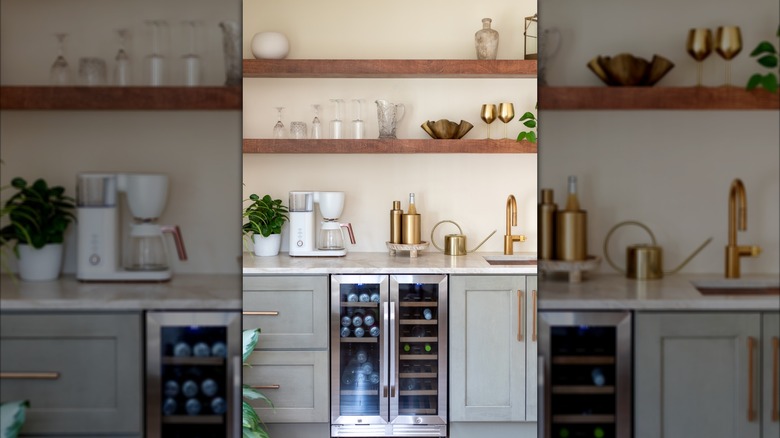
2026 is about making the most of all the spaces you have available. Leaning into the kitchens-as-a-social-space idea, "the walk-in pantry is transforming into a back kitchen or scullery with the addition of a small social seating area or even a high-end coffee/wine station, allowing the user to treat the utility area as a private space of sanctuary," Nitya Seth, interior designer at Nityanamya, tells House Digest. This is perfect for quick, private chats during a dinner party or even a solo glass of wine to unwind after a long day.
Of course, not all of us have pantries that are big enough to hold seating areas and drinks stations. As unexpected wallpapering is a trendy way to give your home personality, consider using wallpaper to visually offset the space if there isn't a dividing wall. Next, consider seating options. If space is at a premium, something compact and chic like the Vasagle Ekho Dining Chairs can still make a big visual impact — especially when anchored by a circular rug or in a shade that ties into the color scheme of the rest of your kitchen.
Curved architecture softens the 2010s minimalist sharpness
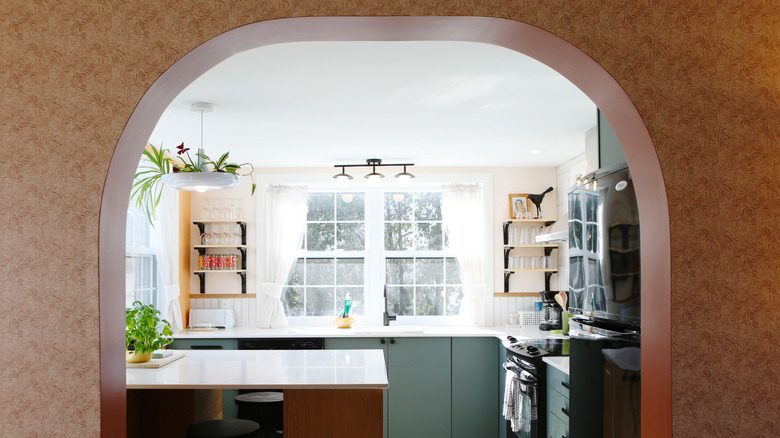
Your kitchen shouldn't feel like a hospital room. Instead, 2026 trends emphasize rounded shapes to create serene spaces that are visually comforting, instead of simply sharp. "In addition to sculptural islands, we are seeing arched doorways, rounded cabinetry corners, and soft ceiling soffits to break up the traditionally sharp, clinical lines of the kitchen," Nitya Seth says.
Luckily, you don't need to commit to a full architectural overhaul to embrace this softer look, either. Even small updates like choosing bar stools with rounded backs or incorporating arched shelving niches can make a noticeable difference in incorporating this trend into your kitchen. Swapping in circular or oval lighting fixtures can also help echo the rounded look without the need for any construction. You can also learn how to DIY arches in your doorways for a classier design to add an extra touch of whimsy.
Heritage pieces are being blended into modern kitchens
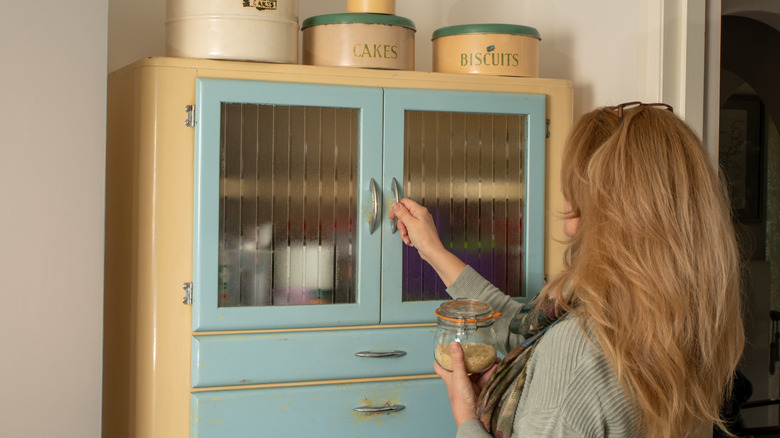
There is plenty of nostalgic inspiration behind 2026 kitchen trends, and our designers encourage you to lean into your desire to recreate the kitchen you grew up with. "We're seeing a strong 'old meets new' trend growing this year, with a resurgence of heritage pieces being blended into the modern kitchen, as homeowners move away from the ultra-streamlined, built-in look of minimalist design," Teri Simone, head of design and marketing at Nieu Cabinet Doors, tells House Digest. This is the perfect time to learn how to decorate your home with flea market finds to create the kitchen of your dreams.
Simone advises the best kinds of items to look out for are "elements like glass-front hutches for displaying dishes, vintage farmhouse tables used as worktables or breakfast spaces and freestanding storage furniture, as well as more solid and chunkier-style hardware with mixed metal tones" as these items "are all making their way back" into fashion and can add real charm to your space. If you aren't a flea market fiend, knowing how to use Facebook Marketplace as the ultimate furniture-shopping tool can also be a real plus.
Color palettes, textures, and finishes that feel lived in, not sterile
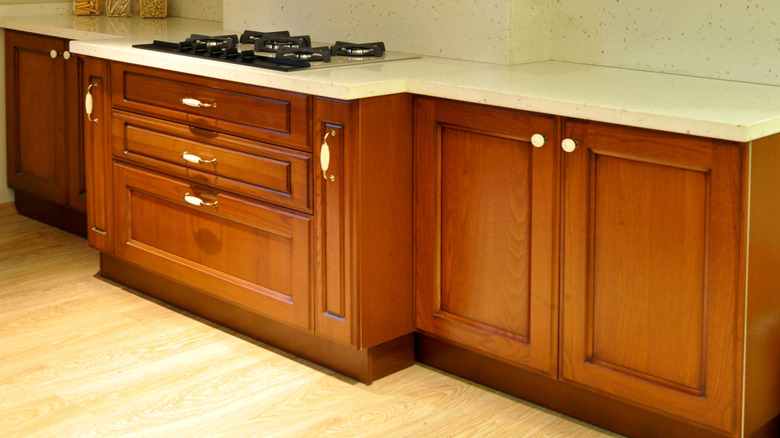
Our designers hope that the starkness of showroom kitchens will disappear in 2026. Once thought to be professional and clean, the high-contrast black-and-white and stainless steel spaces are a thing of the past. "A big shift is toward kitchens that feel lived-in and warm. We see a clear move away from minimal and cold spaces toward layered materials, earthy tones, and finishes that add more warmth and tactility," Artem Kropovinsky, owner of Arsight, tells House Digest.
As a replacement, homeowners are reaching for things that add nostalgic character to the kitchen. These are reminiscent of our grandmothers' spaces, rather than a model home. "Expect to see more rift cut oak, walnut cabinetry, textured stone, and handmade tiles. These materials create depth and make kitchens feel welcoming rather than sterile," says Cara Woodhouse. If you're a bit stuck on where to begin softening your space, she suggests "introducing even one warm material such as wood cabinetry or a natural stone backsplash." Just this little bit of contrast can go a long way in breaking up a sterile look. You can also add earthiness to your kitchen without a remodel by layering in natural textures. Things like wooden cutting boards displayed on the counter or handmade ceramic storage bowls can do a lot of heavy lifting.