

12 Affordable Dollar Tree Items That Belong In Your Gardening Arsenal
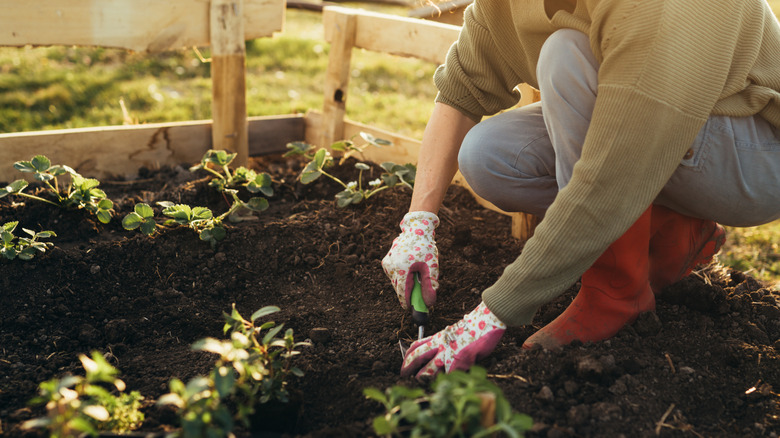
Dollar Tree's collection of garden supplies in the spring and summer is quite impressive — you can get everything from gloves and seeds to pruning shears and trellises at the popular dollar store, usually at a much lower price than at nurseries and home improvement stores. But not all of the must-have garden supplies that you can find for less at Dollar Tree are located in the gardening section. In fact, many of the best options aren't intended for gardening at all, but you can easily turn them into tools that help keep your garden tidy, healthy, and beautiful.
While wandering down the aisles of Dollar Tree, it might be challenging to figure out how pool noodles, mesh laundry bags, bead organizers, and deviled egg holders can be used in the garden. Yet, all of those items (and many more) that are sprinkled throughout the store all work well for various aspects of the gardening process. Since it takes a little creative thinking to spot items that you can repurpose in the garden, we've created a list of 13 everyday Dollar Tree items to use. Starting with these projects could spark even more ideas about how to garden on a budget with dollar store items. And if you don't have a Dollar Tree near you, check other dollar stores or Walmart for similar items also at a discount.
Large flower pots for tidy hose storage
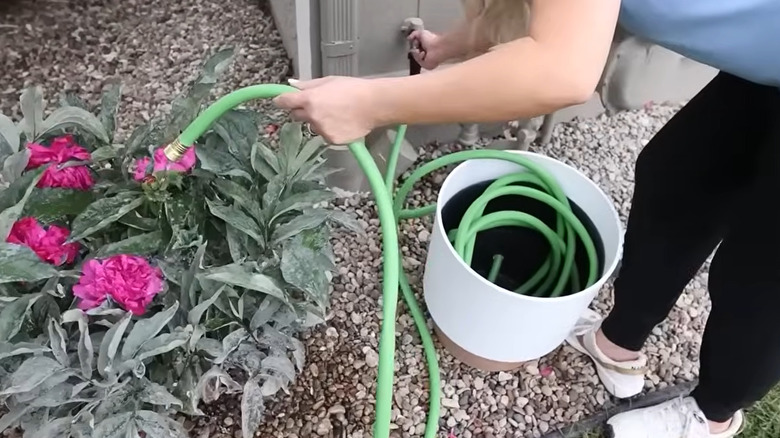
There's no need for expensive hose reels or cheap hose hangers that don't do a good job of corralling the garden essential. Instead, head to Dollar Tree and grab a large planter to keep the hose coiled up and out of sight, yet accessible when you need it. Since you're using a planter, the disguise fits right into your garden. And it only requires one small modification to make room for the hose.
To prepare the pot, cut a small hole on the side not far off the ground. It should be just large enough for one end of the hose to fit through — leave space to accommodate the metal end of the hose. Thread that end through the hole, leaving enough slack for it to reach the spigot. Then, coil up the rest of the hose, and tuck it down into the pot. When you need to use the hose, grab the free end out of the pot and uncoil as much of it as you need. When you're done, coil it back up, and replace it in the pot.
Mixing bowls for increased planting space
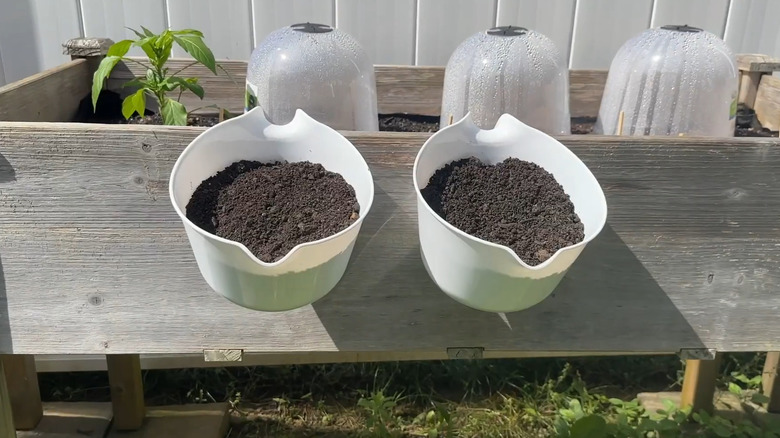
If space is limited in a small garden, you have to get creative. One way to do that is by grabbing plastic mixing bowls from Dollar Tree for a makeshift planter, using the handles as hangers. This is a convenient, space-saving option since it doesn't take up any ground space in your garden or on your patio. The dimensions are 7.9 inches by 10.25 inches by 5.3 inches, so the "pot" is large enough to grow things like herbs or flowering annuals, yet small enough to hang easily.
Before filling the bowl, drill drainage holes in the bottom to prevent root rot. A coffee filter or rocks in the bottom keep the growing medium from falling out. You'll want to fill the bowl with potting soil, which is lighter than garden soil, to allow for aeration around the roots. The lighter medium also makes it easier for the plastic handle to support the weight. Plant seeds or seedlings in the bowl, and hang it over the side of a planter box, a deck railing, or a similar surface. You may need to run a screw through the handle into the supporting surface to keep the bowl secure.
Wire baskets to protect plants
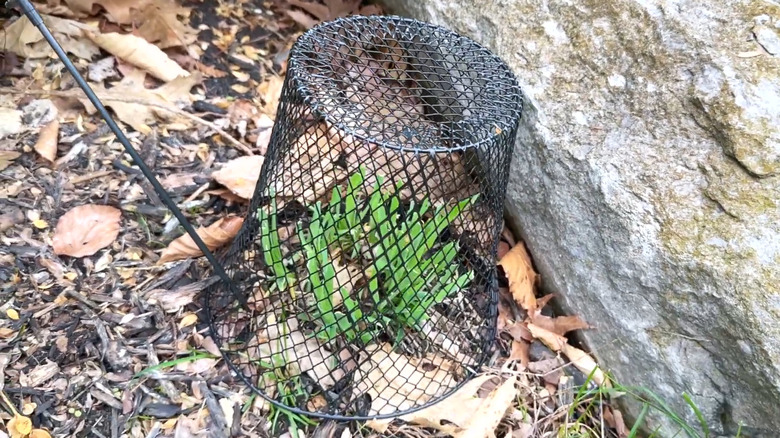
Protect your plants with a budget-friendly garden cloche DIY from Dollar Tree using a wire basket. The Essentials Wire Waste Basket is an ideal size and shape for many delicate garden plants. It can keep animals away from your plants to prevent damage and crop loss. Because it uses a wire mesh design, the basket still allows sunlight through, and won't stop air circulation, which is essential for healthy, unstressed plants with a lower risk of disease. The Dollar Tree trash bin is inexpensive and easy to lift since it's so lightweight.
For the most basic use, simply flip over the trash can and put it over the plant, being sure the bin doesn't damage or restrict any of the plant's growth. If you want to add a handle, attach a decorative drawer pull to the center of the trash can — it'll go on what was originally the bottom but is now the top. You can also spray paint the basket to change the color. Because the wire basket is lightweight, you may want to secure it to the ground to prevent it from blowing away or being knocked aside by animals. You can sit a rock on top for added weight or use landscape staples to hold the basket to the ground.
Broom handles, hula hoops, and mesh bags to create row covers
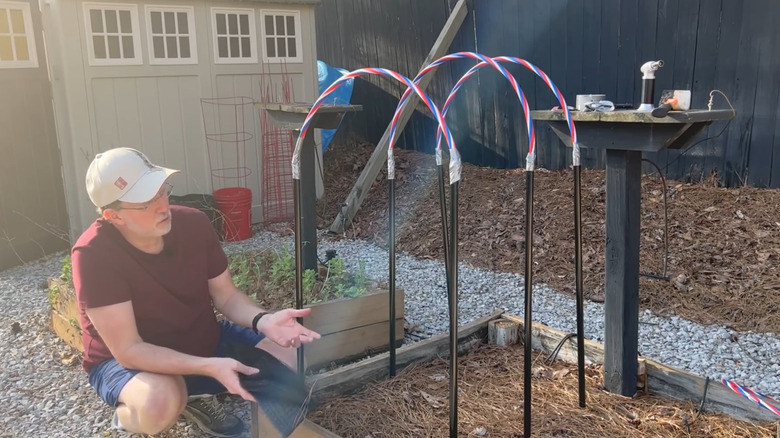
There are plenty of ways to use row covers for a healthier garden, and you can make one inexpensively with Dollar Tree supplies. A row cover can protect plants from pests and shield them a bit from frost and strong wind. To make a simple one, you'll need the Dollar Tree Essentials Plastic Broom Handles and Hula Hoops to make the frame. You can make the actual cover from Essentials Mesh Laundry Bags. The benefit of this method is that you can adjust the length of the cover and the spacing of the supports to customize the cover.
Start by pushing the broom handles, with the grip end down, several inches into the soil to keep them secure. Space them about a foot apart. Then, you'll need another row of the handles positioned directly across from the first row. You're going to cut the hula hoops in half for the top curved support, so hold one up to get the distance for the second row; they should be spaced apart the same width as the hoop's diameter. Cut the hula hoops, and secure the ends to the posts opposite each other using duct tape. Now, you can put the mesh laundry bag over the tunnel structure. Cut the long sides first to make it a longer, single piece of mesh fabric.
Long bamboo skewers for plant supports
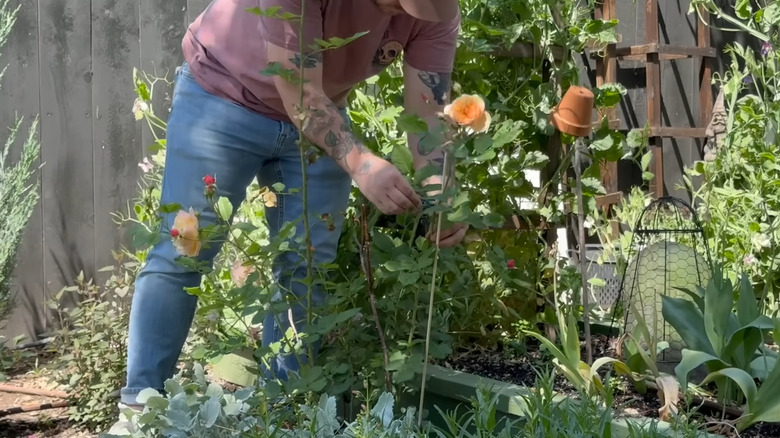
Sometimes plants need a little extra support to grow upright without flopping over. While some jobs call for a tall, sturdy trellis or other large support structures, smaller individual stems might just need a little support. The 32-inch Cooking Concepts Bamboo Skewers could be an option in those situations. They're tall enough to support most plants, but they're thin and naturally colored, so they blend into the garden instead of standing out. Plus, you can easily move the skewers if needed by lifting them out of the soil and reinserting them.
When you have a slender, floppy plant, press one of the bamboo skewers into the soil right next to it. Then, simply use a plant tie or clip to secure the stem to the skewer. Dollar Tree sells the Garden Collection Plant Clips. Or, grab a piece of Crafter's Square Craft Fabric and cut it into strips to create simple ties. The bamboo skewers also come in shorter lengths if you're dealing with floppy low-growing plants.
Mesh laundry bags for fruit protection
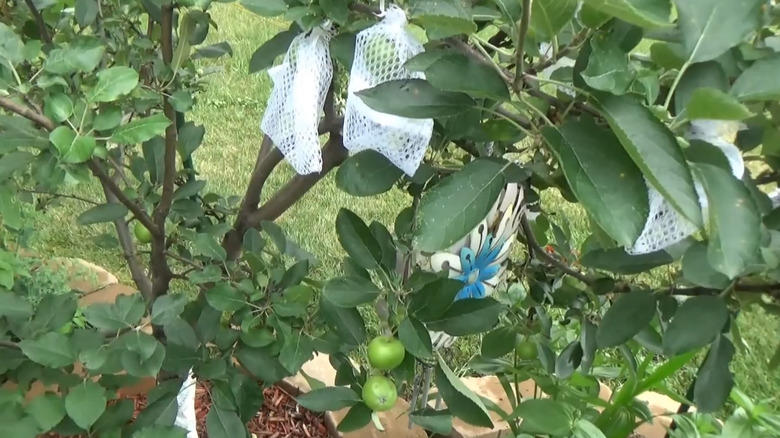
Looking for tips and tricks to prevent birds from munching on your garden fruit? It's frustrating to lose your harvest to critters. The answer could be lingering in the aisles of Dollar Tree. This garden hack uses the small Essentials Mesh Laundry Bags as a mini cover for delicate fruit. The mesh design helps keep birds away from fruits and veggies while they're still growing on the plant.
You can use the full bag — unzip the bag and slip the fruit inside. You can then close the zipper up to the stem, or use a twist tie to hold the bag closed around the produce. Or, for smaller bags, cut the mesh bag into four sections, and sew up the sides so there's only one open side on each bag. Bunch the mesh around the fruit and use string, a twist tie, or a zip tie to secure it around the stem of the plant. You can easily take the bag off when it's harvest time.
Binders for seed organization
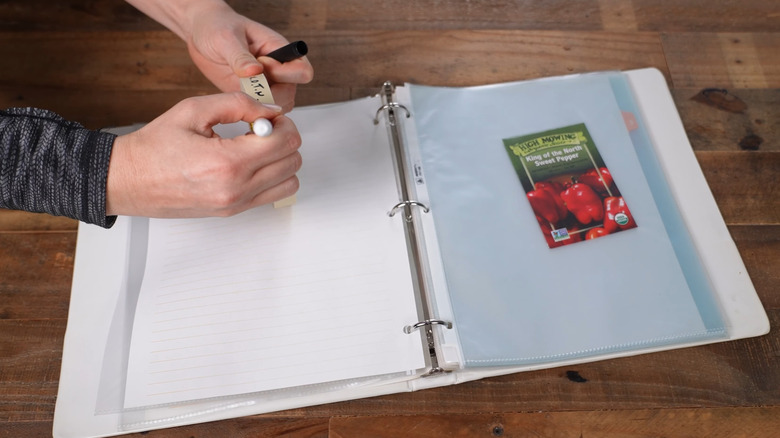
The best places to store seeds are areas that are dry, cool, and dark. Beyond that, there's a lot of flexibility in the container you use for seed storage. If you want to organize a collection of seed envelopes in one spot, grab a Jot Three-Ring Binder from Dollar Tree. You'll also need baseball card holders, page protectors, or Jot Three-Hole Binder Pouches to hold the packets. The clear design of all of these inserts lets you see the seed pouches (and all of the information printed on them) at a glance.
The advantage of the binder pouches is that they zip up, so the seed packets will stay securely inside. Clip them into the binder, add your seeds, and label each pouch so you know what's inside. If you use basic page protectors, you'll want to use a piece of tape or a paper clip to keep the open top secured, so the seed packets don't fall out. Photo pages or baseball card pages have individual compartments that will hold seed packets inside.
Plastic, lidded containers to make supplement shaker bottles
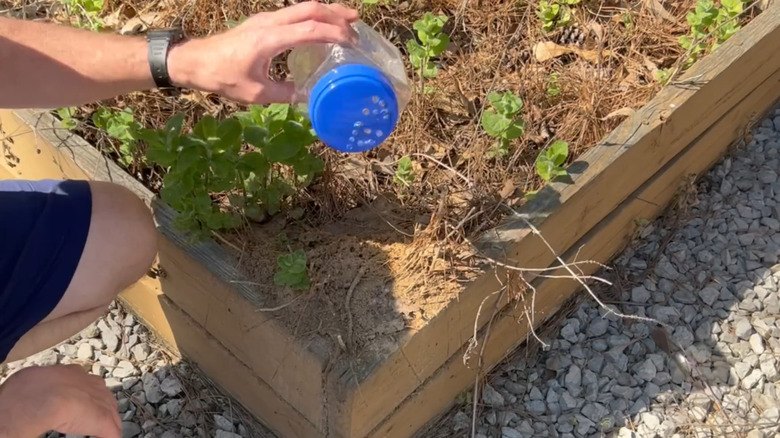
From fertilizer for nutrients to diatomaceous earth for pest control, supplements and additives can help you grow a healthy, lush garden. You don't need a fancy spreader or gadget to apply those supplements, though. Instead, head to Dollar Tree and grab a Sure Fresh Plastic Canister With Twist-On-Lid to create a DIY shaker. The inexpensive container is easy to fill, thanks to the screw-top lid, and it's simple to punch holes through the lid to control the rate at which the contents pours out. Plus, this specific plastic container features indentations to give you a good grip while you shake it.
To prepare the container, drill or punch holes through the plastic lid. While the container is reusable, the plastic is relatively thin and should be easy to puncture. The size and spacing of the holes depends on the size of the material you're dispensing. Granular fertilizer will likely require larger holes to let the particles out than diatomaceous earth, which is a fine powder. Once the lid is prepared, pour the fertilizer or amendment into the container, and screw the lid on tightly. Mark the outside of the container clearly so you always know what's inside. When you need the amendment, grab the container and sprinkle it on the garden.
Deviled egg holders for starting seeds
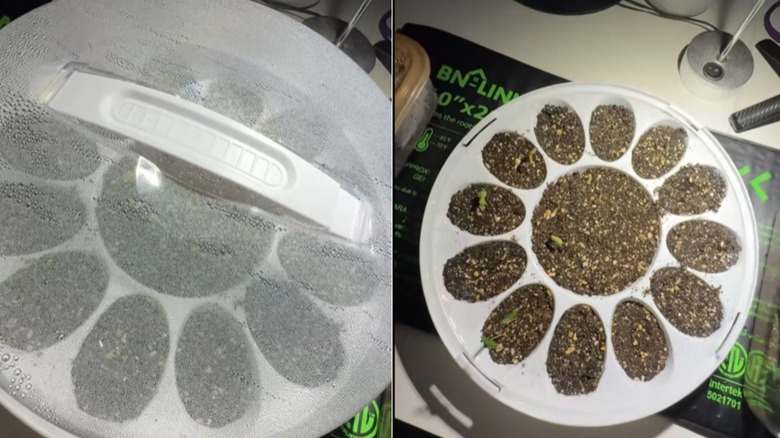
Who would have thought that the Sure Fresh Deviled Egg Carrier could be so versatile? On the surface, it seems like one of those niche items that you probably don't really need and which will just take up space in your cabinet. After all, how often do you make deviled eggs? But deviled egg trays are the Dollar Tree containers every gardener needs for starting seeds. When you look at that design, it makes perfect sense. The tray is already divided into shallow individual sections, so you can start multiple garden plants in a small area to give them a jumpstart on the growing season. Each try includes a lid, which acts as a mini greenhouse to help keep the seedlings warm and moist.
Poke a few holes in each egg slot for drainage, then fill them with potting soil or seed starting mix, water the soil, and plant the seeds. The lid helps keep moisture in, but you also need air circulation — consider poking holes through the plastic lid or propping the lid open a bit. Keep the lid off after germination to prevent molding or other moisture-related issues. When the seedlings are ready, pop each one out of the section, and plant it in the garden.
Glass bowls and gemstones for a bee watering station
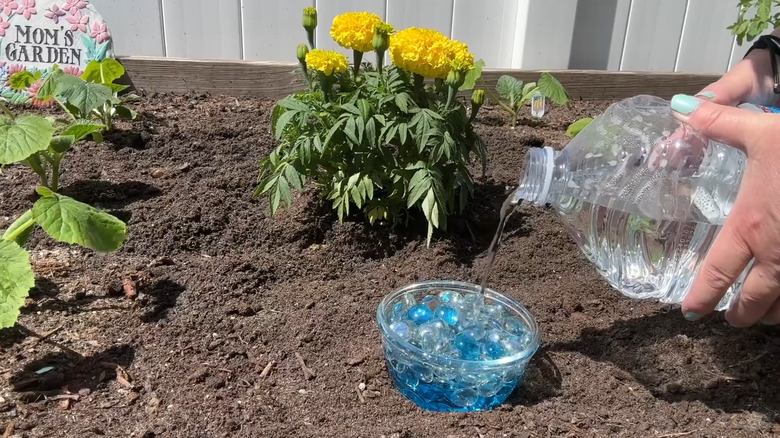
Creating an in-garden watering station for your local bees can invite these helpful pollinators to linger. Bees need water to regulate the temperature in the hive during hot weather and to produce wax and honey. Water is also an important part of a bee's diet, especially young bees. You can do your part by grabbing a wide, shallow vessel, like this Decorative Glass Bowl (or any glass bowl from Dollar Tree), and the glass gemstones of your choice — you should find them in the craft section of your local Dollar Tree. These Floral Garden Ocean Blue Glass Accent Gems add a little color to the design, but any type will work.
To make the bee watering station, fill the container with the gemstones. Then, add water. Bees can drown in deep water, which is why you need the gemstones. Your pollinator friends can safely stand on the stones to access the water without getting in too deep. Finding a spot for the bee watering station near the flowers that they love can help them find your pollinator-friendly watering hole. Make sure you check the bowl frequently and fill it when necessary to offer a consistent source of water.
Clothespins and skewers for simple plant labels
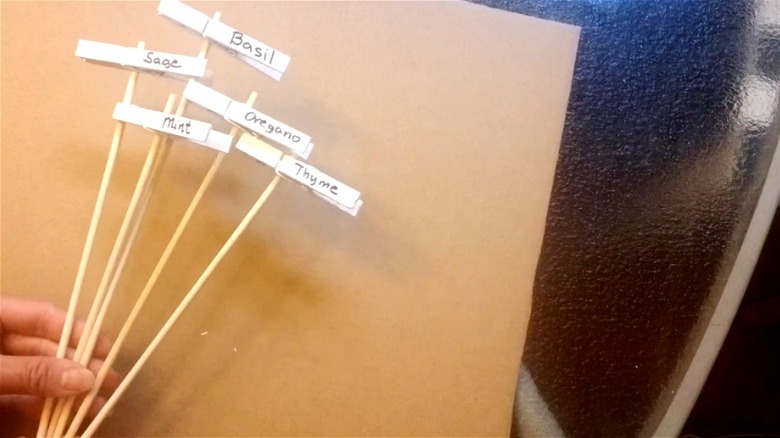
There are plenty of creative DIY garden labels using common household items, including these clothespin stakes. They require only simple bamboo skewers and clothespins. If you don't have those items on hand, you can use a pack of Cooking Concepts Bamboo Skewers and Crafter's Square Wooden Clothespins from Dollar Tree. Labeling your plants might not seem like a big deal, but it's essential to know what's growing where so you can give each plant the right type of care. Even if you think you'll remember where you planted everything, it's not always easy to identify the plants, especially when they're first sprouting. And if you're planting multiple varieties of tomatoes, peppers, or other favorites, you'll want to know which one you're picking.
Paint the clothespins if you want to add some fun color (or if you want to color-code different types of plants), and write the name of the plant in permanent marker. A coat of sealant can protect them from the elements. Then, clip the clothespin onto a skewer and press it into the ground near each type of plant.
Pool noodles for easy irrigation
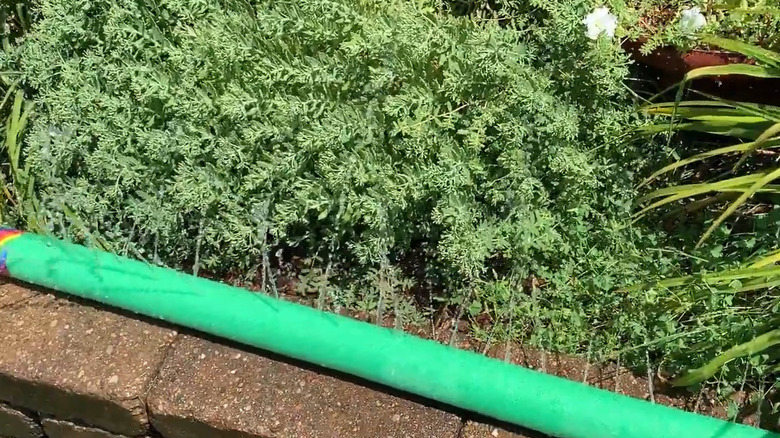
There are plenty of reasons to stock up on the brightly colored foam pool noodles from Dollar Tree when you spot them, including this easy pool noodle hack that makes watering your garden a breeze. Pool noodles might be intended to support beginning swimmers and to encourage fun in the water, but the closed-cell foam used in the construction to make them water-resistant and buoyant also works remarkably well in home improvement projects and crafts. And that leads us to this DIY sprinkler that easily waters a long stretch of garden without you manually spraying the hose on the plants.
To make this inexpensive sprinkler, use a skewer to poke holes through the top of the pool noodle to the center cavity. You can add holes on the sides as well, depending on how much water you want coming out and which direction you want the spray to flow. To force the water out of those holes, you'll need to cover one end — wrap the hole in sturdy duct tape or lodge a rock (or something similar) into the hole. You can tuck the pool noodle into your gardening area and leave it or move it into position each time you irrigate. To use it, simply put the end of the hose in the open end of the noodle and turn on the water.