

What To Do If There Are Holes On Your Hosta Leaves
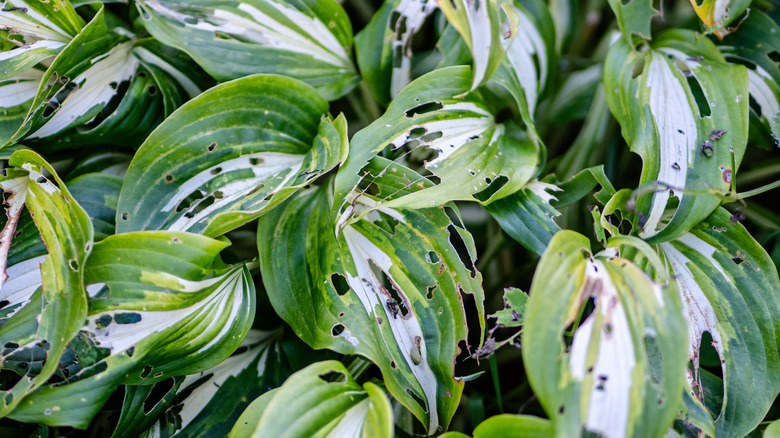
At first glance, those unsightly holes in your prized hosta leaves can all look pretty much the same, but in order to stop them from becoming a season-long nuisance that could ultimately kill your hostas, it's important to take a closer look. Identifying the hole-causing culprits will enable you to attack the problem head-on in the form of setting appropriate traps or spraying the plants with the proper insecticides.
The easiest "villain" to identify is the weather. The jagged holes caused by hailstones look quite similar to those caused by slugs. Recent severe weather and damage confined to top leaves point to hail, but if there have been no such storms recently, chances are slugs have caused the damage. These pests are active in spring and summer. Aside from the jagged nature of the holes, look to see if they've horizontally crossed the vertical veins — another "sluggish" giveaway. Of course, the presence of the squishy, brownish pests themselves will also confirm the matter, as will their slime trails.
Unlike slug and hail damage, variegated cutworm holes cause smooth, oval slots that tend to occur between the veins rather than going across them. Cutworms, which are more active in the spring, have yellow diamond shapes on their dark bodies. Earwig damage can look like slug damage but without the telltale slime trail. Look for the pests themselves to confirm. Earwigs have reddish-brown, segmented bodies and long pincers. Leaf beetles and blister beetles are more likely to chew holes on the edges of plants as well as skeletonizing large sections of the leaves themselves.
After IDing the pests, it's time to eradicate them
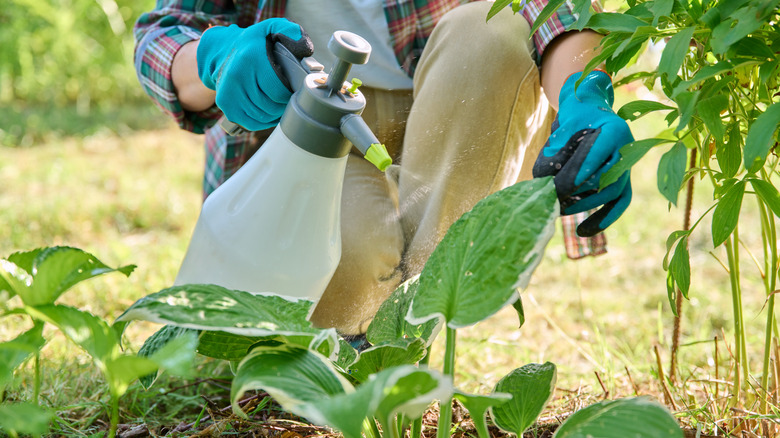
When dealing with slug problems, handpicking can be surprisingly effective, especially in the morning or evening. Shallow lids filled with beer are also useful traps, especially if you empty and refill them often. Both methods are non-toxic ways to keep slugs from damaging your hostas. If you'd rather go the repellent route, set copper strips around the perimeter of your hosta bed. When it comes to dealing with blister beetles, wear gloves to avoid those notorious blisters. Even if other beetles are the cause for hosta holes, the treatment is the same. Insecticidal soap that lists beetle control as among its targets will likely be the best method. Follow directions carefully and spray the leaves thoroughly.
To banish destructive cutworms from your hostas, turn up the soil in the areas surrounding your hosta bed so that the worms will be exposed to hungry birds. Wood ash or diatomaceous earth act as a repellant, while sprinkling a bit of bran meal or cornmeal in a line leading away from each hosta plant will both divert the cutworms and ultimately destroy them.
Bran can also be the key to luring earwigs into a trap. Use empty paper towel tubes sprinkled with a bit of bran. Place the tube near your damaged hostas and knock any earwigs you find hiding in the tubes into a pail of soapy water. Other control measures for earwigs include partially burying shallow containers filled with soapy water or vegetable oil and regularly emptying and refilling these traps.