

What's The Average Lifespan Of A Cobblestone Driveway?

Cobblestone is a driveway material that's sure to boost curb appeal, and for good reason. The natural stone surface gives your home a classic look that never seems to go out of style. Many homeowners choose cobblestone for its beauty, but one of its biggest advantages is its incredible longevity. A properly installed cobblestone driveway can last well over 100 years, making it one of the longest-lasting driveway materials available.
Some historic cobblestone roads in Europe and the United States have remained in use for centuries. When it comes to durability, cobblestone generally outlasts concrete and asphalt by decades. Dense, natural stones handle heavy traffic, temperature changes, and harsh weather better than many other paving materials. Part of the reason it lasts so long is that the stones are individually laid rather than poured as one surface. The layout allows the driveway to flex with ground movement and freeze-thaw cycles instead of cracking as easily as poured surfaces. If a single stone becomes loose or cracked, it can be replaced without damage to the rest of the driveway. Although it's more expensive than most other driveway materials, many homeowners see the investment as worthwhile since replacement is rarely necessary.
Proper installation affects a cobblestone driveway's lifespan
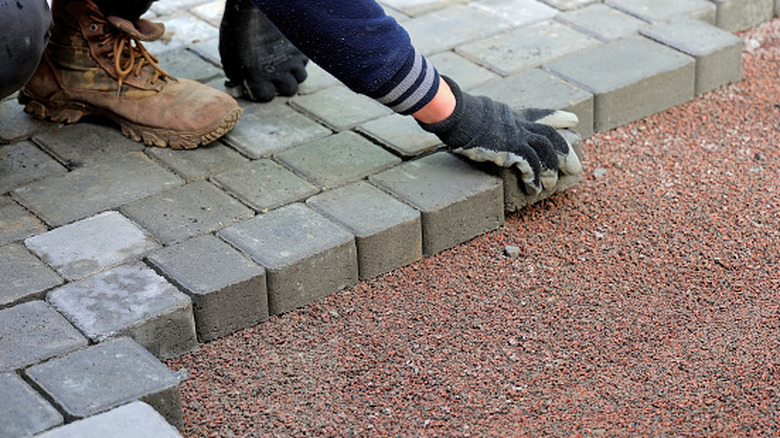
A cobblestone driveway's longevity relies heavily on proper installation. Installation needs a solid foundation beneath the driveway, excavated at a depth of 8 to 12 inches. The base then usually consists of 4 to 6 inches of compacted gravel along with proper drainage layers beneath the stones. Without good drainage, water can settle beneath the stones, which eventually causes sinking or shifting. Finally, a 1- or 2-inch layer of coarse sand is added before the stones are laid. The average installation cost for a professional cobblestone driveway ranges from about $8,600 to almost $25,000, depending on size and design.
Another factor is the material itself. Granite or basalt cobblestones typically last longer than sandstone or limestone varieties. That is because they are denser and less prone to erosion from rain or changing climates. It's important to choose carefully when installing or upgrading a driveway, since cobblestones come in many patterns, shapes, and stone types. The upkeep is fairly simple once the cobblestones are in place, so it's a low-maintenance material that gives your driveway an upscale look.
Regular sweeping helps prevent dirt buildup. Occasionally rinsing the driveway with a hose can remove grime before stains develop. During the winter, snow removal can be challenging. Don't use salt de-icers on the stone, but opt for sand along with careful shoveling. Keeping weeds out of the joints is important because roots can contribute to loosening the surface. You might consider using polymeric sand between the stones as a way to support and stabilize the joints. It is also an excellent solution to keep weeds out of your driveway gaps.