

15 Things Professional Landscapers Wish You Knew
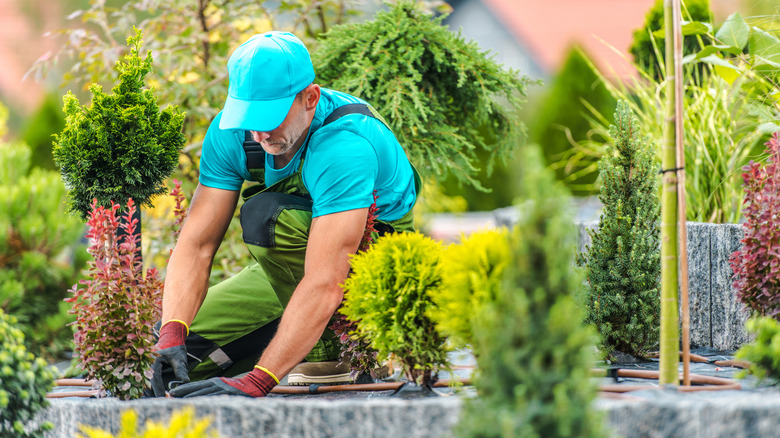
To those of you about to embark on a landscaping project, can we ask: Have you sought the opinion of a professional? While there are plenty of ways to refresh your backyard on a budget by forgoing the cost of expert help, doing so could prove costly in other ways. For example, have you assessed the rules in your area, and identified the areas of your yard that you're allowed to alter? Do you know precisely how much sun your shiny new patio area receives at different times through the year? Are you absolutely certain that your budget can stretch to the landscape you have in mind?
These are just some of the things professional landscapers wish their clients had known before diving into their garden upgrades. And it's those that we're here to help you get ahead of. In exclusive interviews, we reached out to four professional landscapers to help us identify the most common pitfalls when it comes to home landscaping. From legal misunderstandings to mistakes that will jeopardize the health of your lawn, if you're gearing up for a new garden, avoiding the following pitfalls is sure to keep your project moving smoothly.
Setbacks and easement rules need to be adhered to
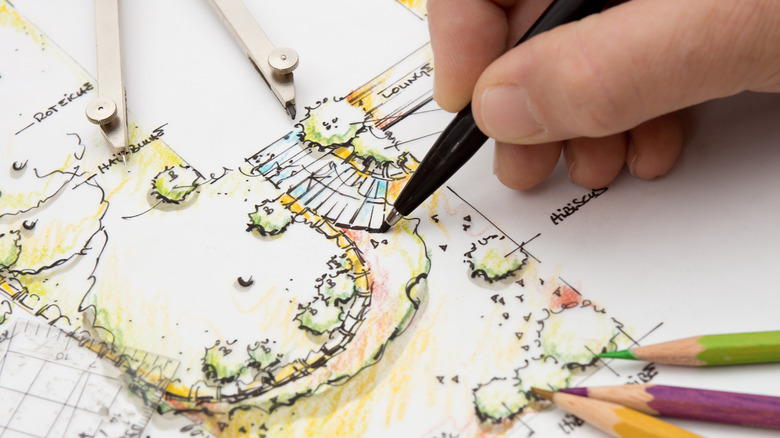
Speaking exclusively with House Digest, Brad Holley, owner of The UnDesign, explains how easy it is to accidentally ignore property setbacks and easements. The nature and specific rules around these vary between states and regions. Generally speaking, though, says Holly, "Setbacks are a collection of invisible lines that run through your property, dividing the space into areas that you can do whatever you want with, and areas that have limitations." The example he offers in his own area of North Texas is that you're not allowed to build anything within 3 to 5 feet of your property lines, which includes shade structures, walls, water features — anything that requires digging into the ground, sinking a post, or pouring concrete. Easements, meanwhile, are similar to setbacks, but are specific to each individual property. Some homes may have more than others; some homes may have none. Easements exist to provide either your local authority or another third party a legal right to access — for example, utility line maintenance.
The long and short of it is this: Don't ignore setbacks and easements. You can add planters and groundcovers to these areas, says Holley. But anything else risks legal recourse. "Not only could they get a major fine ... but the ensuing damage could cost tens of thousands of dollars (or more) in repairs or lawsuits."
How the sun angle affects your yard throughout the year
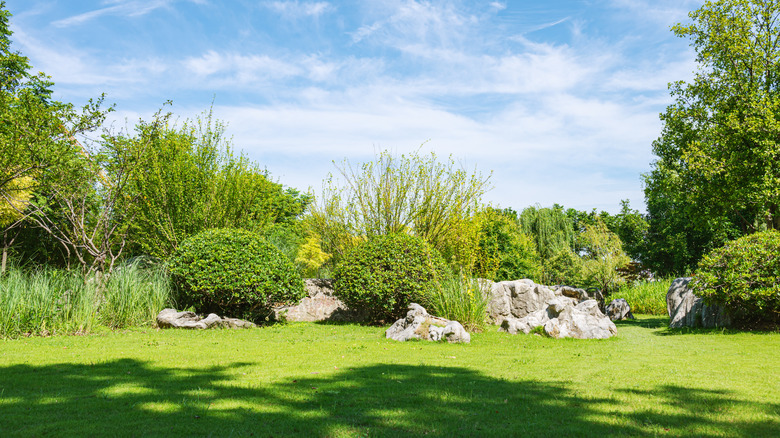
Understanding how the sun behaves in your garden is key to maximizing the color in your yard. But before you decide to set aside an afternoon to watch the sun, be warned that it's one of several mistakes you could be making when trying to build a sun map. Or, as Brad Holley puts it, "That's child's play. I want you to figure out how light and shade fall on your yard, not only throughout the day, but throughout the entire year." He explains that many homeowners fail to fully understand how the sun's arc changes through the year. And yet, only by mastering this concept can you determine which plants are best for your garden — and where is best to plant them.
"The good news," says Holley, "is you don't have to be Aristarchus of Samos to figure this out." By enlisting the help of a professional, he explains that you can benefit from their specialized design software that anticipates sun-based changes. Using this, they can then design a landscape for you that factors where the sun and shade will fall anywhere in your yard, on any given day.
How important drainage is
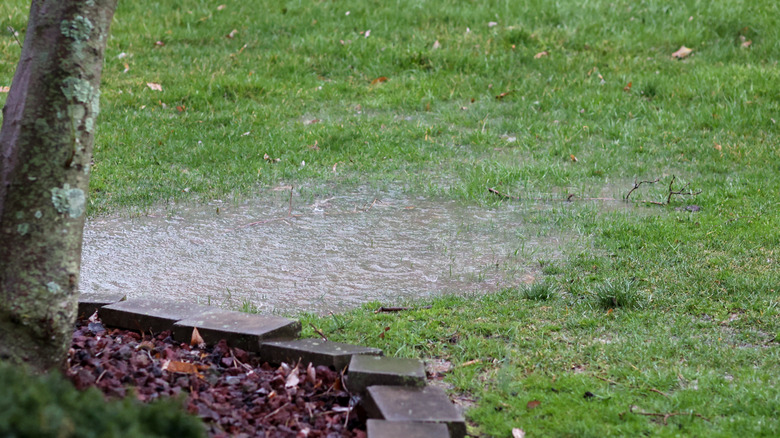
Even if your garden is currently free from drainage problems, Brad Holley explains that changing the landscape can quickly upset the balance. If not properly accounted for, water can pool in your yard, suffocating the grass. Pooling can also attract pests like mosquitoes, uncontrolled streams of water can erode the soil, and in extreme cases, it can erode the foundations of your home. Fortunately, there are various drainage solutions to help prevent overflow in your yard — solutions that a professional can easily advise on.
Alternatively, Holley suggests trying to picture how your landscaping changes will behave before you make them. "No matter what you're changing in your yard, before you do it, I want you to close your eyes and imagine that it's pouring outside." He says to try and imagine which pathway the rainwater will take when it hits the ground. Is your landscape designed to funnel it away and drain? Or are there natural low spots where it'll pool? Use your findings to inform your strategy, and if necessary, adjust it to avoid problems.
Being realistic and honest about your budget is critical

Understanding what your budget can actually afford is key in landscaping. While we would never discourage you from daring to dream, we would nevertheless recommend drafting a shortlist of the things that are most important to you. Once you have those, Brad Holley says you need to factor in the costs that come with each of them. For example, on a DIY project, he suggests pricing up the required tools and equipment. Alternatively, if you need professional help, working out the cost to hire a garden designer will help to avoid unwanted financial surprises.
If you do need to meet with a professional, Holley encourages you not to feel nervous about sharing your budget. "Most aren't asking so that they can initiate some sort of "hardball" negotiation." Instead, he explains, they simply want to know what they have to work with, so that they don't accidentally "over-design" something that you can't afford. To further ensure you get the most bang for your landscaping buck, he advises that you shop around for contractors. "Getting multiple opinions helps you determine who is being honest and who might be trying to take advantage of you."
Not considering ongoing maintenance is one of the most common landscaping mistakes
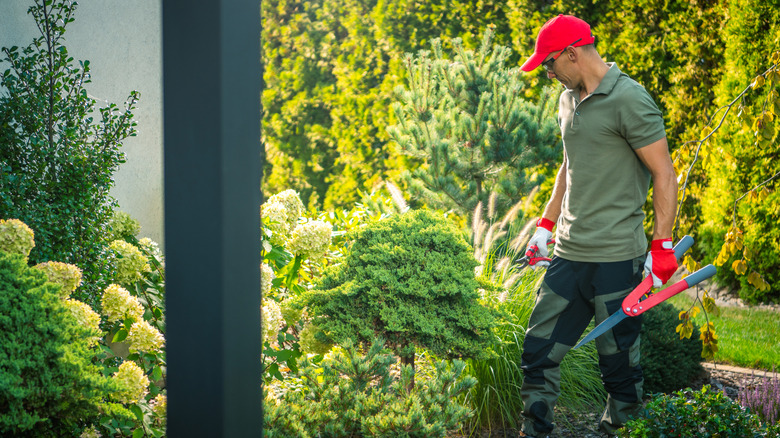
Having (and paying for) your dream landscape is one thing. Maintaining it is quite another. At least, it can be, says Brad Holley. And it isn't just the time that you'll need to spend on maintenance that requires careful thought, either. "There is a price that you will pay to install or build something today," he explains, "and there is another price that you will pay, each year, to keep it clean, protected, and thriving."
If you're planning to maintain your garden yourself, Holley suggests working out what it'll cost you in both time and money to keep things looking pretty. Alternatively, if you intend to enlist professional help, then it pays to know what's appropriate to pay a gardener. Armed with that information, it's then important to shop around. When you do, ask your prospective gardeners: Do they charge by the hour, or do they have a day rate? How many of those hours and days will they need each year to keep your garden looking fresh? Then ask yourself: how many more seltzers will you get through on the weekend when you're not having to do the work yourself? As the old adage goes, it all adds up!
The maximum impervious coverage for your property
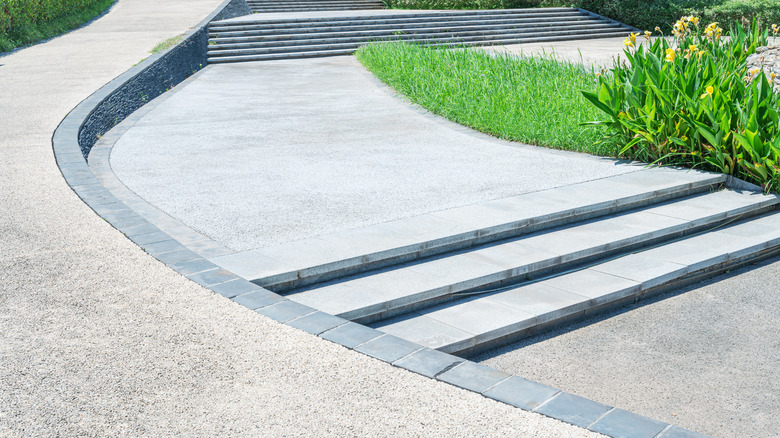
Impervious coverage typically refers to roofed structures and impermeably-paved surfaces. It includes the concrete footings for your garden shed, your driveway, swimming pools, and of course, your patio. In an exclusive interview with House Digest, Nate Fox, lead designer at Foxterra Design, explains that it's one concept he wishes every homeowner understood.
"Homeowners are often surprised to discover that even a large, open property may only allow as much as 30% of the lot to be built upon or paved," says Fox. He explains that the limits are set by local municipalities. This means that before you go finalize your landscape plans, it can pay to check with your local authority and make doubly sure that you're working within your limits. Like easements and casements, failure to abide could lead to costly fines, and even-costlier demolitions. But, by knowing and understanding these limits, you'll find it easier to plan a realistic landscape upgrade while avoiding future disappointment.
Getting estimates early, for different features, can help keep expectations realistic

As well as being upfront with contractors about your budget and prioritizing the things you can actually afford, Nate Fox says you should also check what products cost in your area. "Pricing for things like patios, pools, and plants can be opaque and vary wildly from state to state." It's also important to remember that costs will vary between regions, with pricing fluctuating in alignment with the cost of living in metropolitan versus more rural locales. As Fox puts it, "What may cost $50,000 in one region could easily run $80,000 or more in another, so getting local estimates early can save you from designing a vision your budget simply can't afford."
Like Brad Holley, Fox suggests talking to professionals. Shop around, and pick their brains about your ideas. They'll be able to help you understand what things cost in your area, and thus what you can realistically afford. This can help you avoid getting carried away with a long list of landscaping ideas, and thus prevent disappointment when you settle on a final design.
What features truly fit your lifestyle

As you begin to plan out your new landscape, which items are you most determined to include? Do you envisage a fully-fledged outdoor kitchen? Would you incorporate a stunning, modern water feature? How about a pool? Whatever they are, would you actually use them enough to warrant the expense? "Before diving into any landscape plan, I always encourage homeowners to ask themselves important questions about lifestyle," says Nate Fox. "For example, would you realistically use a full-scale outdoor kitchen regularly, or would you be better served by one that covers the basics?"
As Fox explains, it's very easy to get carried away when planning a new landscape. In the planning stage, what originally made the list as "nice to haves" can quickly turn into "deal breakers." When they do, your budget inevitably has to stretch even further. This is why he says it's important to keep your mind grounded in how you actually use your space. As he puts it, "forgetting your actual lifestyle can leave you with a stunning outdoor space full of features that never get fully utilized."
Designs that cater to the seasons can make your yard more useful
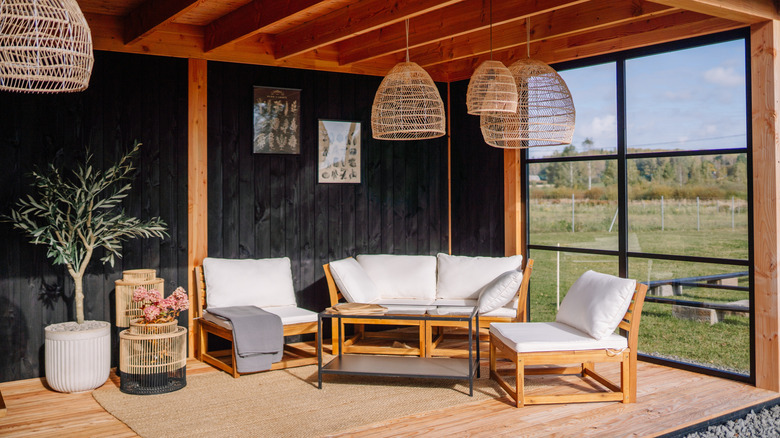
We've already learned that understanding seasonal sun patterns will help set you up for planting success. But it's just as important to understand how you would like to use the space year-round. For example, if you're designing the perfect patio for dreamy summer days spent grilling and relaxing with friends, then great! But what about the rest of the year? Will your space remain conducive to conviviality, even when the mercury starts to drop?
As Nate Fox explains, "Homeowners often overlook designing their outdoor space for all four seasons ... but a truly well-designed landscape should offer something in every season." Depending on where you live, he says that features like a covered fireplace nook can keep things cozy as the temperatures fall. Providing shade and shelter can also help to make your patio the ultimate outdoor entertaining destination, even when the weather starts to worsen.
It's easier to design from a clean slate, versus an overgrown mess
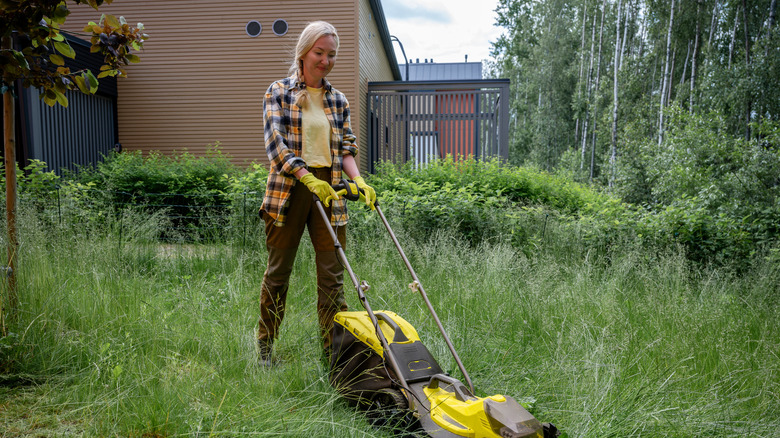
If your garden is already in a bit of a mess, and you're planning to re-landscape it anyway, what's the point of cleaning it all up? In an exclusive interview with House Digest, Sara Bendrick, Stihl USA spokesperson and a C-27 contractor at Sarita Landscapes Inc., explains that doing so can make the whole landscaping process easier. "Sometimes it is best to do a big yard clean up before designing or building," she explains. "If the yard is severely neglected, it might be easier to envision spaces once the yard is cleared and to see opportunities you might have missed."
As an example, let's say your tidy-up included cutting back a bunch of unruly shrubs. If that suddenly exposes your garden to the nosy eyes of your neighbors, then you might want to consider landscaping ideas to create more privacy. And don't forget, contractors are likely to charge more to bring your landscape to life if they first have to clear your overgrown garden. Handling the clean-up yourself could potentially shave a chunk off the final project cost.
Removing big trees isn't always a smart move
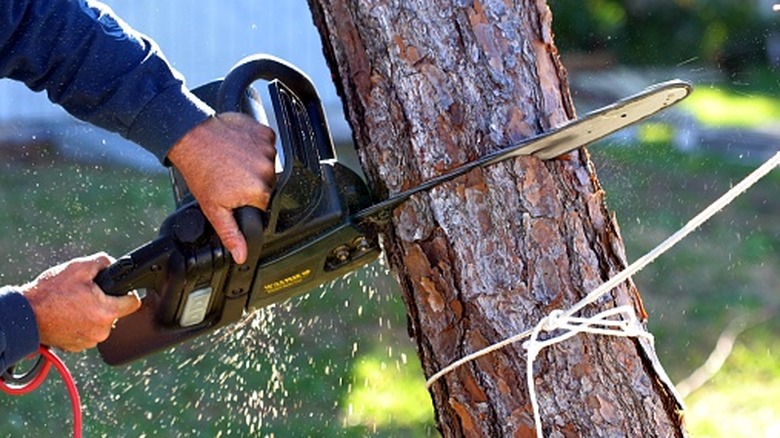
If you're contemplating removing a big tree to minimize landscape maintenance, then you're urged to reconsider. As Sara Bendrick says, "everything requires maintenance. Large trees, although they can drop leaves, offer shade, scale, and maternity to your yard." She also suggests that trees can add value to your property, since they take so long to grow big, and that keeping them in situ can actually help to increase your return on investment.
With that being said, there are certain signs that tree removal is actually the right decision for your yard. For example, Bendrick says that if it's having destructive consequences for the structures around your garden, then removal may make sense. You might also consider trimming the tree roots, however, doing so can cause serious harm to the tree. What's more, you should only trim roots under 2-inches in diameter, which may not be enough if you have chunky roots starting to dislodge your structures' foundations.
Buying smaller plants can help you save on costs
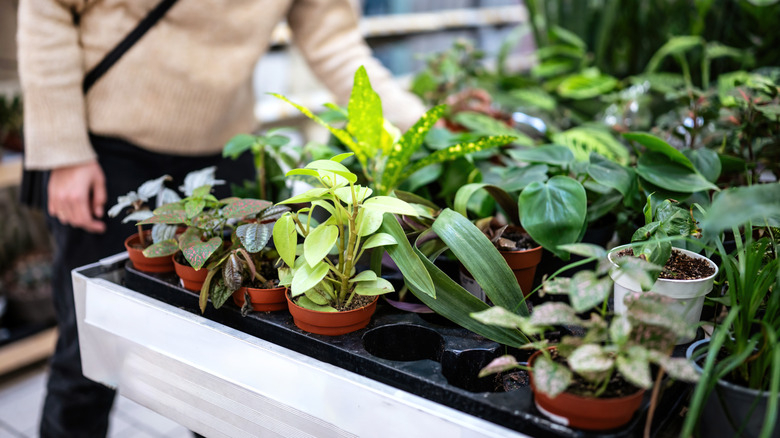
Our final tip from Sara Bendrick is to not get carried away with large, expensive plants. It's an easy mistake to make, especially if you're working with a sparse landscape that you want to "fill" quickly with new flowers and shrubs. But as Bendrick explains, "You can save a lot of money on a landscape renovation by reducing your plant container sizes."
She adds that, while smaller plants and planters may struggle to give your yard an immediately-established look, they will eventually grow in. What's more, she says, "reducing the size makes the labor cost and labor time go down," since larger plants inevitably require more work in order to embed them in the landscape. To make your efforts worth it in the long-term, consider choosing self-seeding flowers to effortlessly fill your yard with color. Self-seeding, dense-foliated plants will naturalize themselves given the right conditions, lending your yard an established, mature feel in the long-term.
Not factoring in deck space for walkways and stairs is a mistake
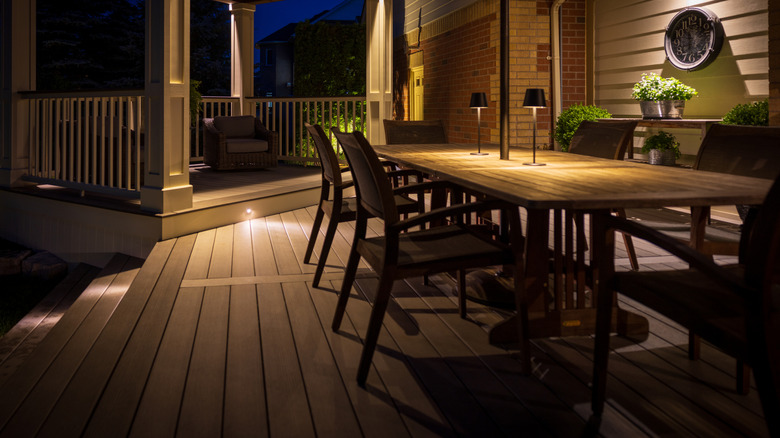
You've got your dream decking planned, you've specified your outdoor kitchen, and your container garden's flower seeds are in the mail. But have you considered how you'll move around your outdoor space? In an exclusive interview with House Digest, Andrey Likhman, owner and principal of Vandeck Builders, explains that failure to factor in walkways is a common landscaping mistake. "A lot of homeowners size their deck based on what furniture they want to fit, without thinking about how people actually move through the space."
He suggests thinking about things like doors and staircases, neither of which should be blocked by seating. You'll also want to ensure there's space to freely move around any chairs or tables. "I've seen plenty of 'spacious' decks feel cramped the moment the dining set goes in," says Likhman, "just because nobody accounted for the walking paths."
Choosing materials based on inspo images can lead to bad design

If you're in the throes of planning your new landscape, you've likely found yourself scrolling the boards of Pinterest or Instagram long into the early hours. And why shouldn't you? It's a great way to find inspiration! However, Andrey Likhman explains that lots of homeowners lose sight of how their social-media finds will flow with what's already in their yard.
As an example, Likhman says, "They might love a sleek gray fence they found online, but if the house and patio are red brick, that gray is going to fight the rest of the property." Instead, he explains that materials and colors should be chosen in the context of your existing home and garden. Choosing them in isolation, he says — purely because they looked great on social media — is a recipe for regret. It's especially true if your landscaping project is more about "additions" than a complete redesign, as there'll inevitably be "leftover" aspects that need to be considered. And don't forget, even if your yard is getting overhauled completely, your choices will still need to dovetail with the color and architecture of your actual house.
Underestimating planter weight on rooftop decks is a serious mistake
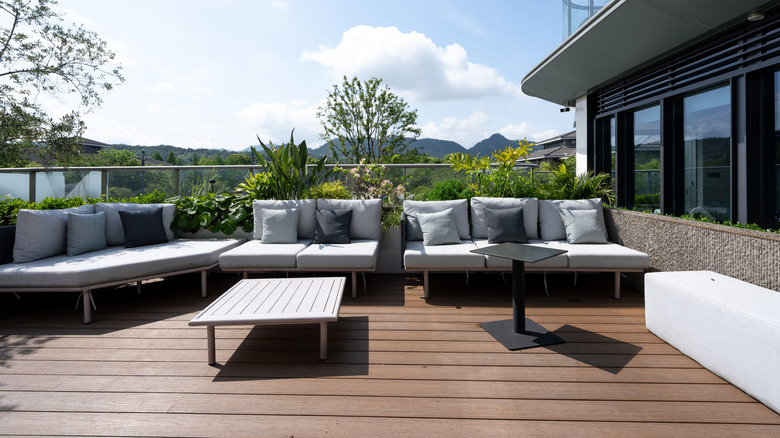
Whether you're building a patio or a raised deck, weight-bearing capacity is one of the most important considerations. It's perhaps never more important than with your planters, especially if your deck happens to be perched atop your roof. The problem, according to Andrey Likhman, is that, "People consistently underestimate how much a full planter weighs, and there's a lot that goes into the math." Wet soil, for example, is much heavier than dry soil. The plants also have their own weight, which increases as they grow, and certain planter materials are also surprisingly heavy. "And that's before factoring in snow, furniture, and people moving around."
On a rooftop terrace, says Likhman, every pound counts. If you hire a professional to install your rooftop area (which is almost certainly advisable), its load-bearing capacity is one of the first things they'll work out. They'll factor in the plants that you want, the flooring materials, your seating, even the number of guests you're likely to entertain — everything that's likely to put additional strain on your deck.