

8 July Tasks That Keep Your Garden Thriving And Blooming All Summer
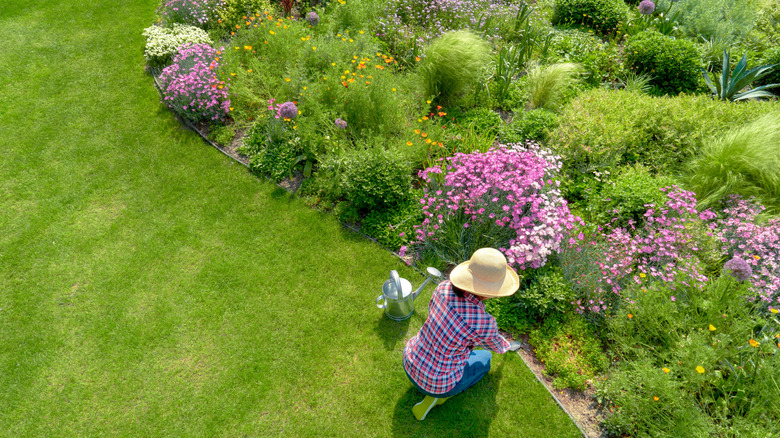
By the time July rolls around, most flower gardens look like they're on autopilot. Abundant flowers on tall stalks or supple branches sway in the breeze, and bright green foliage fills every other available space for growing. You probably know what we're going to say next: Looks can be deceiving. Any seasoned gardener knows that growing garden flowers that will have summer beds bursting with color requires ongoing care — you can't just focus on spring preparation and fall cleanup.
Weeding is a given; it's necessary in every season, especially summer. This task alone can take up a good chunk of your allocated gardening time every week. Deadheading is another necessary chore for some plants, though not every species benefits from it. Some flowering plants are heavy feeders, even in summer, but for others, applying fertilizer in the summer heat can do more harm than good. Still more greenery needs thinning out, while others require a major mid-summer chop. Do you know which ones need pruning?
Since July, like every month on the calendar, only comes around once a year, it's a good idea to make yourself a list of tasks to refer to. Did you glance through this list and exclaim, "Oh yeah, that!" or "This is news to me!"? If yes, then those are the chores you need to add to your own list to refresh your memory. Follow all the tips in here, and this July could have you showing off your best blooms ever to family and friends.
Adjust your watering schedule
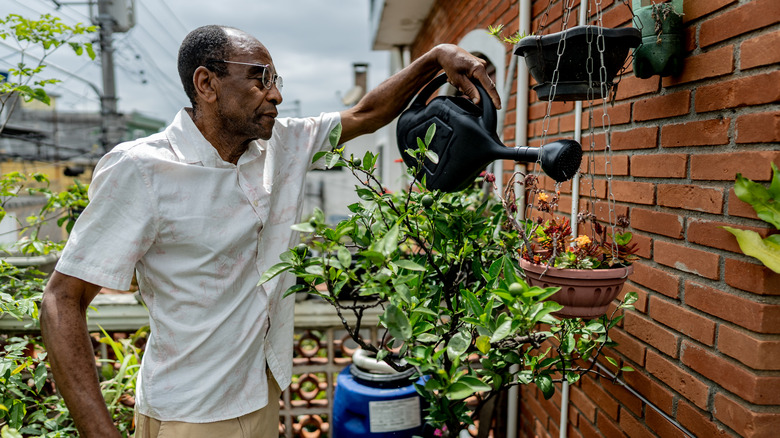
The mercury stays pretty high in July for many gardeners in the United States. Regular watering is a must if you're not getting sufficient rain. Play it safe by giving your flower beds a drink in the morning, doing your best to water at the soil level and avoiding wetting your plants' leaves. In hot, dry areas, give the soil a long, thorough soaking. You can also do this in the evening, but if you live somewhere humid, morning watering is a smart strategy. Your greenery will dry out during the day, avoiding issues like mildew.
To deadhead or not to deadhead? It depends
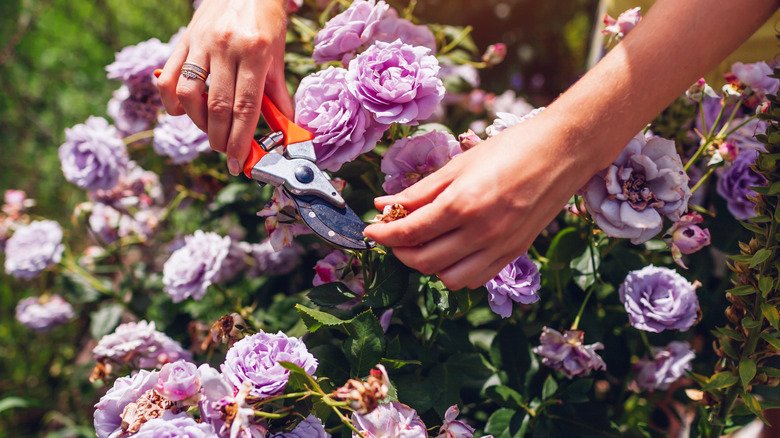
There are many perennials you should deadhead for blooms that keep coming — think bee balm, blanket flower, geraniums, globe thistles, and delphiniums, among many others. Keep your clippers handy for such plants. However, pinching or trimming off wilted blooms in summer isn't necessary for every flowering plant in your garden. Keep flowers on perennials you want to re-seed, like hollyhocks, cardinal flower, and forget-me-nots. Plus, leaving the flowers on your plants ensures lots of seeds for hungry wildlife during the cooler months.
Cut back flowering plants for a second blooming
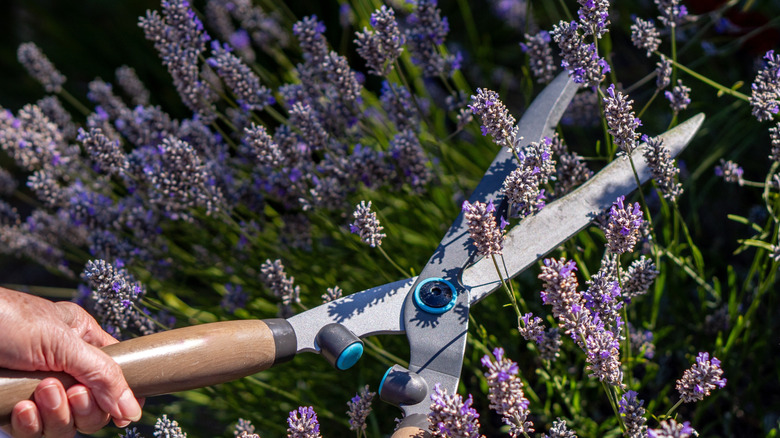
Gardeners often think pruning is only necessary for trees and shrubs. That's not entirely wrong, but pruning overgrown flowering plants can also be helpful. It increases air flow around the crown, which helps keep the plant healthy, and may even free up some energy for a second round of summer blooms. Cut back Shasta daisies, blanketflower, and coreopsis, among other species, by about one-third in July to encourage another flush of flowers.
Prune leggy bushes and vines

Many spring-blooming bushes and vines set their buds for next season on new growth, and pruning them in summer will jeopardize next year's bloom. However, plants that bloom on old wood can benefit from a summer trim. Forsythia, deutzia, Natchez mock orange, chenault viburnum, and American wisteria (Wisteria frutescens) all thrive after a July haircut. Pruning some shrubs, like reblooming roses and 'Black Knight' butterfly bush (Buddleja davidii 'Black Knight') may even trigger them to flower for a second time in summer.
Plant fast-growing seeds and biennials
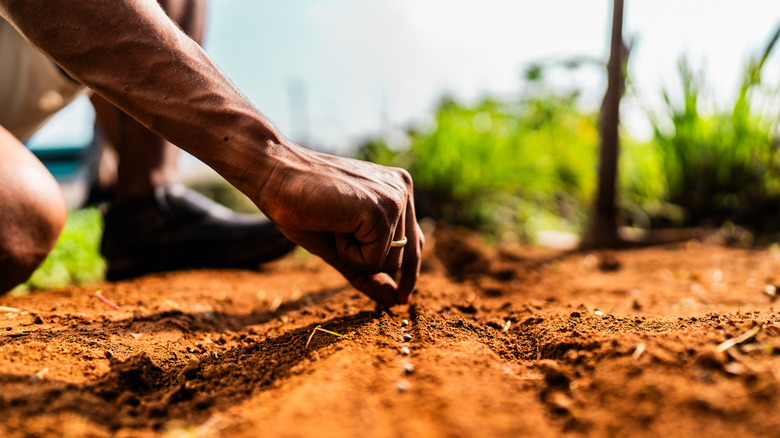
In July, most spring and early summer flowering plants are winding down their activity. That frees up space for fast-growing plants — sow them now to enjoy their blooms in just weeks. Unless you live somewhere extremely hot, scatter cosmos, red poppy, or zinnia seeds to bring more pollinators to your yard and garden. If you also want to boost next year's floral bounty, July is prime time to plant the seeds of biennial species, like foxglove, wallflower, and annual honesty.
Feed your nutrient-hungry flowering plants
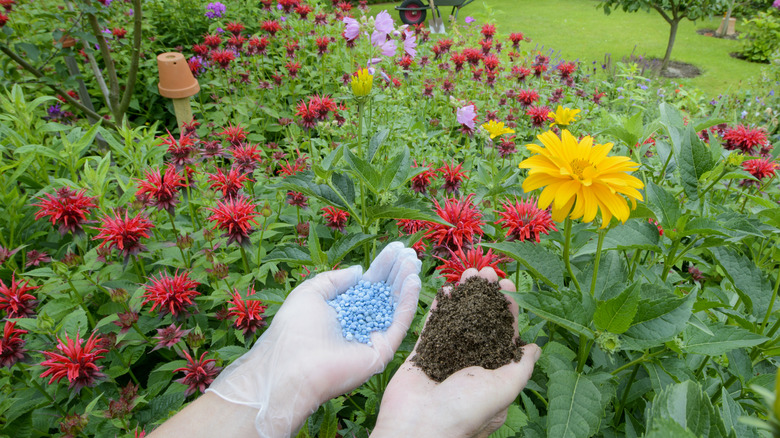
Fertilizing plants in sweltering temperatures is a summer gardening mistake that's ruining your perennials. If your plants are showing signs of heat stress — for example, curled, wilted, or browning leaves — hold off on applying fertilizer. However, some particularly nutrient-hungry flowering plants need a dose of food in July. Roses, dahlias, and sweet peas get snacky in July, so fertilize them if they're looking stress-free. You'll likely need to stop fertilizing all your perennials by the end of July, though. New growth is vulnerable to fall frosts.
Pull up, divide, or plant bulbs, rhizomes, and tubers
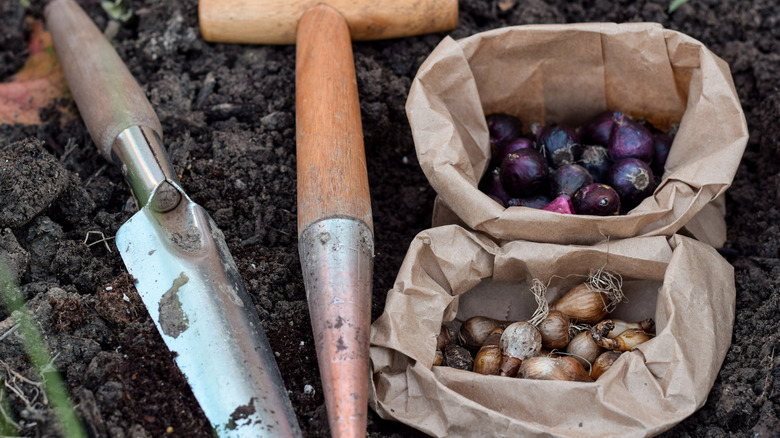
Join the underground garden movement in July! Summer is the time to pull up or divide certain spring bulbs and plant fall bulbs and tubers. Pull up and store allium, eremurus, and lily bulbs for future seasons. In their place, plant fall-flowering bulbs like sternbergia, nerines, and colchicums. If three to five years have passed since you first planted your irises, they're likely itching to be divided this July. If the first frost is still over three months away, you can plant dahlia tubers for blooms by early October.
Harvest flowers and cuttings
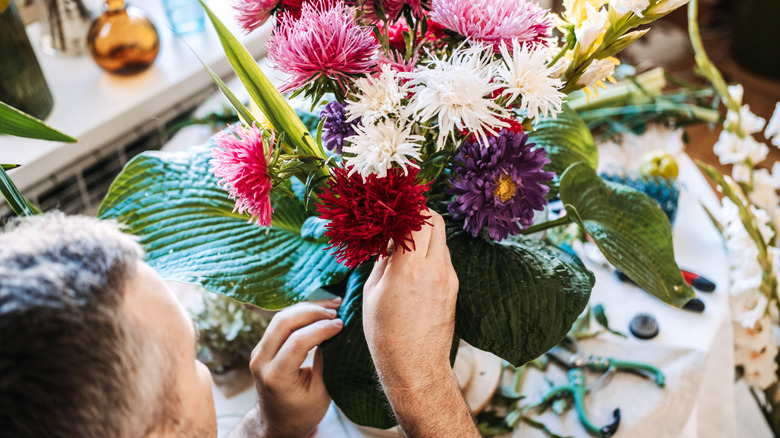
Floral abundance is best enjoyed outdoors as it grows. However, cutting flowers before they go to seed has practical and pretty purposes. Annuals that reseed give you a gift you get to enjoy next year, but you might not want quite as many replacement plants as your current blooms will provide. Cut them for fresh bouquets, or dry them for later. Don't toss the plant cuttings from your bushes and vines into the compost heap, either. Save a few to propagate. Choose softwood cuttings between 3 and 5 inches long that have two or more nodes.