

Every 2000s Home Loved It: The Paint Trend That Didn't Age Well
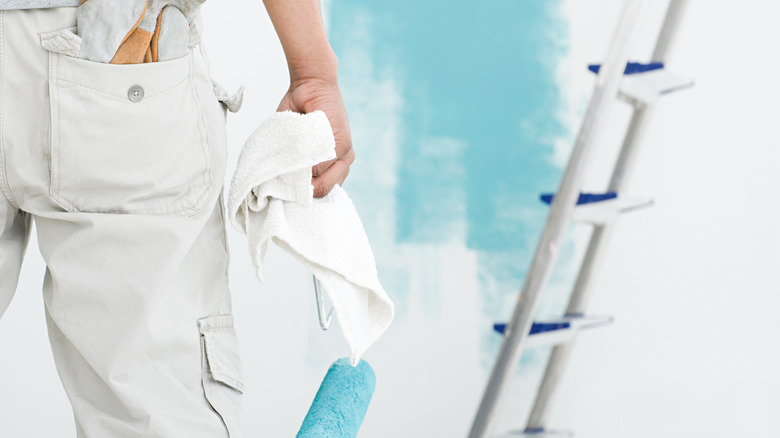
Do you have a wall in your now-college-aged child's bedroom that was painted so that it looks like an undersea swirl of various shades of blue? You're not alone. It wasn't uncommon for homes of the early 2000s to showcase various trendy or quirky painting techniques as a way of adding texture or interest to their interior design. Homeowners used faux finishes as a way of incorporating variety and depth. However, detractors contend that these paint techniques are among the worst 2000s home decor trends. One style that included a distinctive mottled, layered appearance provided the telltale signature of rag rolling. The commonly-used DIY faux finish involved bunching up a rag or piece of fabric and rolling or pressing it across a wet painted surface to create a watercolor effect of swirling, dimensional patterns. It was unique, affordable, accessible, and everywhere.
But when it comes to adding texture to your walls with a ragging paint method, the appeal lies in its ability to mimic antiqued or shabby chic aesthetics harkening to the charming, aging walls of a villa in Tuscany or a rustic French estate in the country. The problem? That romanticized, distressed quality is precisely what makes it look so out of date in homes today. Not only that, but faux finishes also become too common, losing its appeal. A few decades into the 21st century, finds many homeowners looking for a matte, solid finish that works well with the softscape textures in their decor.
Why you'll want to smooth over the rag rolling trend
Rag rolling is one of the old-school home decor trends that didn't age well. Much of modern design has moved away from faux paint finishes toward simpler or smoother looks while adding texture through the use of natural elements like stone. Relying on a wall finish style achieved by using techniques like rag rolling is fraught with downsides, from making your home look dated to adding unnecessary visual clutter to your room.
Even if you love your rag rolled, ocean-themed wall in what began as your baby's nursery, the 20 years that have passed should have made it worth painting over if only to freshen the look. Two other problems with textured walls like the rag rolled ones are that they create areas that compete with whatever you hang. Plus, they introduce shadows to the appearance of the walls, toeing the line of dim and dingy. Rag rolling is meant to make your walls more interesting and distinctive. However, it's more clean and stylish to let your photos or artwork draw focus instead of the wall. And if you want a room that exudes light and bright, avoid the shadows generated by the color variations or raised texture of rag rolling.
If you're still set on texture, limewashing, which uses crushed limestone to create an aged coating, is a trendy alternative to rag rolling and other faux finishes. It, too, has some drawbacks, which include the difficulty in creating the effect and its durability. Still, limewashing may be worth considering, nonetheless, for its versatility.