

How To Calculate Concrete Blocks Needed For Your Next DIY Project, So You Don't Buy Too Much
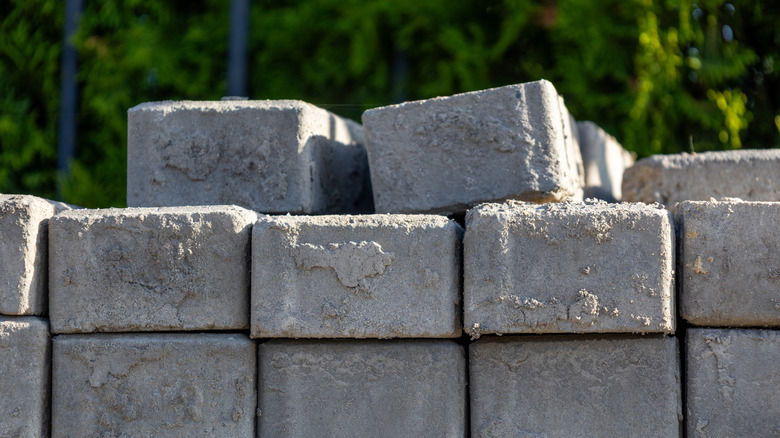
Whether you're building a sleek raised garden bed, looking to ditch traditional retaining walls for a modern landscape alternative, or taking on a full-scale hardscaping project, concrete blocks are one of the most durable and cost-effective materials you can use. But there's a fine line between a successful weekend DIY and a frustrating trip back to the home improvement store — usually caused by ordering either three blocks too few or three dozen too many. Luckily, taking the guesswork out of your masonry order doesn't require an engineering degree. With a tape measure and a simple surface-area formula, you can estimate your block count before you ever set foot in the building supply yard.
Calculating the exact number of concrete blocks for a project comes down to one simple formula: total wall surface area divided by the face area of a single block, plus a standard 10% safety buffer for cuts and waste. First, calculate the wall's square footage by multiplying its length by its height in feet. Be sure your height measurement includes any below-ground rows, since many retaining walls require at least one buried layer to properly anchor the structure. If your wall includes doors or windows, calculate their area (width multiplied by height) and subtract that from the total wall area.
Apply the formula
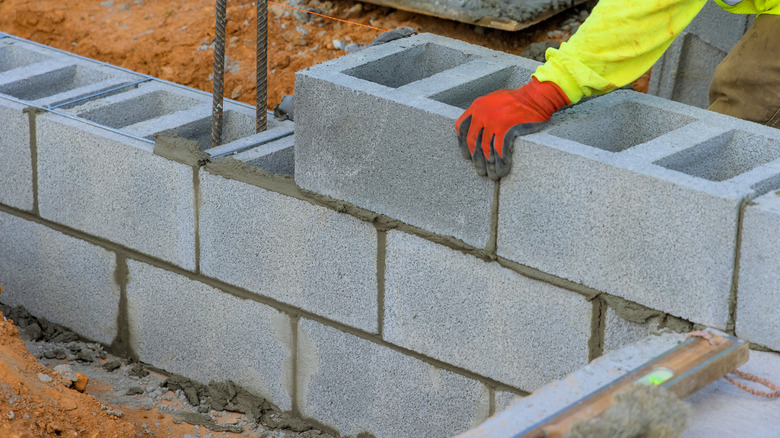
Once you have the net wall area, you can then determine how many blocks you'll need. It's easy to mix them up, but understanding the difference between concrete blocks and cinder blocks keeps you from buying the wrong material for a heavy-duty wall. Most standard units have nominal dimensions of 8 by 8 by 17 inches, which account for a standard 3/8-inch mortar joint. To calculate the surface area of a single block, multiply its height by its length in inches, and divide that number by 144 to find the square footage. This gives you roughly 0.89 square feet per standard block. As a rule of thumb, it takes 1.125 blocks per square foot of wall surface area.
With your wall's net square footage calculated, finding your baseline block order is as simple as multiplying that area by 1.125. For example, a retaining wall measuring 20 feet long by 4 feet high has a surface area of 80 square feet. Multiplying 80 by 1.125 gives you a baseline of 90 blocks.
Don't stop there. You should never buy just the baseline amount. Add a 10% safety buffer for cuts, corner staggering, and accidentally damaged units during transit. Bumping that 90-block baseline up by 10% (multiplying 90 by 1.10) gives you 99. Rounding up to an even 100 helps ensure you won't have to stop mid-project for an unexpected supply run.
Finishing steps to order just the right amount
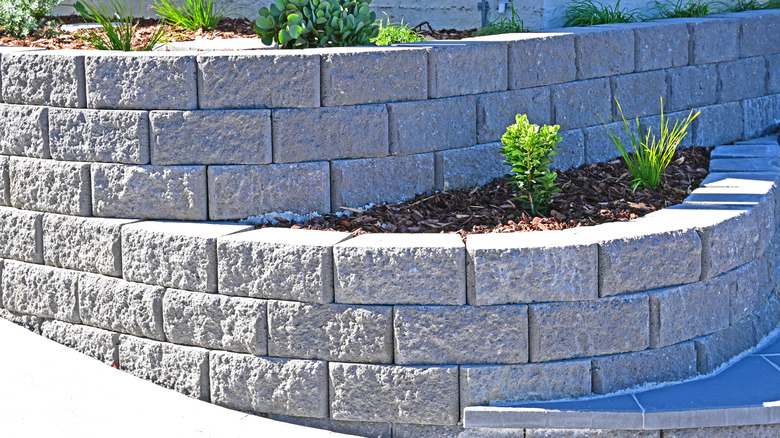
Finally, make sure to account for specialty blocks to finish out your order correctly. If your wall includes 90-degree corners or exposed ends, plan on ordering one corner block per row for each exposed end. These feature smooth, finished ends rather than recessed ears, keeping your edges looking clean. To cap off the project, add solid top or cap blocks along the top row to give the wall a clean, weather-resistant finish. Because standard cap blocks are 16 inches long, you'll need roughly 0.75 caps per linear foot of wall (or 15 caps for a 20-foot wall). If you're laying traditional mortared block, don't forget to grab three to four 80-pound bags of Type S mortar mix for every 100 blocks. Matching these specialized block types and supplies to your layout up front ensures every edge looks intentional, professional, and fully finished.
If you end up purchasing too many blocks (which is always better than buying too few), start by checking your retailer's return policy. Many major home improvement stores accept returns of unused, undamaged masonry units with proof of purchase, though policies vary. You can also put extra blocks to work in another project. For example, you can build a succulent garden entirely from concrete blocks by utilizing the hollow open cells as individual planters for low-maintenance greenery, letting you put every single dollar of your masonry order to good use.