

The Pantry Item You Should Be Using As An Organic Tomato Fertilizer
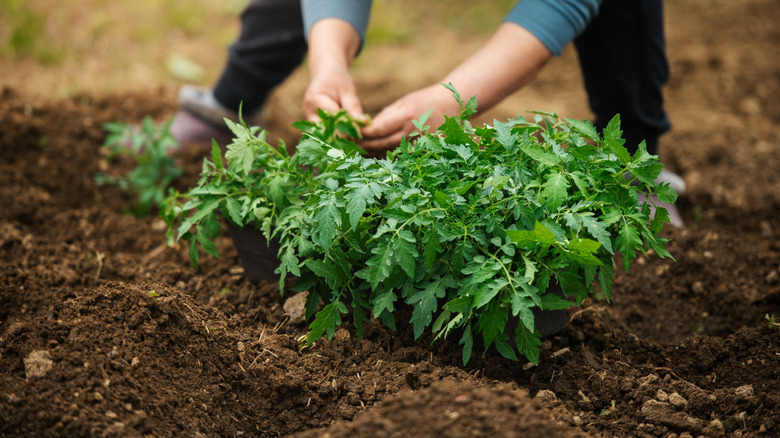
It's always exciting when you have tomato plants growing in your garden during the summer months. As you watch them grow, you anticipate the arrival of the first flowers and then eagerly look for those tiny fruits that will eventually grow into luscious tomatoes. You may also have familiarized yourself with tomato growing tips you need to know for a successful harvest, and one of these is that your plants will require regular fertilization. While there are plenty of good fertilizers that you can use to encourage your plants to produce more flowers and fruits, there's one pantry item that you might want to consider as an organic supplement -– dry yeast.
While you wouldn't consider yeast as a complete fertilizer, as it only contains a decent amount of nitrogen but very little phosphorus and potassium, it could be used to enhance flower and fruit production. A study conducted by Benha University in Egypt found that a yeast extract solution at around 4 fluid ounces per gallon, sprayed onto tomato plants, did increase yields. The solution was made from dry yeast with added sugar for activation, and then diluted with water. For the experiment, it was then frozen and thawed twice, as this would allow the yeast cells to release the nutrients more quickly than normal. The study also concluded that the treated plants appeared more vigorous than their untreated counterparts.
Similar research was conducted by the University of Queensland using brewer's yeast to enhance the growth of tomatoes and sugarcane. This study found that the yeast helped to increase root growth and the uptake of nitrogen and phosphorus.
How to make a dry yeast mixture to boost tomato plant growth
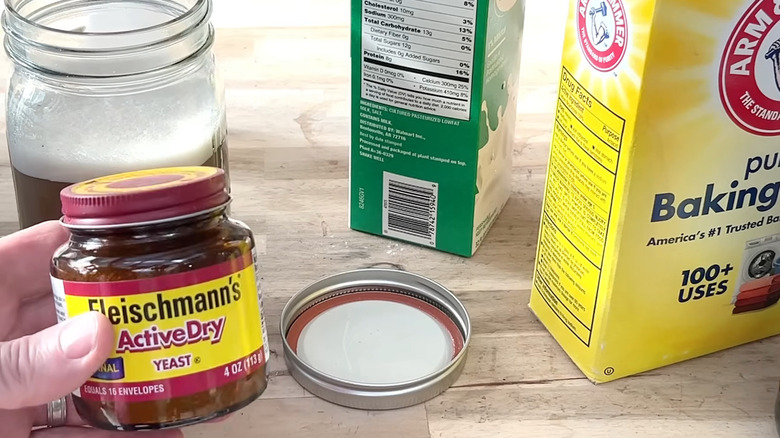
If experimenting in your garden is something that you love to do, you'll want to know that the baker's ingredient you should be using is active dry yeast. So, why not give this formula, created by Zen Garden Oasis, a try to boost the growth of your tomato plants? You might even like to just try it on a couple of your plants to see what kind of difference it makes. All you need is one tablespoon of dry yeast, two tablespoons of sugar or molasses, one tablespoon of baking soda, one cup of buttermilk, and one gallon of lukewarm distilled water.
To prepare your solution, pour about one cup of the water into a bowl and add the sugar or molasses, then stir to ensure that all the sugar is dissolved. Sprinkle the yeast on top of the mixture and don't stir it in. Leave this to sit overnight so that the sugar water can activate the yeast. When you examine the mixture the following day, you should see some foam on top, which signifies that your yeast is alive and active. You now want to add the rest of the water and the cup of buttermilk, then stir the mixture to combine. Lastly, add the tablespoon of baking soda and stir again to mix everything together.
Using the yeast solution on your tomato plants
While you could just make up a basic yeast solution to give your plants a boost, the other ingredients in the formula above are all designed to benefit the health of the soil, which in turn will be beneficial to your tomato plants. Essentially, the buttermilk adds calcium, nitrogen, phosphorus, and potassium, while the baking soda can limit the growth of fungal pathogens. Calcium can help prevent blossom-end rot as long as the plants also receive adequate water so that any available calcium can be absorbed by the roots. However, if you don't have those ingredients on hand, you can just make up the basic yeast, sugar, and water mixture, and use that as a supplement for your tomatoes.
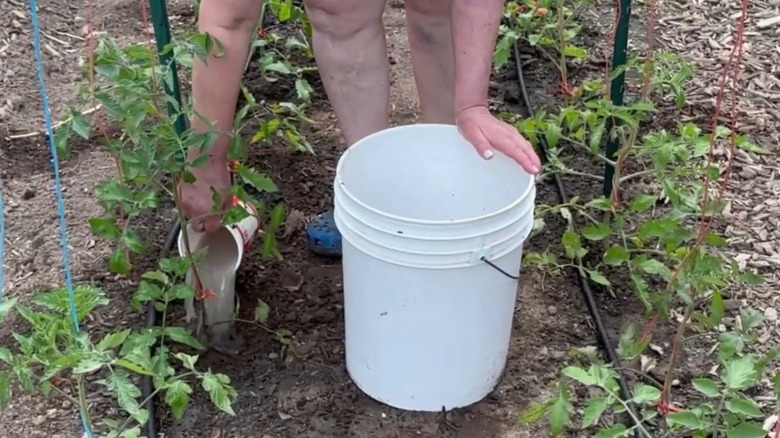
Before you give some of this solution to your tomato plants, water the soil lightly so that you don't end up overloading the microbes with the mixture. You can then apply about one cup of the mixture to the soil around established tomato plants around once a week, keeping it a little distance from the stems. Avoid adding too much, especially on young plants, to which you might only want to add around ¼ of a cup to begin with, or just a few drops if your plants are only seedlings. Remember, though, that this yeast mixture is only a tonic, so you'll still want to use a few other tricks to make your tomatoes grow faster, such as supplying them with aged compost and well-rotted manure.