

What Are Cinder Blocks Made From?
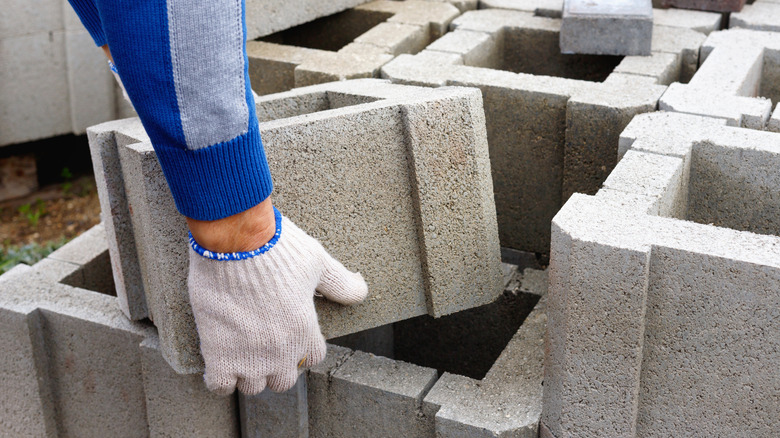
Concrete is the most widely used construction material in the world, and one of the most popular uses for concrete (especially for do-it-yourselfers) is the classic cinder block. It's not hard to see why: these hollow concrete blocks are incredibly versatile, making them useful for everything from construction to small home projects. Cinder blocks are actually quite different from regular concrete, however, and what many don't know is that "true" cinder blocks aren't manufactured anymore. But if they're not the same as standard concrete bricks, then what exactly are cinder blocks made of?
The term "cinder block" specifically refers to a type of concrete brick that emerged in the early 1900s. They are made by mixing leftover coal cinders with cement to create blocks that are lighter and easier to handle than regular high-density concrete, which is where they get their name from. Their composition gives cinder blocks some unique advantages, but there are also some drawbacks to be aware of if you're using them for your next DIY project.
How cinder blocks came to be
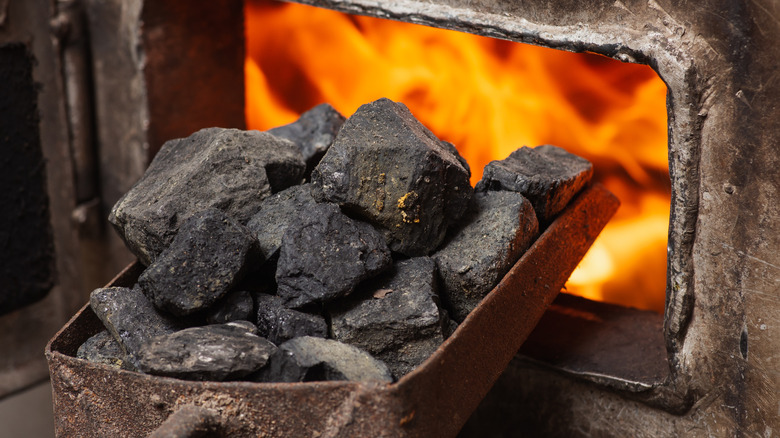
Although concrete has been around since ancient times, cinder blocks are a comparatively modern invention. In its simplest form, concrete is a composite mixture of cement, water, and other materials, such as sand and crushed gravel, that add structure and strength. Cement is heavy, though, so in the early 20th century, when coal was a widely used fossil fuel, Francis Straub patented a method for replacing some of the cement with leftover coal cinders to create lighter concrete blocks — hence the name "cinder block."
These lightweight cinder blocks quickly became a popular and economical choice for all sorts of construction projects. Recycling coal ash to make cinder blocks was also an effective way to reduce waste. But as coal-burning processes and manufacturing technology improved in the 20th century, cement makers replaced coal cinders with finer fly ash, which was also more durable, eventually phasing out cinder block production altogether. Both cinder and fly ash are byproducts of burning coal, but while cinder is simply the ash that stays after coal is burned in a furnace, fly ash consists of extremely fine spherical glass-like particles and other residues formed during cooling. It is airborne and collected from the burning gases using particulate emission control devices and filters. By 1950, true cinder blocks were no longer made and soon became obsolete as a home-building material. However, the moniker stuck. Today, what most people refer to as "cinder blocks" are either regular high-density concrete blocks or lightweight concrete partially comprised of fly ash instead of coal cinders.
How to use cinder blocks for your projects
While true cinder blocks are no longer widely manufactured or used in new construction, they were so widespread in the 20th century that they're still common in many older buildings and homes. That means that you're very likely to find them if you're remodeling or renovating an older structure. And although their names are used interchangeably, the varying characteristics of cinder and concrete blocks make them suitable for different applications.
One of the main advantages of cinder blocks –- their relatively light weight -– is also one of their biggest disadvantages. A 8×8×16-inch cinder block weighs roughly 3 to 4 pounds less than a concrete block, which tips the scales at 26 to 38 pounds. But due to its lower density, cinder blocks provide less structural strength and load-bearing capacity than heavier, sturdier concrete. Modern fly ash units are tougher than cinder blocks, but still usually offer less compressive strength than concrete. Because of this, you shouldn't repurpose old cinder blocks for things like load-bearing walls. However, cinder blocks are great for projects like building an affordable concrete retaining wall.
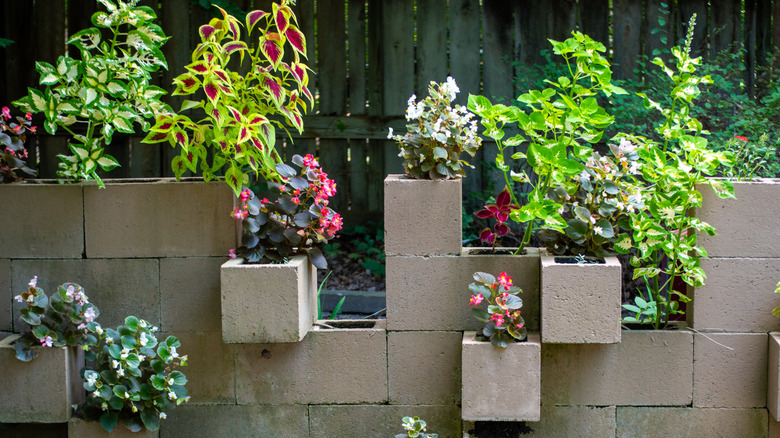
Some other clever and safe ways you can use reclaimed cinder blocks include DIY patio furniture or a cheap bookshelf display. But if you're placing them outdoors, know that cinder blocks are very porous and therefore much more susceptible to absorbing moisture than concrete. That's one of the main reasons why cinder blocks aren't used in house foundations anymore. Be sure to waterproof your cinder blocks if they'll be outside, such as by using a liquid surface sealant.