

The Answer To Why You Have So Much Crabgrass May Be In Your Soil
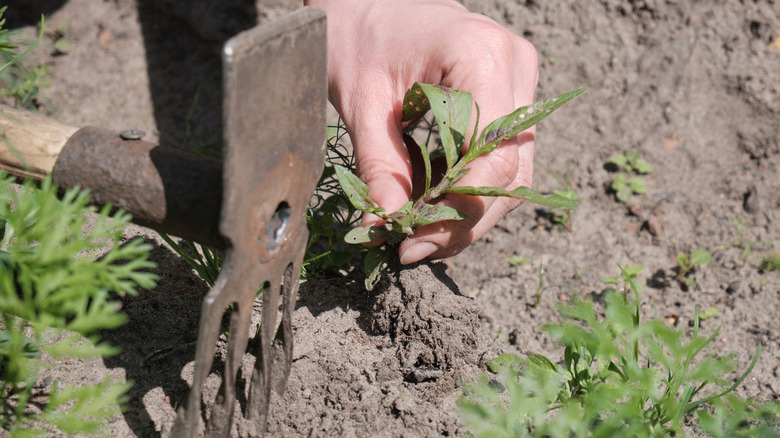
Dealing with weeds in your landscape is an ongoing issue that may seem never-ending. However, that doesn't mean you should stop trying to get rid of them — or figuring out the reason they are growing. If you're wondering why you have so much crabgrass in your yard, the answer may be hiding beneath it. This weed thrives in sandy, hot, dry, and compacted soil, especially when your turf is already struggling. Preventing it from becoming a problem starts with good lawn care, but improving the soil can make your yard much less inviting to this persistent weed.
You'll find that if crabgrass favors the type of soil in your yard, your turf grasses are likely to be weakened during the warmer months of the year and may even be a bit sparse. This lack of full coverage allows the sun to hit the dirt, so the seeds lurking there will quickly germinate, and before you know it, it's taken over. Remember that these weed seeds are quite resilient and can persist in your yard for up to 30 years, just waiting for the right conditions to sprout. Of course, crabgrass can crop up in other areas of your yard as well, such as your garden beds, which can be another sign that your soil needs some attention.
Combat crabgrass by improving the health of your soil
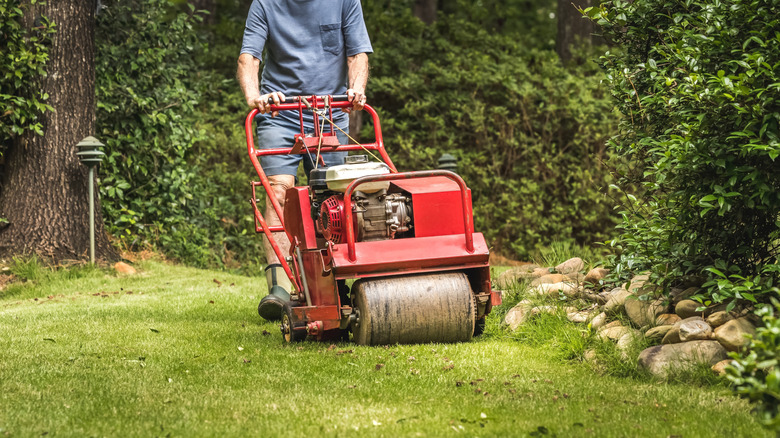
While it's probably not practical to give the soil under your entire lawn a total overhaul, there are a few things you can do to improve growing conditions for your turf and make it less favorable for crabgrass. First, check whether the ground is compacted. If it is, aerating can improve its overall health and give grass roots an easier path to spread out. It also helps water and air reach the root zone instead of running off the surface. To that end, it's important to give your lawn a good, deep soaking each time to encourage grass growth, helping it better withstand the hot, dry conditions that crabgrass prefers.
When dealing with crabgrass, you want to avoid common mistakes like cutting your yard too short or ignoring those bare patches of ground. Raise your mowing height to at least 3 inches, as taller grass will shade the soil and prevent the weed seeds from germinating.
You can also improve your soil by adding aged compost and raking it in. This will help break up any compaction and increase microbial activity, keeping it more friable with plenty of air and water spaces. To keep your yard cooler and more hydrated, add a decent layer of organic mulch over the surface. Healthier soil and thicker, stronger plants can go a long way toward making your landscape less hospitable to crabgrass in the first place. With this method, you'll also find that any weeds that do come through will be much easier to pull out by hand, and this is one of the simplest ways to get rid of crabgrass.