

Purple Vs Blue Painter's Tape: What's The Difference?

We may receive a commission on purchases made from links.
Unless you're well-practiced at painting your home like a professional, painter's tape is an absolute must when it comes to any project. Whether you're simply trying to avoid smudges on trim or painting a complex geometric mural, it's handy to have a roll on hand to achieve those clean, crisp edges. When it comes time to stop by the hardware store, however, things can start to feel a bit more complicated. Gone are the days of plain, beige masking tape — now, there are myriad options on the shelves boasting a wide range of colors. Just about every DIYer is likely familiar with blue painter's tape, but now, there are offerings available in a unique purple hue.
So what exactly is purple painter's tape, and what sets it apart from the more common blue option? Purple tapes, like Scotch Delicate Surface Painter's Tape, are designed with a gentler adhesive, making them a good option for materials with existing finishes that could chip or peel with too much force. Blue painter's tape, on the other hand, remains less sticky than masking tape, but can still cause some damage on particular delicate surfaces. In other words, the difference between these two varieties is fairly simple, but things can become more complex when determining the situations where you should use each color, what results they'll yield, and how long you should leave them on the wall before peeling them away.
When and how to use blue versus purple painter's tape
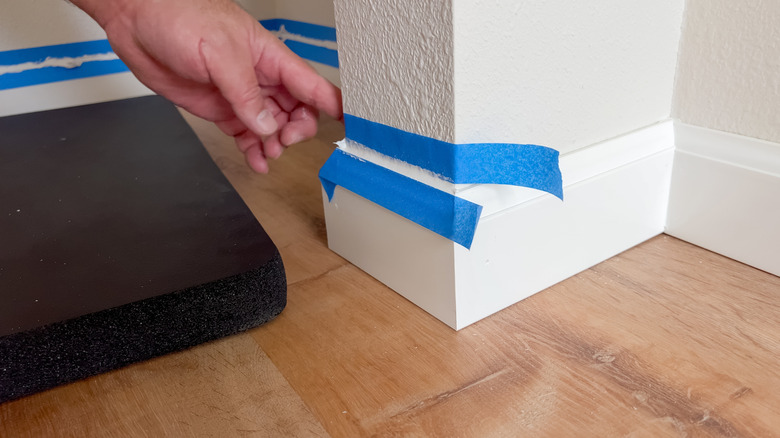
If you're simply recoloring an existing wall or refreshing your trim, plain blue painter's tape can help you achieve flawless paint lines without any damage (as long as you're using your original paint color to seal your painter's tape). These tapes are designed to provide the ideal level of tackiness on painted drywall, plaster, baseboards, and unfinished wood. They're even useful for other DIY situations, like caulking around the edges of a countertop, protecting hardware on doors or furniture, or keeping paint off of windows. Generally, you shouldn't face any issues with blue painter's tape damaging your existing surfaces if you remove it within two weeks.
Purple painter's tape is for delicate materials, as we've established, but what exactly qualifies? Finished hardwood, walls that have been painted in the last week, wallpaper, wood paneling, and veneer all fit the bill. Essentially, if it's a material you'd be worried about bumping into or scratching, purple tape is probably the way to go. The decreased tackiness will help to ensure that it doesn't grip onto the surface too hard and create too much force when pulled off, but it also has the added benefit of giving you a greater window for clean removal. While you should peel off your blue painter's tape within a couple of weeks, you can go up to 60 days with purple tape. If you leave painter's tape on for too long after your surface has dried, you might need a hair dryer to loosen adhesives.