

What Does A Pink Flame On A Gas Stove Mean?
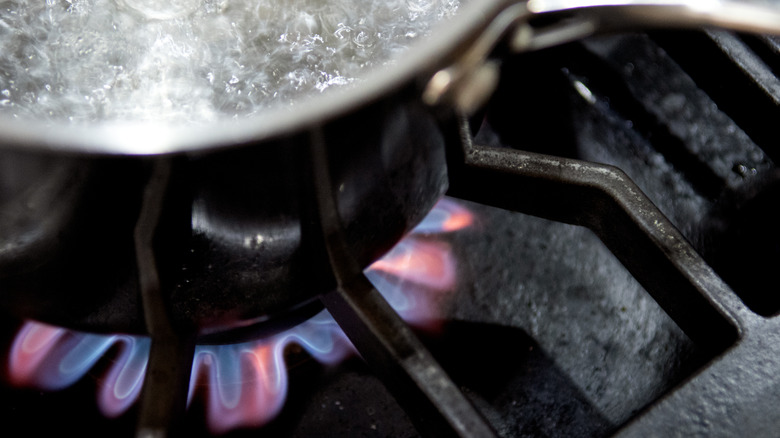
Most of us are familiar with a couple of different flame colors. Blue and white are signs that a fire is burning hot and clean, exactly what you want from a cooktop, while an orange flame on a gas stove is a common symptom of an underlying problem. A pink flame, however, is a bit of a head scratcher. While this color is certainly pretty, it can also become a source of anxiety for homeowners — after all, preventing a gas explosion at home requires a certain degree of awareness and caution when it comes to gas-powered appliances. Luckily, there's no reason to panic. The pink tinge comes from an abundance of potassium in the air rather than an issue with your stovetop.
When burned, potassium chloride produces a unique pinkish or lilac flame, which is what you're seeing on your stove. This phenomenon can be off-putting, but it's not dangerous — yellow or orange are the real signs that something is wrong. High potassium levels in the air are most often the result of a nearby humidifier that's been running on tap water, as potassium chloride is often used as a water softener. It's also a frequent inclusion in processed foods and a fertilizer that boosts potassium in garden soil, more commonly known as potash. This compound is safe to consume and generally considered harmless, but if you're not particularly comfortable with the idea of a pink flame, there are ways to bring your stovetop back to blue.
How to get rid of pink flames

Doing away with pink flames is simple: Get rid of the potassium, and you'll get rid of the color. Because high levels of potassium in the air are most often the result of the diffusion of water that's been treated with potassium chloride, simply moving or turning off your humidifier will likely do the trick. Nearby essential oil diffusers should be considered too — while they don't release a ton of moisture, ultrasonic diffusers that are used with tap water could contribute to the discoloration of the flame, especially if they're close to your stove.
There's also the option to use heavily filtered water in your humidifier. While most filtration systems leave healthy minerals (like potassium) in the water, reverse osmosis systems will eliminate them almost entirely. The same goes for store-bought distilled water. It's strongly recommended by manufacturers to use distilled water in your humidifier anyway, so making the switch could actually be beneficial for the longevity of your appliance. To further reduce the potential of potassium in the air, you'll also want to make sure your windows are closed if it's humid outside.
To reiterate, though, the presence of potassium in the air isn't harmful, so reducing it won't make much difference overall. As long as you keep your stove in good working order, there's nothing to worry about here — your cooking area is still safe, functional, and ready to use to prepare your favorite meals.