

Is Vaping In Your Home Ruining Your HVAC System?
When you think about potential threats to your HVAC system, clogged filters or aging motors may come to mind — not your favorite vape flavor. While swapping cigarettes for e-cigarettes or nicotine vapes eliminates smoke and ash, it doesn't leave your indoor air entirely clear. Vaping indoors introduces an invisible hazard to your home's heating and cooling setup that most homeowners completely overlook.
Bottom line? Vaping indoors slowly wears down your heating and cooling equipment if you aren't staying on top of maintenance. The exhaled aerosol that vapes leave behind deposits a layer of liquid residue that can settle on critical parts of your heating and cooling unit. That residue, mostly composed of vegetable glycerin (VG) and propylene glycol (PG), builds up on filters and coils, forcing the compressor and electrical components to work twice as hard — leading to higher utility bills and a shorter overall lifespan for your unit. One of the benefits of buying a new construction home is enjoying brand-new, energy-efficient HVAC equipment. If you're an indoor vaper, that new system can quietly degrade faster than expected without the right upkeep.
How vaping can ruin your HVAC system
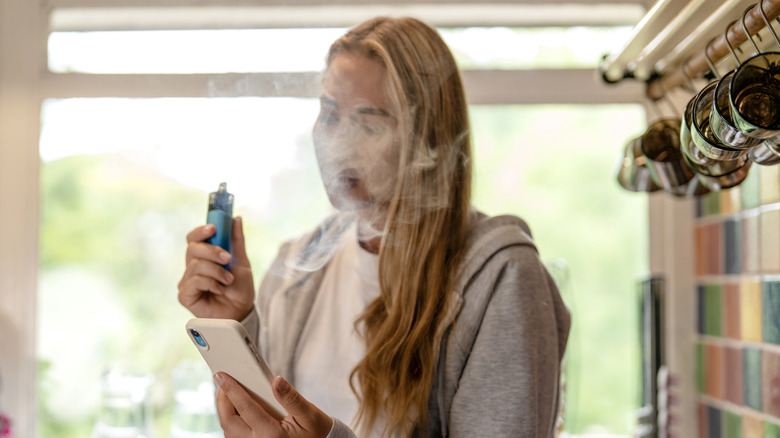
To understand why indoor vaping is bad for your HVAC system, you first need to look at what's in that vapor. Every flavorful cloud exhaled into your living space carries a mix of vegetable glycerin (VG) and propylene glycol (PG) — two heavy liquid compounds that don't just vanish into the atmosphere. Vegetable glycerin is thick and hygroscopic, meaning it attracts and holds moisture. The VG in the exhaled aerosol gets pulled into return vents and clings to the wet metal fins of your AC evaporator coil. With enough time and accumulation, it forms a sticky coating that traps airborne dust and pet dander, restricting airflow.
Air filters may suffer just as much. Standard pleated filters are effective against dry particles (such as dust and pet dander), but vape aerosol saturates the filter with liquid VG and PG that eventually clogs the airways. When airflow is restricted, static pressure increases and your blower motor has to work harder to compensate. This drives up your energy bills and shortens the equipment's lifespan.
Lingering residue can also do long-term damage to ductwork. When you vape, the aerosol coats the inside walls of supply and return ductwork. Once this layer forms, dust always collects on it, creating a breeding ground for bacteria and mold. This lowers your home's indoor air quality and creates a lingering, musty smell that is hard to get rid of. Knowing how to get rid of stubborn smoke odors in your home's HVAC system can help restore clean air, but preventing aerosol buildup in the first place is always the best defense.
What to look out for if you vape inside your home
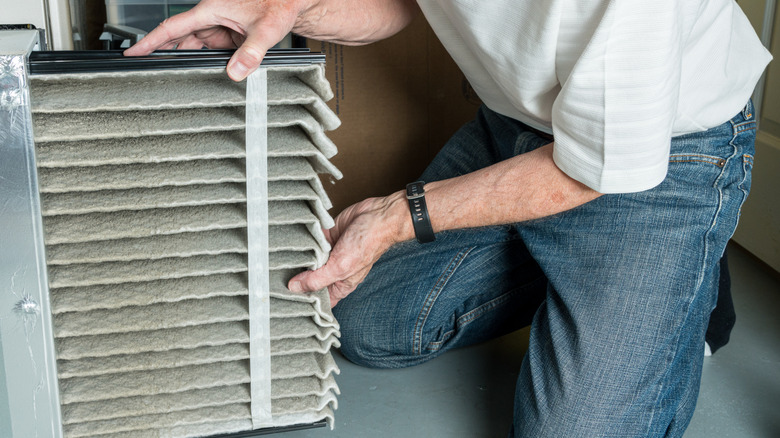
Vaping inside once or twice won't cause your entire HVAC system to break at once. This is an issue that builds up gradually. One of the first signs your system is being impacted by your vape habit is a sudden drop in airflow from your vents. If you notice the vents aren't pumping out heat or cool air as strongly as usual, your coils or filters may already be choked. Also, vaping near a return vent can create residue around your registers. This will look like a clear, tacky film, but heavy dust buildup directly on return grilles is another clear red flag. In addition to visible buildup, you might notice a stale or damp smell coming from the vents when the fan or AC turns on — this indicates bacteria, organic buildup, or even mold trapped inside your system.
Whenever possible, take your vape breaks outside to save your HVAC system from unnecessary wear and tear. If you prefer to stay indoors, you need to be proactive about maintenance. Start with regular checks and air filter replacements. You should swap out your filter every 30 to 60 days instead of the usual 90. Nailing down exactly how often you need to change your air filter is the best way to keep static pressure from spiking. You can also run a standalone HEPA purifier with a carbon filter to catch those aerosol particles before they reach your return vents. Lastly, book an annual coil cleaning with an HVAC professional. They can use chemical degreasers to wash away that stubborn film before it hardens, traps dust, or corrodes your equipment.