

Backyard Trends That'll Give Your Outdoor Space A Much Needed Upgrade In 2026
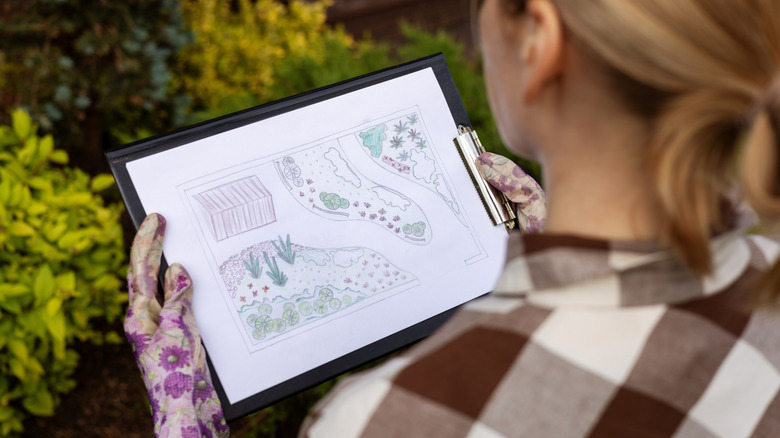
When you step out your back door, you should be excited to enter a space that you love spending time in. However, creating this experience may require some careful planning and a few upgrades. Luckily, when it comes to embarking on a backyard makeover and creating your own outdoor oasis, there's no shortage of ideas. There are ways to create a spot for al fresco entertaining, including meal prep. Or, if a peaceful retreat is your goal, there are projects to give you a secluded haven in that unused corner of your lot. Of course, there are also ideas to design hardscaping and landscaping for the backdrop you desire.
When it comes to upgrading your backyard, some of 2026's biggest trends can inspire your next project. From small changes and additions to major overhauls, these concepts can help you create an impressive and functional backyard. Plus, these concepts can be customized to your yard's size and shape and to reflect your own personal style.
Plunge pools make backyard dips more accessible
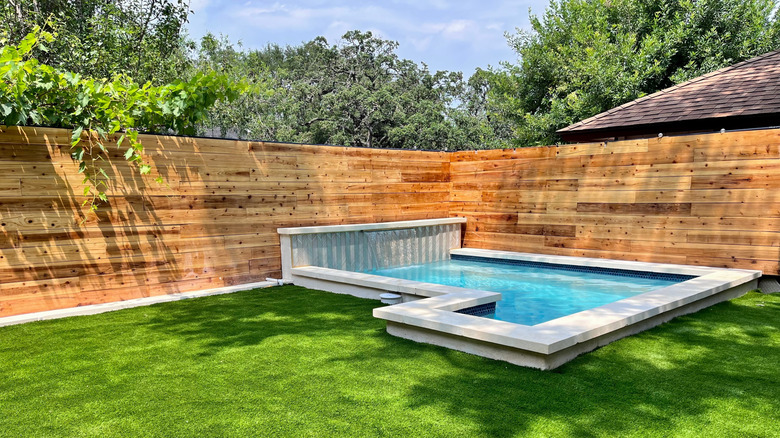
There's a wide range of reasons that plunge pools have been trending recently. Compared to their traditional counterparts, they are lower cost, faster to install, and easier to maintain. Plus, not everyone has enough room to install a larger pool. Also referred to as cocktail pools, this more compact option is very versatile. For those into current wellness trends, a cold plunge pool can be a helpful recovery tool. On the other hand, heated plunge pools can be used similarly to a hot tub for more of the year.
These pools are either installed above or below the ground. Design options are nearly limitless as they can be added to the center of the yard or integrated into a deck or patio. There are also a wide range of sizes and depths available depending on your needs and space constraints. Custom installation is more costly, but there are a variety of prefab options as well. A small pool can be purchased for as little as $5,000, but larger, higher-end options can run $60,000 or more. Keep in mind that labor costs and permit fees will increase the total a bit. You may also incur the cost of adding a fence if needed to adhere to local regulations.
Nostalgic gardening creates a sense of comfort
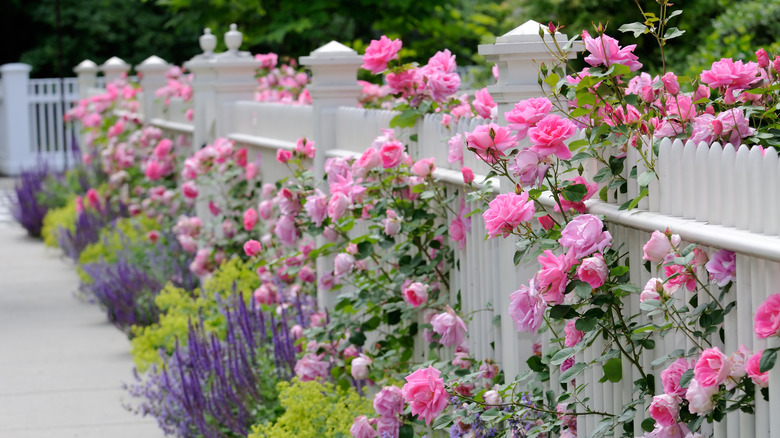
Nostalgia is having a big moment in interior design, and the trend is spilling over to the outdoors. Filling beds with old-school blooms that harken back to your grandma's garden creates a sentimental feel. "Garden classics like lilacs and forsythia are hugely popular, especially now that smaller, more floriferous varieties are available. These plants make it possible to add some old-fashioned loveliness to almost any size garden," Natalie Carmolli, public relations specialist with Proven Winners ColorChoice Shrubs, told Country Living.
Advancements in hardiness, as well as the availability of smaller plant sizes, mean that these can be an option for many home gardeners. To pay homage to the landscaping beds of the past, plant rows of varieties like hydrangeas or irises. If you are working with a small space, add compact options like marigolds or miniature roses. However, if you don't want to overhaul your beds, use containers to add charm to your deck or patio. Compact lilacs and forsythia provide lots of color and can be grown in containers.
Layered lighting for functionality and aesthetics
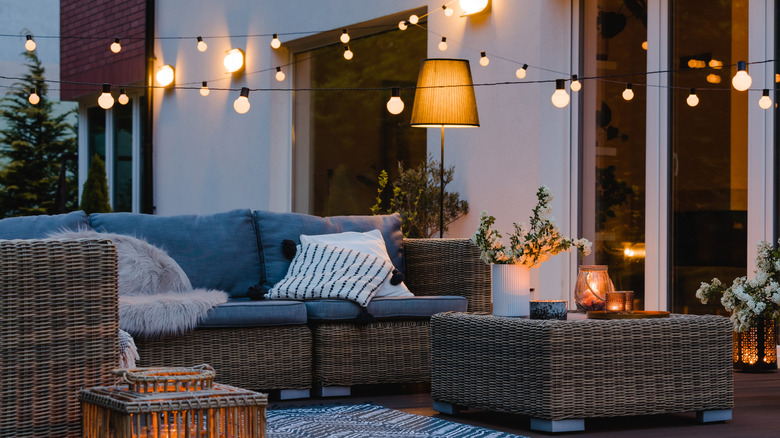
Layered lighting is an essential design practice, both inside and out. Not only does it boost the functionality of backyard spaces, but it also helps create a curated vibe. Jennifer Hamilton, founder of design firm Vawdrey House, explained to Livingetc, "In 2026, we're seeing outdoor spaces treated with the same sensitivity and layering as interiors. Lighting in particular has evolved; it's no longer about brightness, but atmosphere." With multiple fixtures, the vibe can be customized, whether you're hosting an outdoor game night or planning for cozy stargazing.
Luckily, there are lots of exterior light fixtures to create the illumination levels and style that you'd like to achieve. First, take your main source of outdoor light from functional to wow factor. If you have a covered, weather-protected outdoor space, look for a chandelier fit for a great room. Warm wooden fixtures work well in rustic or Mediterranean spaces. And fixtures in sleek metal fit right into modern or industrial outdoor aesthetics. If you don't have a covered area, strategically placed outdoor-rated floor lamps like the Bobcat Lighting Solar Outdoor Lamp can flood spaces with light.
Then, complement this with fixtures at multiple levels. Fortunately, technology makes this a simple DIY project. Solar options, like PasaMic's Wall Lanterns, don't require wiring and can be attached to nearby walls. And lanterns such as Bonlion's Solar Powered Lights can be hung from hooks, placed on tables, and used to line steps.
Creating seamless transitions extends living spaces
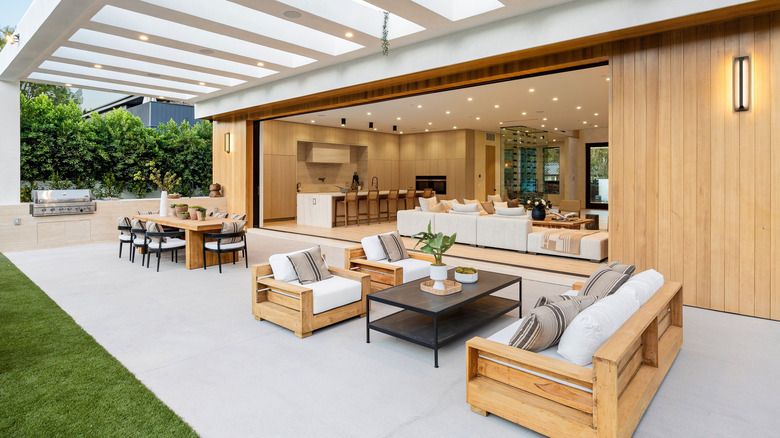
For years, designers have used greenery and natural materials to bring the outdoors in. Now, the opposite is true as seamless transitions between the interior and backyard are the gold standard. Kristian Thiem, landscape and outdoor living designer with Tidal Creek Designs, explained to Country Living, "Design trends now blur the lines between indoors and outdoors, with furniture and accessories built for exterior use yet styled like indoor pieces. Planters bring nature inside, while performance fabrics and outdoor furnishings are increasingly used both indoors and out, creating cohesive and flexible living spaces."
This is a two-part strategy. To make the outdoors seem like an extension of your home, you have to design it thoughtfully and for comfort in addition to utility. Opting for furniture designed with plush upholstery and layering textiles like pillows and throws creates a space that feels more like a living room than a patio. To create a seamless connection, use a cohesive color palette in the room adjacent to your backyard and your outdoor space. This could mean placing the same indoor/outdoor rug on both your patio and in your adjacent living room. Or, look for outdoor furniture with the same wood finish as your indoor table. To take the transition to the next level, enhance the way you move back and forth between the two spaces. This could mean widening the doorway or installing a pass-through window so you can mingle and serve drinks to outdoor guests from the kitchen.
Alternatives to traditional grass reduce maintenance demands
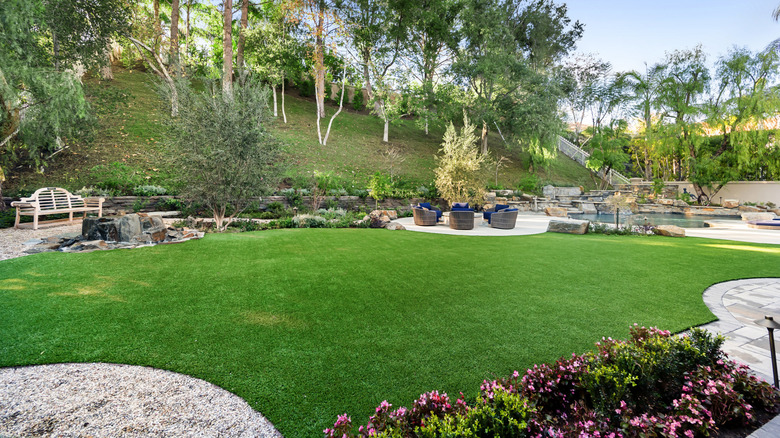
Homeowners spend hundreds of dollars on garden and lawn care each year, and that amount has been steadily increasing over the last decade. So, it makes sense that many are forgoing the all-American patch of green. Landscape designer Samantha Ulasy explained to The Spruce, "Lawns might be iconic, but they're fast becoming impractical. In our region, they demand daily watering, regular mowing, and chemical inputs just to stay alive through summer. They add little to the garden ecologically, and frankly, they're expensive and uninspiring to maintain." Luckily, there are some on-trend alternatives to traditional grass.
Synthetic turf is one option that's seeing increased interest. It's an ideal choice for small spaces and newer products have high durability with long warranties. Manufacturers are also designing it to more closely mimic the look and feel of real grass more than past options. Plus, it's green all year, requires little to no maintenance, and can be used where conditions don't allow natural grass to grow.
The clover lawn is another, more-natural grass alternative. They don't need to be mowed as often as grass and eliminate the need for fertilization. The perennial plants also help prevent erosion and need little, if any, irrigation after they're established. Clover can grow in a wide range of soil types. It's just important to research the specific types will do well in your area. White clover is a popular option that's hardy from Zones 3a to 10b.
Gravel hardscaping is versatile and sustainable
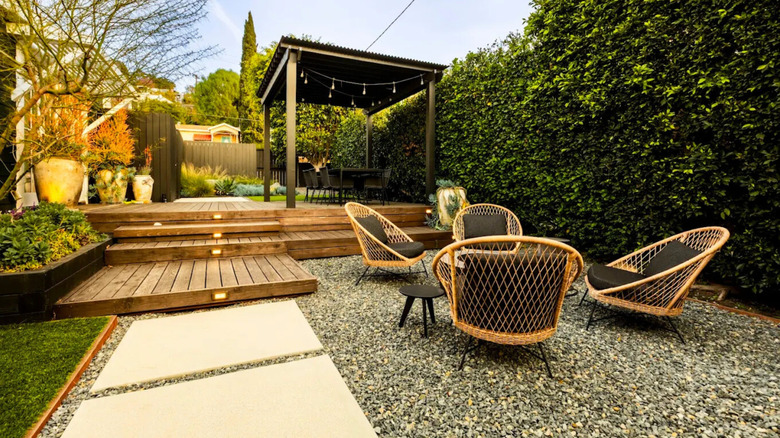
As nostalgia and softness are trending, as are old-school and reliable materials. Gravel has multiple benefits, including being low-cost, low-maintenance, and DIY-friendly. Plus, it's a super versatile hardscaping material, so designers and homeowners can use it to create a wide variety of backyard projects. With many working to reduce their carbon footprint, gravel courtyards are coming back thanks to their low water needs and permeability. Offering more character than materials like concrete, they complement the organic landscaping shapes that are also on trend.
Gravel pathways are another popular hardscaping project that are ideal to pair with the current cottage garden comeback. Or hop on the gravel garden trend and use it throughout the whole bed instead of traditional wood mulch. Gravel is also versatile as it works with a range of other hardscaping options. It can be used to border other trendy materials like organically shaped stones. Fine gravel can also add texture and interest to a pathway of geometric pavers.
Wicker furniture is a classic choice
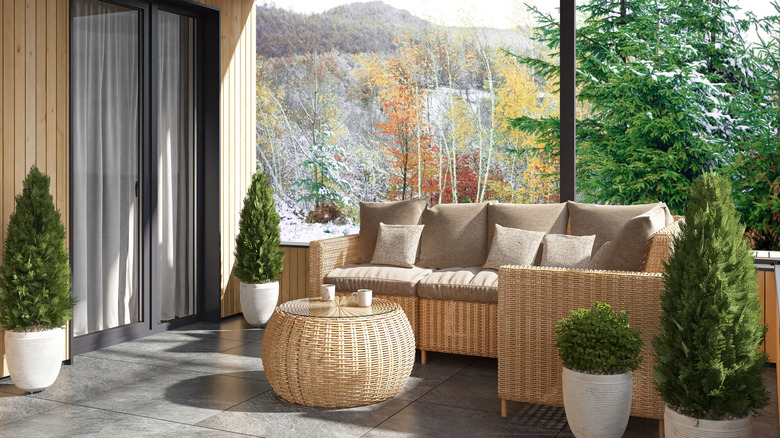
Wicker is making a comeback in both indoor and outdoor furniture designs thanks to its welcoming, heirloom-like charm. Interior designer Lauren Saab explained to Homes and Gardens,"People are craving history over hype. Wicker carries that collected, passed-down feeling, like it has always been there, which gives a space depth you cannot fake with brand-new, overly polished pieces." The material also has an organic feel, another current trend.
Wicker is making its return in sleek and modern silhouettes that give it an updated twist. That also means that there are lots of ways to use it in your backyard. Pieces with clean lines, like Chita's Outdoor Conversation Set, can provide a pop of the material in an updated way. Or, complement your current wood table with a set of wicker dining chairs. You can also use the material as an accent (while layering lighting) with a fixture like Mixl's Handcrafted Wicker Shade.
Adding privacy provides a retreat
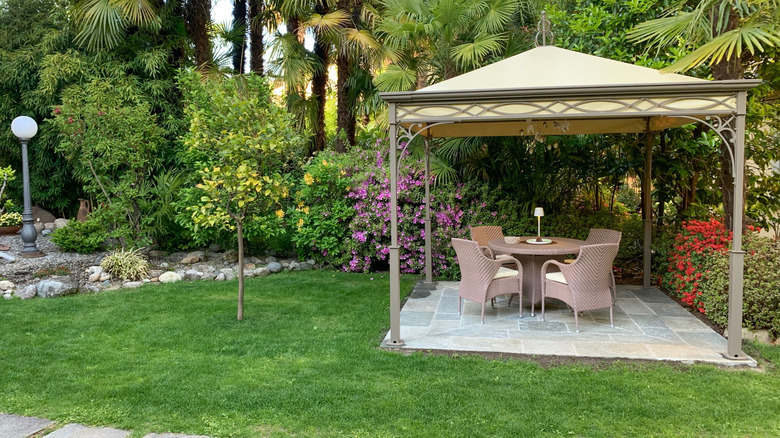
Many people are currently transforming their backyards into their own outdoor retreats. And this requires a key feature — privacy. This allows for more relaxation without the worry of neighbors and their prying eyes. However, instead of wrapping the whole yard in a towering fence, privacy strategies are leaning more natural. "Seclusion can be achieved with a simple fence panel, bamboo screening, or a few well-placed evergreen shrubs," Nate Fox, lead designer at Foxterra Design, told Real Simple.
Of course, buying plants that are tall enough to block outsiders' views can cost a pretty penny. So look for fast-growing trees that can give your yard a natural privacy screen quickly. Green Giant Arborvitae can grow up to 3 feet a year and are a popular choice with dense, year-round foliage. If you'd like a colorful privacy screen and you live in Zones 6 to 9, Red Rocket Crepe Myrtle has a very fast growth rate and puts out vivid red flowers.
If you opt for a panel or screen, use plant life to soften its appearance. Native wisteria (Wisteria frutescens) grows moderately fast and could rapidly cover a sturdy structure. However, if you don't have a green thumb, lean into artificial options that still give off natural vibes. Cover a frame with synthetic foliage like Vevor's Ivy Fence Screen to create a lush, life-like barrier.
Bold design breathes life into outdoor living spaces
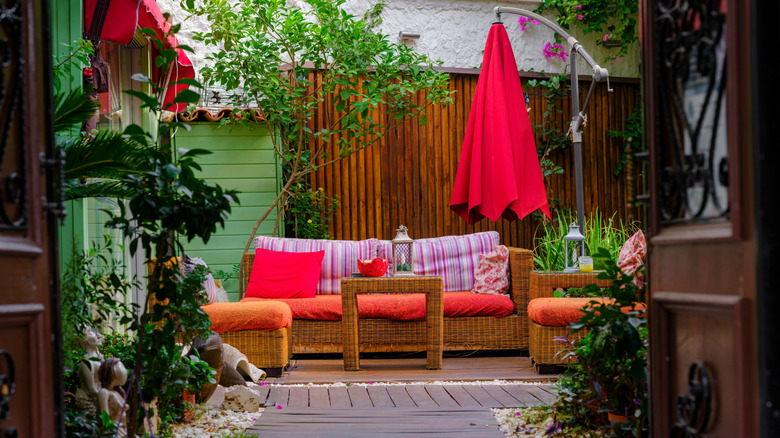
As trends veer from the neutrals and beiges of the early 2000s, both indoor and outdoor design are seeing a pivot to more statement-making looks. UK-based interior designer Benji Lewis told Business Insider, "The maximalist trend that was big here a few years ago for interiors is big in gardens now." That means backyard designs are being brought to life with layered colors and bold pattern mixing.
When it comes to textiles, stripes are big this year. And mixing various colors of them or complementing them with other patterns can create a lively look. Varying the scale of the patterns you use together can make your outdoor textiles feel even more curated. This could be combining a large-scale floral pillow with a thinly striped seat cushion. When choosing colors, try to stick with the same intensity, whether that be pastels or jewel tones to avoid a singular hue taking center stage. Also, consider the color wheel and decorate with complementary shades, like purple and yellow, for a dynamic look.
Softer, more organic landscaping
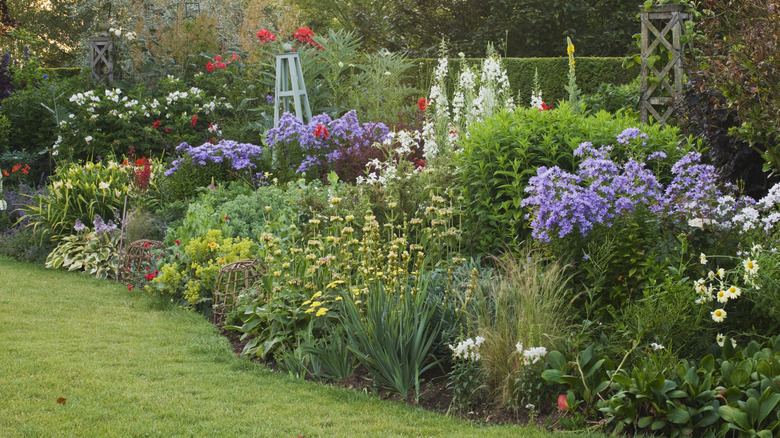
The greater trend toward more organic vibes is carrying over to how designers and home gardeners are designing their backyard landscaping. Kerrie Kelly, CEO and creative director of Kerrie Kelly Studio, explained to House Beautiful, "Highly structured, overly symmetrical gardens are starting to feel less relevant. People are moving away from anything that feels too rigid or high-maintenance in favor of spaces that feel more relaxed and livable."
That means that when it comes to landscaping beds, perfectly-measured symmetrical layouts are dying out. Instead, opt for more organically shaped and free-flowing borders that create a relaxed feel. And when it comes to retaining walls, lean away from sterile-looking, grey-toned pavers with harsh lines. To create a more natural vibe, use boulders in various sizes or textural stacked stone in welcoming, warm hues.
These naturalistic beds are best complemented with laid-back and low-maintenance plant choices. Native plants are often long-blooming, require less care, and can be more resistant to local pest problems. These, of course, vary by area. But popular widespread options like coneflowers, golden rods, and asters have attractive, free flowing textures. As a bonus, they attract pollinators and can increase the odds of fluttering butterflies and feathered friends frequenting your backyard.
Creating a shady spot is a must
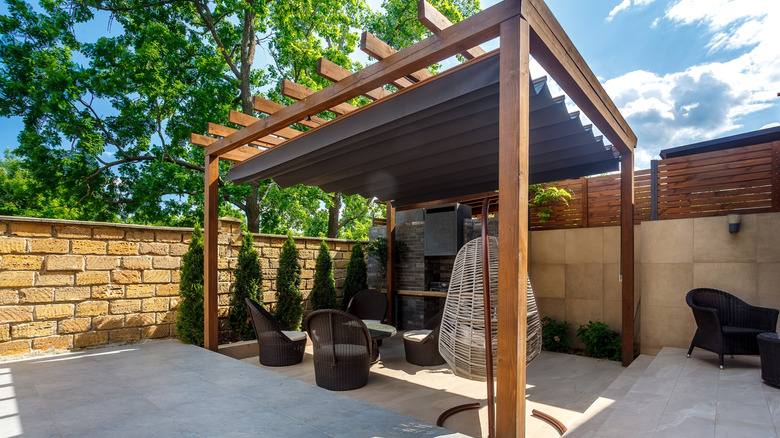
If you really want your backyard to emulate the indoors, a shade structure can make it feel more intentional. Dave Marciniak, owner and lead designer of Revolutionary Gardens, explained to Business Insider, "Homeowners have really been looking for garden structures that both define the space and provide a sense of enclosure and a bit more utility." Luckily, there's a range of options at various price points. Before you start planning, hone in on the style that meets your needs. You'll also want to check your HOA regulations and what kind of permits your locality requires. Lower-cost options, like DIY pergolas and gazebos, range in price and installation demands. For example, Lausaint Home Store's 12-by-12 Gazebo Canopy with Netting is about $240 and is designed to be put together in just a couple of hours. On the other hand, Purple Leaf's 12-by-16 Pergola with Retractable Canopy is about $550 and has a more complex design. Its assembly is a bit more complicated and requires DIY knowledge and specialty tools.
If you'd like to invest in a more permanent structure, you'll likely want to go with a pro if you don't have construction expertise. Wooden pergolas are customizable and can also be made from vinyl or metal for lower maintenance. However, they often have open slatted roofs that don't offer full coverage. Backyard pavilions typically have solid roofs, so they're an ideal choice if you'd like protection from the elements. However, if you're ready to spend more on a flexible outdoor living space, custom louvered structures provide lots of options. The roof can open and close depending on the weather, and they can support heaters for multi-season use.
Outdoor living spaces get a boost in functionality
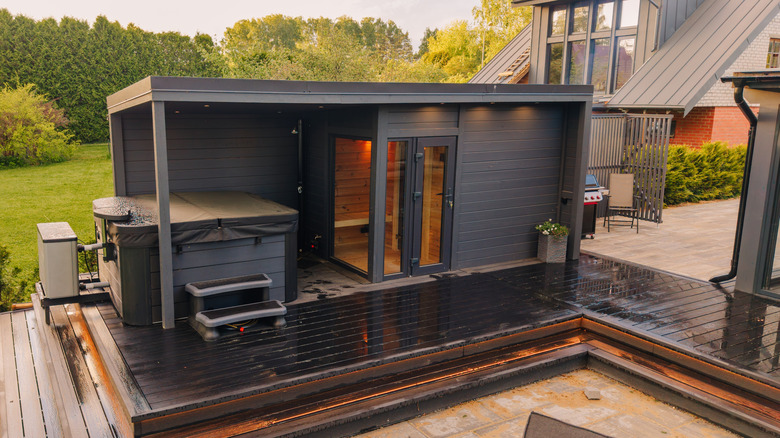
Backyards are becoming more functional additions to the home. And many are looking for ways to integrate them into their daily routines rather than relegating them to an occasional weekend hangout spot. Depending on your lifestyles and interests, different zones can serve different purposes depending if it's Tuesday morning or Saturday night.
If recharging is a priority, your own backyard is the perfect place to find some peace. Wellness gardens are trending as a way to add amenities that may not fit into the interior space. Saunas, outdoor showers, or a dedicated yoga space tucked in the corner of the yard can provide an at-home escape. Surrounding it with other features, like a small fountain or fragrant garden, can appeal to all of the senses and up the zen vibes.
However, those who still want to host a fete have on-trend ways to create a zone for that. Outdoor cooking spaces are getting upgrades beyond the basic barbecue. Pizza ovens, drink fridges, and cooktops are all popular. Adding an outdoor TV allows you to enjoy sports or movies and creates a fully-equipped hangout space. Conversation pits, whether it be a built-in bench around a fire pit or a group of comfy seating around a table, are also trending. These casual setups allow friends and family to get comfy and engage in casual togetherness.