

How To Protect Succulents From Heavy Rain Without Causing Damage

We may receive a commission on purchases made from links.
A backyard bursting with intriguing succulents is the ideal water-wise garden, especially if you live in an area with low rainfall. Yet even drier locales can experience sudden storms that expose succulent gardens to soil erosion and plant tissue rot. Planning for a bit of precipitation protection, including ensuring good drainage and frequently pruning away dead foliage, is your bet for a long-lived outdoor succulent garden.
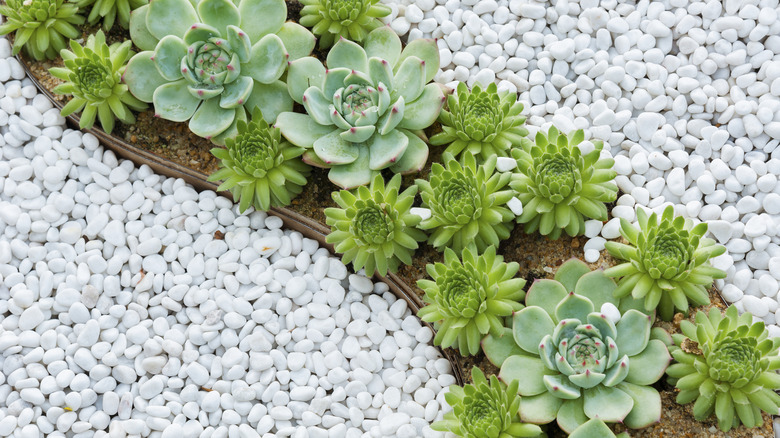
Protection for succulents growing in containers starts during the potting process. Whether you're caring for succulents inside or outside your house, excellent drainage is crucial. It's even more important for succulents exposed to rain. Low-profile containers best suit the shallow root systems most of these plants have. Line the bottom of the pot with window screen to cover the drainage holes, then fill it with a good-quality cactus and succulent potting soil. Products like Rosy Soil Cactus & Succulent Potting Mix contain coarse materials that improve drainage, such as pumice, perlite, or vermiculite. Surround the bases of established plants with a thin layer of gravel, river rocks, or sea stone to stop heavy rain from washing the potting soil away and drowning the roots.
Likewise, provide in-ground succulents with the best drainage materials to relieve your plants of excess moisture. A reliable soil mix for succulents contains equal parts coarse materials and loam. For example, in a large container, mix one part sand and perlite with either one part peat moss and good-quality soil or coco coir and good-quality soil. Stir everything together to thoroughly combine the materials and use your DIY growing medium in planting holes or new succulent garden beds.
Mounding soil and pruning regularly prevent boggy conditions in succulent gardens
Providing drainage isn't the only way you can protect your succulents from downpours. One practical solution if you only have a few potted plants is simply to bring them indoors or onto a sheltered porch during storms. Ideally, set the succulents up near a south-facing window or heat-retaining wall so that they can still catch some warmth during chilly weather.
In an in-ground succulent garden, playing around with levels adds more than visual interest; it also helps protect your plants from sudden downpours. Create gently sloping mounds by digging trenches around the planting area. If the removed soil is good quality, save it to use in planting mixes. The water will flow around the mounds, while keeping your succulents' feet too dry. Further afield in your landscape, consider establishing swales to keep excess rainwater from flowing downhill and flooding a low-lying succulent garden.
Protecting succulents from wet conditions also means removing any debris that collects on and around them. That's especially true of rosette-forming succulent species, the tight foliage of which traps and holds onto moisture. In addition, prune away any dead and decaying foliage from your succulents frequently. These damaged parts also sequester water and rot easily. Finally, ditch the traditional mulch for a long-lasting alternative (that also suppresses weeds) like gravel. Wood chips or leaf mulch hold onto moisture, leading to rot, especially when the material is too close to the base of your succulents.