

What's The Average Lifespan Of A Wooden Shed?
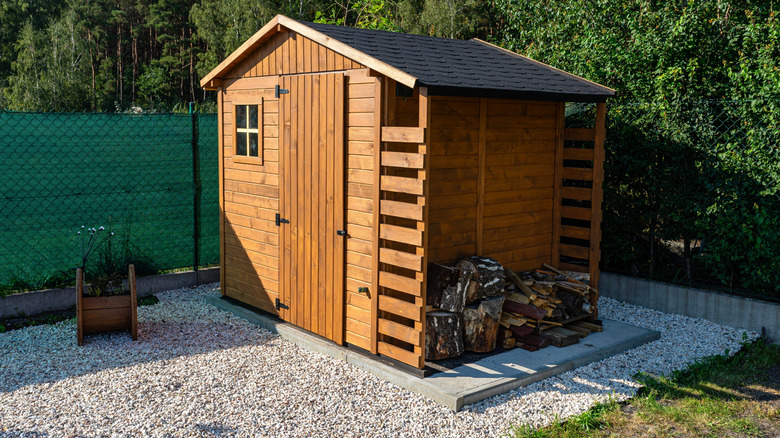
Adding a shed to your property is an excellent way to expand your square footage and free up space in your garage and home. Whether or not you use a pre-built kit or you choose to build your own DIY shed, deciding on the type of material to use is one of the most important choices you will make, as this will help determine how well it holds up against the outdoor elements.
When considering the pros and cons of a wood shed, you'll probably want to factor in its lifespan. Average wood sheds typically last 15 to 20 years, but excellent site prep and roof upkeep completely change the math for the better. With a little effort, you can extend your structure's usable life well past the three-decade mark. While you cannot control the weather, you can control how well you protect your investment against it.
How to get the most out of your wooden shed
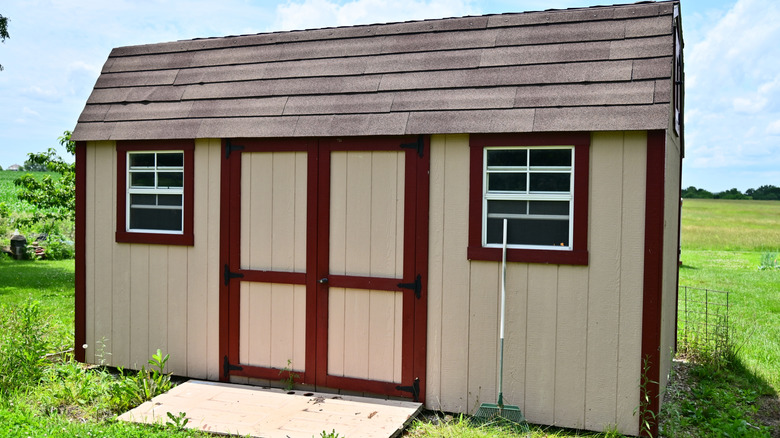
The key to getting the maximum life out of a wooden shed is preventative maintenance. Firstly, it's crucial that you keep water off the base of the building's frame. Water is the number one enemy of any wooden structure, so make sure it's placed on a gravel pad or concrete piers (not on natural soil or grass), to prevent moisture from accumulating underneath the floor joists. You should also leave at least 3 feet of clearance around the shed. Make sure to cut back any tall grasses, weeds, mulch, or overhanging branches that may trap moisture against the sides of the structure.
Periodically sealing and painting your wood shed will help prevent damage caused by heavy rains and other harsh weather. The roof is the building's first line of defense, so check the asphalt shingles for cracks and replace them as needed each year to keep the elements out. Furthermore, you should clean off any leaves or debris that may collect on the roof as soon as possible. Wet leaves lying on top of a wooden roof are highly likely to accelerate the water penetration process and promote rot.
Condensation in a confined wooden space promotes the growth of mold, mildew, and internal rot. Installing either gable vents, a ridge vent, or small soffit vents will help channel moist air out of the building throughout the year. You should also seal any openings around the foundation with either hardware cloth or caulk to prevent vermin like carpenter ants, termites, or rodents from causing serious structural damage. Once protected and functional, there are plenty of simple ways to completely transform your backyard shed into a workspace, studio, or custom storage hub.