

Bye, Toxic Pesticides — The Organic Solution That Removes Chewing Pests From Your Yard
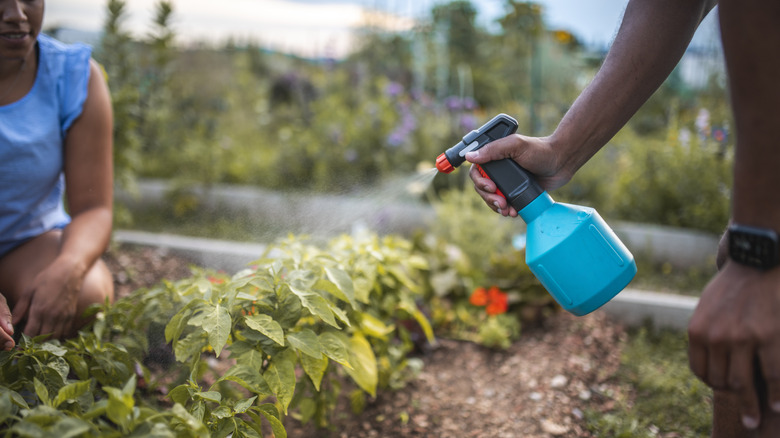
Going natural is a great way to rid your garden of destructive, chewing insect pests. But if you're hesitant to use homemade products in your garden, you're not alone. Fortunately, organic doesn't have to mean DIY! The key is to discover what kind of bugs are pestering your plants, and which non-toxic products can safely defeat them. That's where an ingredient you might not have heard of, spinosad, comes in.
Spinosad is a combination of two soil bacterium, which results in a mixture that is toxic to many insects. If chewing pests are your main garden problem, using this natural compound can be an effective solution against thrips, fruit flies, spider mites, leaf miners, and, of course, caterpillars. Just note that it works best against chewing, rather than sucking, insects. Spinosad products come in sprays, pellets, dusts, and granules. With these options, you can choose the one that works best for your plant, from orchard fruits to vegetables and herbs, along with leafy ornamentals.
Compared to other organic, bacteria-based insecticides, such as Bt-based products, spinosad has been found to last longer. Even better? A little goes a long way, as 1.5 ounces is all you'll need to cover an acre of plants. Most importantly, spinosad products aren't toxic to humans, pets, or the environment. Of course, even when you're ditching the chemicals for an all-natural solution, it's important to use sensible precautions to avoid skin or breathing irritation. Timing your application carefully is also important so that you don't inadvertently harm pollinators, including bees.
Apply spinosad strategically to maximize its effectiveness
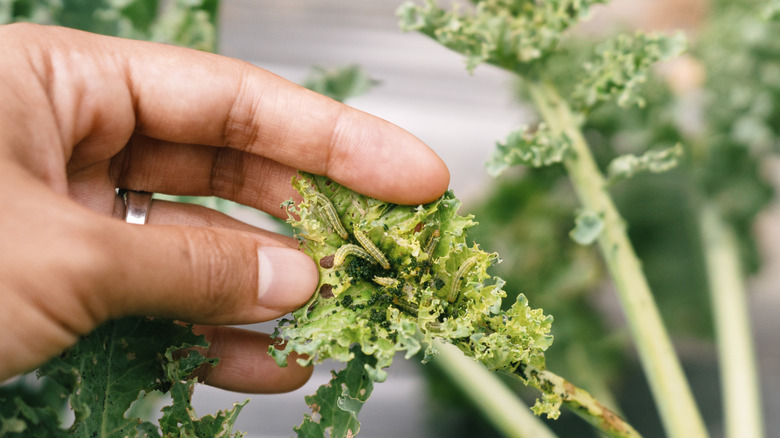
Keep in mind that even when using eco-friendly ways to keep bugs out of your garden, one product can rarely do it all. The easiest way to determine if spinosad products can help you with your particular pest problem is to examine the damage carefully. Chewing insects tend to leave unmistakable holes, frayed edges, or a skeleton-like leaf with only the veins remaining. (This is opposed to the damage left by sucking pests, who leave behind discoloration on leaves or flowers, as well as speckles on foliage.)
Once you determine that "chompers" are your main problem, purchase a spinosad-based spray, dust, or other form of the natural insecticide. They work best on pests in their larval stage. To avoid killing pollinators, use spinosad products in the early morning or early evening. This gives sprays time to dry, which matters because they are only toxic to pollinators when the foliage is wet from sprays. In terms of specific effectiveness against chewing insects that feed on plants, evening is best overall because the product begins to break down in sunlight.
Although spinosad products are considered non-toxic to humans, basic safety measures are always important. Avoid spraying or dusting your plants on windy days, and always wash your hands after using the products. Most importantly, read the label instructions and warnings on your chosen product before using it, and follow those directions carefully.