

Why Do Retaining Walls Tend To Shift In Winter?
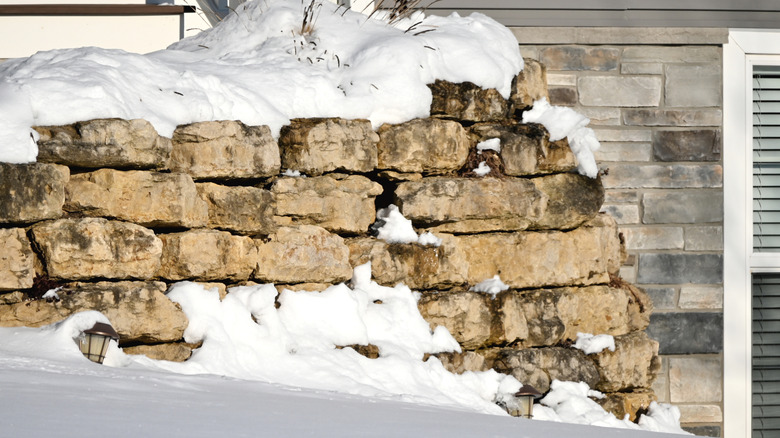
As winter sets in, homeowners spend plenty of time winterizing pipes and sealing windows. But one of the biggest features that's often left to battle the elements on its own is a retaining wall. While there are many compelling reasons to build a retaining wall on a sloped property, winter conditions can put serious strain on these outdoor structures. If you've ever stepped outside in early spring to find your once-straight stone wall leaning or completely out of alignment, you are far from alone. The primary reason behind this seasonal damage is a combination of freezing soil and trapped subsurface water.
Retaining walls are designed to hold back heavy earth, but autumn rains and melting sleet soak deep into the soil behind them. And when the weather turns freezing, the moisture freezes and expands. The issue with winter weather is that it doesn't always stay at a constant freeze. As temperatures drop and rise throughout the cold season, the ground expands and contracts. This causes your blocks to push forward and crack the mortar. The liquid will turn to ice, creating layers underground that push against your wall. Skipping proper drainage is a critical mistake that will cause your retaining wall to collapse, as even the strongest stone or concrete wall can be affected by the intense weight from wet soil and freezing pressure. Once spring hits, you will be left with serious damage.
Simple ways to protect your retaining wall before the freeze
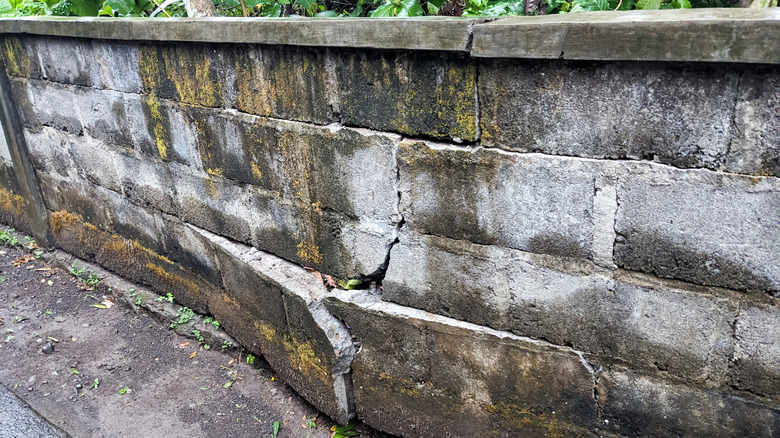
While it can be frustrating to watch your retaining wall shift during an icy winter, taking some preventative measures to protect it in the fall will prevent you from getting a hefty repair bill in spring. Following the essential do's and don'ts of building a retaining wall and maintaining it regularly will ensure you don't need to rip your landscape apart to protect your investment.
Walk around the top of your wall to ensure the surface is sloping away gently. This will help prevent rain or snowmelt from pooling against your wall. Check for any nearby downpipes or garden beds that may cause too much runoff to collect against the retained earth. If water tends to collect in this area, you can grade it or install a French drain to help divert it. Check weep holes, aggregate fill, or drainage pipes at the bottom of your wall and remove any dead leaves, mud, and organic matter so water can escape.
You can also use a breathable sealer on concrete blocks and natural stone to help prevent moisture from soaking into the porous material and causing microcracks. If you have a tall wall or an area where surface runoff collects, ensuring there is a layer of clean crushed stone or gravel along the top drainage trench behind the wall gives pooling water a quick path to drain away before the first hard freeze. If you spend an afternoon each fall doing these simple jobs, you will have a strong retaining wall that stands straight for years.