

What Is The 1/3 Rule For Retaining Walls?
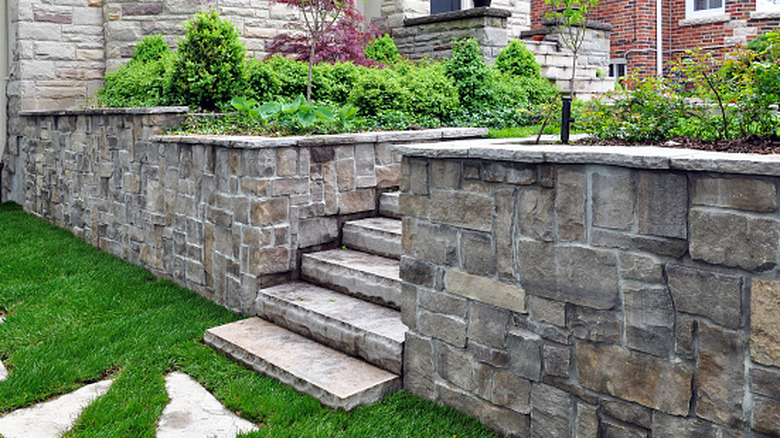
If your property sits on sloppy ground, there's a good chance erecting retaining walls is on your radar. It's one of the ways to hold back soil and rocks to prevent erosion, turn the slanted ground into a functional space, or simply add design to your landscape. But no matter the reasons behind building a retaining wall, maximizing its durability is a must if you want it to stand the test of time. And a good place to begin is by following the ⅓ rule. Basically, this is a general guideline that helps determine how deep the foundation (also known as embedment) for your retaining wall should be. After all, a weak foundation is a common reason why most retaining walls fail. So based on the ⅓ rule, the foundation depth should be one third the height of the wall. For example, if the wall section above ground is 6 feet tall, the foundation that's underground should be at least 2 feet deep.
Stability is what we're aiming for when calculating this embedment depth. Though the visible part of the wall appears to be doing most of the work of holding back the soil, in a real sense, the embedded section also plays a big role in structure stability. Besides literally anchoring the wall to the ground, it helps balance the forces acting against the wall to prevent wall failure.
How the 1/3 rule helps achieve stability of your retaining wall
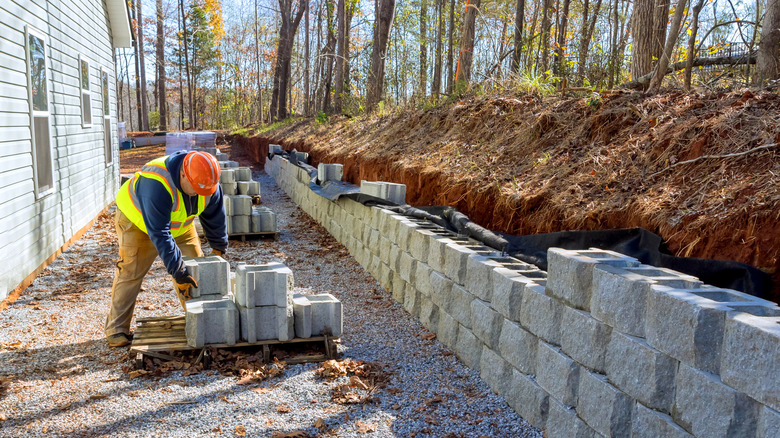
To understand how the ⅓ rule supports retaining wall stability, let's first understand how the embedment contributes to stabilizing the wall. While the wall is consistently being pushed by lateral pressure from the soil and moisture behind it, the foundation on the other hand carries the weight of that pressure plus the weight of the wall itself. By doing so, it keeps the retaining wall steady and grounded. That means the foundation size should correlate with the wall. And that's where the ⅓ rule comes in handy.
If you build a taller wall, there's more lateral pressure exerted because there's a lot more soil behind it pushing against it, and, therefore, you need a deeper foundation to maintain stability. With a foundation that shallower than required, you risk wall instability and might even start spotting signs that show your retaining wall is about to fail, like tilting and cracking. However, the ⅓ rule is only a starting point and shouldn't be used on its own.
The 1/3 rule for retaining walls doesn't work in isolation
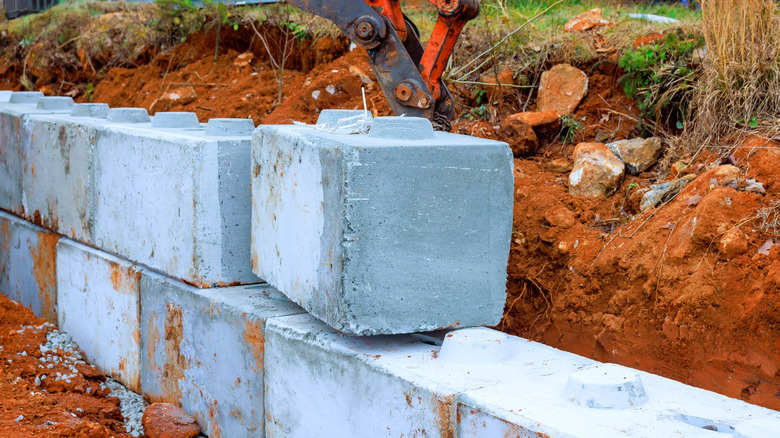
In an ideal situation, builders shouldn't solely use the ⅓ rule to determine the embedment depth. This rule is just one of many factors that influence how deep the foundation of your retaining wall should be. The other considerations include soil type, slope, drainage, and the intended use of the wall. For example, if there's clay soil behind your retaining wall, that is going to exert a bit more lateral pressure, especially when it's water logged, compared to, say, sandy soil. Also, if your planned retaining wall is below a driveway, you might require a deeper foundation to be able to carry the extra load that'll be exerted when cars park or drive on the pathway.
So how exactly do you use this ⅓ rule? Well, the rule alone can suffice when building a small or medium-sized retaining wall — anything 4 feet or less. However, instances where the structure requires a foundation more than ⅓ its height include: when walls are taller than 4 feet, built on unstable ground or soil with poor drainage, and built near a heavy load such as a pool, driveway, or shed. Under such circumstances, it's strongly recommended to work with experienced professionals like an engineer or licensed contractor. All in all, always factor in the do's and dont's of building a retaining wall so you can reap the full benefits of your investment.