

11 Modern Furniture Trends That Boomers Can't Stand

Whether you're looking to maximize market appeal when selling your home, or are looking for ideas to help baby boomer relatives with a home revamp, members from this generation are highly discerning. That's because there are so many home decor trends that boomers have watched come and go that they're often highly adept at recognizing when a trend is unlikely to last. This, in turn, makes many members of the baby boomer generation highly particular when it comes to choosing their furniture. But which home design trends put boomers off the most? More specifically, which types of furniture are least likely to make the mood boards of this generation's most savvy homemakers?
In order to answer these questions, we reached out to three interior design experts, to see which modern furniture trends least suit the sensibilities of their baby boomer clients. In exclusive interviews, they provided us with 11 design choices that tend to be avoided by members of this generation. Some come as little surprise, like low-level chairs that even a Pilates instructor would struggle to sit in. Others are more enlightening, like a preference for low-sheen finishes, which are easier to maintain. We learned the kinds of upholstery that most satisfies their sensibilities, along with the opinion among boomers on boucle furniture. From living room sofas to comfortable dining-table seating, if you're interested to know what boomers find most appealing in their furniture, you'll find the answers you're looking for below.
Ultra-low furniture sacrifices function for form

If you're furnishing a space with baby boomers in mind, then as we'll see throughout this guide, practicality and ease of use are perhaps the most important considerations to make. With this in mind, Cara Woodhouse, founder and principal designer of Cara Woodhouse Interiors, says that ultra-low, sculptural furniture choices are widely booed by boomers. "I love a sculptural moment," she admits in an exclusive interview with House Digest. However, she adds, "I find that many of my baby boomer clients have very little patience for furniture that sits extremely low to the ground." The same can be said for pieces that sacrifice comfort for the sake of a look. The reality, she says, is that regardless of a piece's photographic credentials, if you don't actually want to sit on it, then it's simply not doing its job.
Instead, she continues, boomers tend to favor furniture with a more comfortable seat height. This alone makes the pieces easier to use on a day-to-day basis, especially in spaces like the living room where they're likely to be used every day. Proper support is equally important, and generous proportions also earn kudos as far as boomer comfort is concerned. But that doesn't necessarily equate to traditional or "boring" furniture choices. Instead, says Woodhouse, "I'll look for something that still feels architectural and interesting, just with comfort and functionality built into the design."
Banquette or bench dining seating lacks support
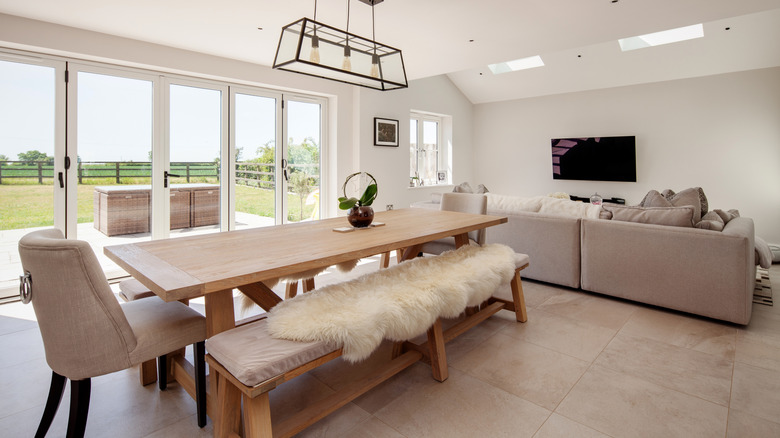
You may have heard that banquette seating is on trend in 2026, and if so, you're probably wondering why it's on this list. The answer is actually two-fold. In an exclusive interview with House Digest, Artem Kropovinsky, owner of Arsight Studio, first points to the lack of support offered by such seating arrangements. As he puts it, "Baby boomers want something behind their back when the dinner runs long." Banquette seating looks great in pictures, but as we've already seen, that means little if the thing isn't actually comfortable to sit on! Another reason to avoid banquette seating (and this applies to everyone, not just boomers), is that whoever is sat in the middle during dinner is effectively stuck there until everybody else gets up.
Instead, baby boomers tend to prefer real, traditional dining chairs. These, says Kropovinsky, provide the back support that older users need from their furniture, especially during longer meals (like Thanksgiving). As he puts it, "Comfort beats the beauty here. A simple chair lets everyone get up without asking the whole table to shift." More than that, the inherent support offered by a classic dining chair means that anybody struggling with mobility or back pain problems can rest more comfortably.
Boomers favor neutral palettes over bold, bright furniture colors
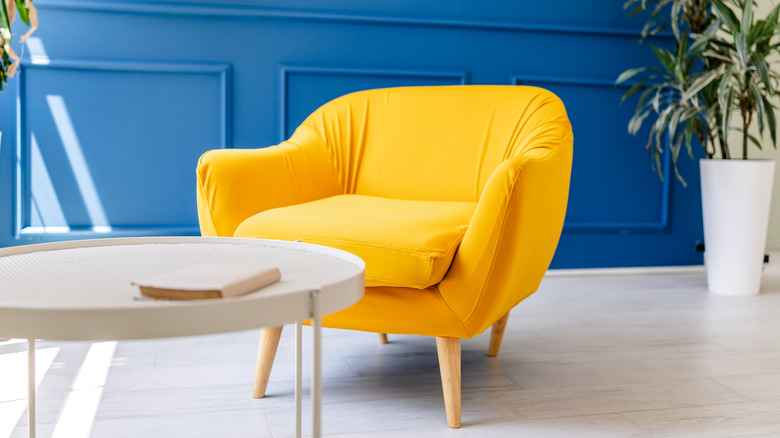
Drawing on her experience working with baby boomers, Lisette David, lead interior designer at Modern Concept Interiors, highlights a number of home decor essentials found in most boomer households. In an exclusive House Digest interview, she says that neutral colorways are one of the most common, and that, generally speaking, "Boomers tend to stay away from colors that are too bright." This goes back to the experience of decades, during which homeowners of this particular generation have seen how quickly bold trends can fall out of favor. Opting for furnishings that are bold and in your face feels risky, and honestly, the last thing boomers want to do is replace their sofa or armchair just to keep up with current trends.
Once again, this isn't to say that furnishings need to be boring to appeal to boomers. Far from it. While David explains that they "tend to stay more in the beige tones or brown color options," these are actually very much "en vogue" right now. They're neutral, for a start, which means that they can be easily layered with more interesting (and cheaper to replace) accents, like throws and cushions. Not only that, but they tie nicely with a growing movement towards more biophilic design modes, whereby homeowners are infusing their spaces with calmer, softer, more naturally-inspired colors. Believe it or not, beige matches this perfectly, reminding viewers of the natural tones of materials like sandstone and driftwood.
Unusual furniture designs, like animal shapes, feel too out there for boomers
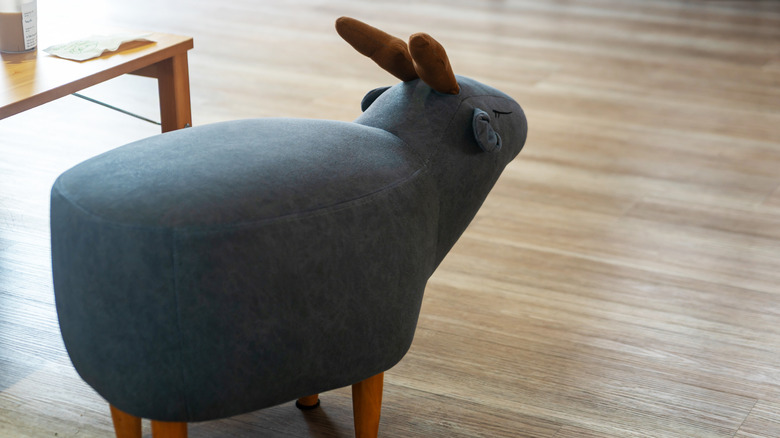
As we've seen, boomers rarely favor furniture that sacrifices comfort for style. Well, according to David, the same can be said for animal-shaped or inspired furniture. On animal-shaped pieces, she explains that boomers don't always appreciate such wild designs. As an example, she points to the Horse Lamp by Front Design by Moooi. "This horse lamp is an actual size of a horse that has a lamp shade on top."
Of course, animal-inspired furnishings, like animal-print textiles, are among the many home decor trends that every millennial has likely had in their homes at one point. And as David points out, "I have seen younger clients appreciate the horse lamp and other unique pieces such as the Rabbit Chair by Qeeboo," — a chair that's literally shaped like a rabbit. The thing is, whereas some view such pieces as marvelous, David points out that "boomers sometimes don't get the design aspect of a sculpture furniture piece being a piece of art." It's not that they don't understand that the above pieces can be used functionally. Instead, says David, "some boomers find it a bit out there and not practical."
Stone and marble coffee tables feel harsh, stain easily, and are difficult to move
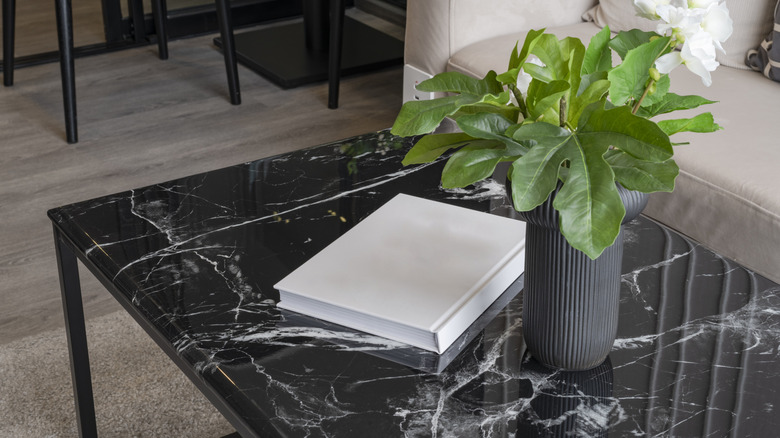
When you think about it, it probably makes sense that a marble or stone coffee table would feel impractical to homeowners from this particular generation. As Kropovinsky explains, "A solid stone coffee table can easily weigh a hundred pounds," which, if nothing else, is difficult to move around the room. That's true for anybody, regardless of the generation they belong to. But the reasons boomers baulk at such hefty furnishings goes deeper than maneuverability. Harsh, angular corners can look rough, for example. Kropovinsky also points out that some materials, especially marble, can stain easily if not properly maintained.
Fortunately, if you're dressing your living room for baby boomers, chances are that the best alternatives to your mood board's marble coffee table will cost you less. As Kropovinsky says, "Most of my clients would prefer an upholstered ottoman with a tray on top where they can put their feet up." Alternatively, they may prefer wood. In either case, you can expect to pay considerably less for such an item. You may even find an ottoman or wooden table at your local thrift store, allowing you to give your living room an affordable refresh while still appealing to boomer sensibilities. If you settle on something wooden, Kropovinsky suggests finding a table with soft edges. More importantly, he adds, look for "something that people can actually move."
Boucle furniture lacks the timelessness that boomers crave
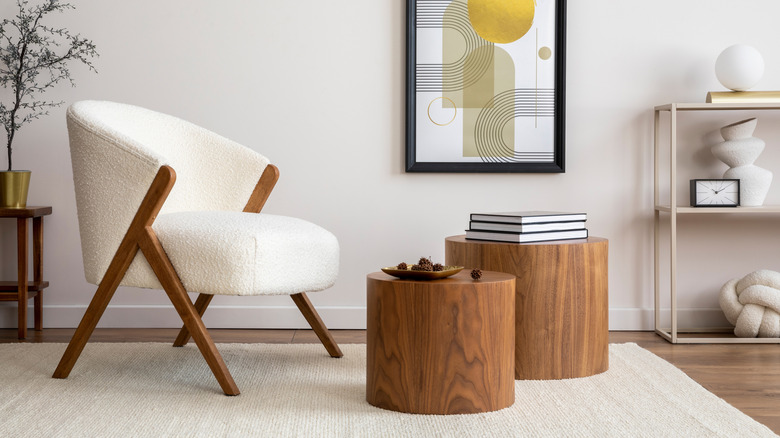
Up until recently, boucle furniture was seemingly everywhere. As Woodhouse says, it had such a huge moment that "at one point, it felt like every chair and sofa was covered in it." Now, though, she explains that many of her boomer clients are simply over it. They're not alone, either. In actual fact, boucle is one of several furniture trends that are out in 2026, with homemakers from various generations finding that it's been done to death. What they may not, perhaps, agree on is what should replace it. For boomers, says Woodhouse, the request is simple: their furniture should not feel tied to one particular moment in time.
So, what does this mean? Well, it goes back once again to the idea that boomers have seen how fickle fashion can be; that they understand the dangers of tying themselves to the mast of a particular trend. As for what Woodhouse is seeing more of on the wish lists of her baby boomer clients, the answer is manifold. She highlights a growing interest in beautiful wools, for example, along with velvets, linens, leathers, and highly tactile performance fabrics. "They still want texture," she explains, "but they want it to feel sophisticated and intentional, rather than like they bought into a trend that will immediately date the room."
High-gloss finishes scream high maintenance to experienced baby boomers
In a recent article, we explored just some of the modern kitchen trends that fail to impress baby boomers. Among them were reservations about high-gloss finishes, which means we were rather unsurprised to find them listed as one of the boomer generation's least favorite furniture trends. As for why, Kropovinsky explains, "Although high-gloss lacquer is having a moment, many of our clients already went through glossy furniture in the past." He adds that they recall how difficult it was to keep fingerprints from spoiling the look, not to mention how hard even a simple chip in the gloss could be to fix. To put it another way, high-gloss furniture requires far too much maintenance.
Instead, says Kropovinsky, "Boomers prefer wood with a satin or matte finish." If such pieces become scratched, he explains, they're easier to fix. High-gloss finishes, on the other hand, are much harder to make right should they become damaged, especially pieces that are used everyday and which are therefore more prone to knocks. Not only that, but matte and satin surfaces also feel softer and more inviting than the reflective sheen of gloss. They feel warmer, too, which is important. Baby boomers tend to avoid cooler, more minimally designed-spaces, instead reaching for rich, calming, and more understated natural finishes.
Armless sectional sofas feel both unfinished and uncomfortable
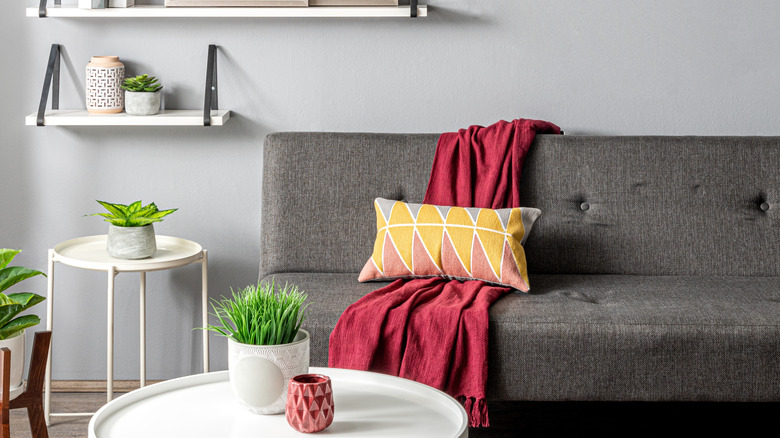
Armless sofas offer a degree of versatility to modern homemakers. As David explains, they allow buyers to place an end table close to one of the armless ends, making it easier to access and use. Others may also use the lack of an arm to stretch out in the evening when they're lounging. Unfortunately, despite their sleek, pared-back silhouettes and useful multifunctionality, there are several drawbacks to armless sofas.
One is that they can raise safety concerns, particularly for those sitting at the end. As a result, they also lead to wasted space, as users inevitably try to avoid taking a tumble. Finally, as you may well have guessed given their place in this guide, boomers typically aren't fond of armless sofas. That's according to David, who explains such configurations make them feel like the sofa is missing something, or that it's unfinished. Their reaction, she says, is to ask "Where can they put their arms up? Where can I lean on the arm rest?" Instead, you're probably better off sticking to a sofa that's "complete" with arms. Which is fine. There's hardly a shortage of more traditional sofa styles to pick from!
Discerning boomers can do without fast, disposable furniture pieces
Another home decor trend that homeowners of all generations are starting to avoid is fast furniture. Buyers are increasingly focused on longevity — of furnishing their spaces with items that will last. It's among the more ironic trends, in that the trend itself is to avoid pieces that will become "dated" as trends move on. But it's also about sustainability; ensuring that the pieces lining the walls of your living space aren't relegated to the rubbish dump in just a few years' time. As far as boomers are concerned, says Woodhouse, they tend to recognize quality pretty quickly, which means that fast, cheaply-made furnishings rarely pass muster. Indeed, she explains, "they're less interested in something that looks great online but feels flimsy or generic in person."
Instead — and this is sound advice for anybody interested in quality furnishings — boomers look for substantial construction. Per Woodhouse, they favor "beautiful materials, custom upholstery, vintage pieces, and furniture that feels like it has some permanence." The goal here is to buy well, and buy once — rather than buy cheap to fill a hole and then have to spend again just a few months' or years' time. As for how to do it, Woodhouse suggests "mixing those investment pieces with something unexpected." This sounds vague, but that's the point. "Unexpected" is not specific, so be creative, and look for pieces that bring you joy and add interest to your space. That way, she says, you can avoid your room appearing overly serious or predictable, but still enjoy the inherent quality and longevity of your quality furniture choices.
Bold-print furniture upholstery feels obtrusive, and is expensive to replace
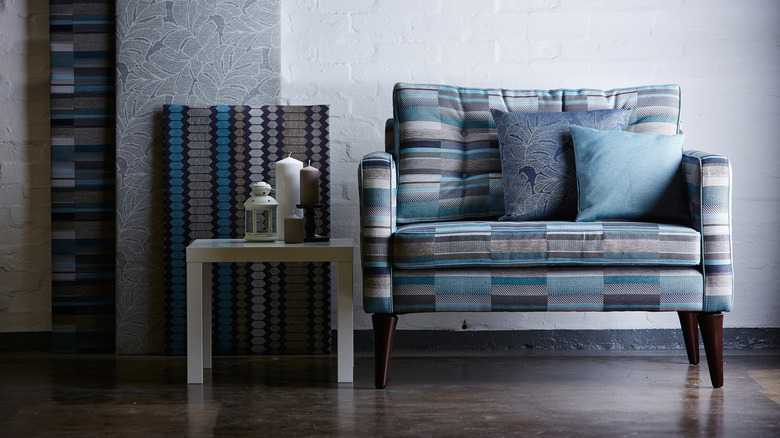
We've covered animal-shaped lamps and bunny-shaped chairs, and we've also touched on animal prints. In all cases, boomers would gladly be without them. But it's not only motifs or silhouettes of the animal kingdom that raise eyebrows. According to Kropovinsky, heavily-patterned upholstery — animal print or otherwise — has long-since had its day. As he puts it, "Many of our boomer clients already had a big floral sofa, and they already spent time to shift to something calmer." With that being the case, he adds, loudly patterned pieces in a room feel like a step backwards. Not only that, but they can also "fight" for space with art or other statement pieces.
Of course, if you're designing for yourself and don't need to worry about boomers, then there's nothing stopping you from adding charm to your space with this bold furniture trend. But if you are, Kropovinsky suggests something a little more conservative. "These clients," he explains, "usually prefer a solid linen with accent patterns on smaller pieces like cushions or curtains." Such additions are much easier to change out down the road should you become tired of them, and they're certainly easier on the wallet to replace. Remember, boomers tend to favor high-quality furniture pieces, which could easily remain comfortable and functional for up to, and even over, a decade. With that in mind, says Kropovinsky, "it makes sense to make it the calmest piece in the room."
Baby boomers a collected aesthetic versus matchy-matchy furniture sets
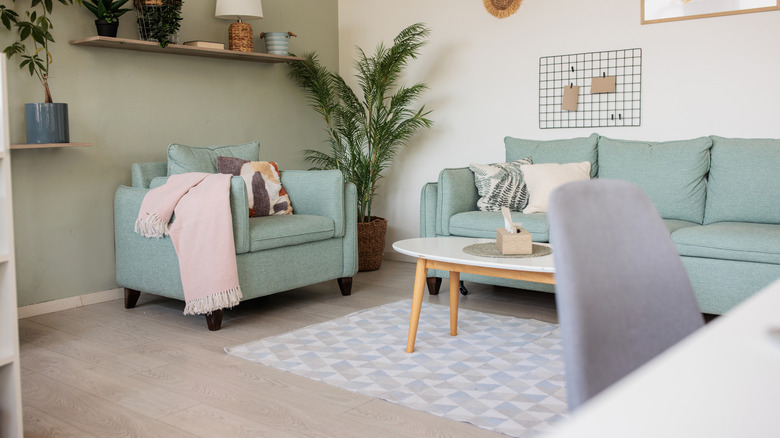
Another home decor trend that boomers agree should make a comeback is spaces that feel both lived in and functional. But what does that mean, exactly? Firstly, it means doing away with matching furniture sets. Which is interesting. As Woodhouse says, matching furniture was once incredibly common, even among boomers. However, she explains that more recently, "I find that many of my baby boomer clients no longer want the bedroom suite where every piece matches or a living room that looks like it was purchased off one showroom floor." Instead, she continues, the trick to giving your home an older, lived in feel is a more curatorial approach to decor. And that includes your furniture.
Luckily, this preference is not unique to baby boomers. Indeed, one of the most important current design trends is for homemakers to pursue a scheme that resonates with them, instead of desperately trying to match the cover of their favorite magazine. It's about curating different pieces that take your interest, and layering them together to tell a story that's reflective of you. To quote Woodhouse, the goal is finding furniture that "makes a home feel like it belongs specifically to the person living there." As for how you could do it, that's up to you. "I like mixing periods, materials, shapes and price points so that a room develops its own personality," offers Woodhouse as an example. She suggests pairing a vintage piece with something more contemporary — or a custom piece with something more off-the-shelf. Either way, you'll end up with a space that feels collected over time, rather than one that was bought as a job-lot from Wayfair.