

Forget Asphalt: 11 Driveway Alternatives That Look Just As Good
Whether you've decided that the disadvantages of asphalt driveways outweigh the benefits, or simply want to ensure you've considered all options, who could blame you? Your driveway is an important functional part of your home. It is, after all, designed to house your vehicles. If you choose unwisely, you could be left with a surface that's not fit for purpose. Not only that, but if you settle for asphalt because it feels like the only safe choice, you may not actually get the "look" that you want from the front of your home.
In the guide below, we've explored just some of the best alternatives that can lend your home just as much curb appeal (sometimes more) as your average asphalt driveway. There are more sustainable, recycled options for those who want to reduce their home improvement's environmental footprint. You'll find ways to make your lawn a more suitable driveway surface, and in case you're shooting for a coastal aesthetic, there are ways to achieve that as well. Whether your goal is durability, or you simply want to avoid falling foul of outdated driveway trends, you're sure to find an alternative that suits your sensibilities below.
Indian sandstone is more versatile than asphalt from a design perspective
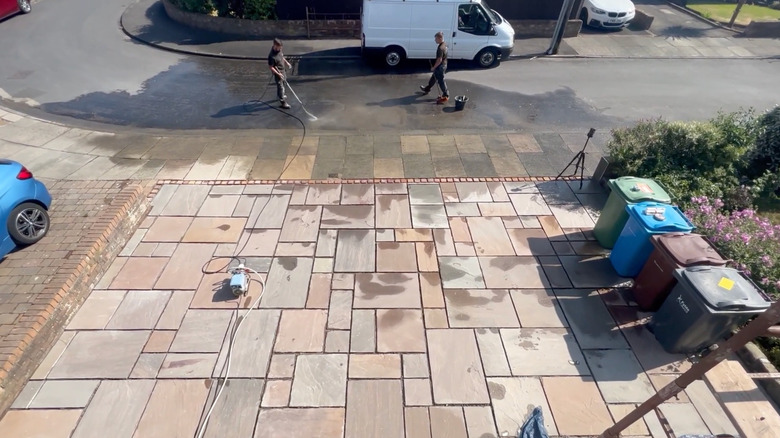
One fashionable material that'll make your driveway pop is Indian sandstone. Formed over millions of years from various sedimentary layers compressed with seismic pressure, it's both strong and highly durable. It contains high amounts of quartz, which lends it excellent hardness. It also contains feldspar, which offers extra strength. As for looks, since it can contain various mineral blends, it's available in a variety of beautiful vibrant hues. You could choose from warm reds, for example, as well as yellows, grays, and earthy browns.
Indian sandstone is more than just an attractive alternative to asphalt. It's also slip-resistant thanks to its naturally tumbled texture. Not only that, but its porous nature means further non-slip treatments will adhere well to the surface. It stands up well to hard weather, too, including mercurial extremes at either end of the temperature range — provided that it's properly maintained. However, on that note, it's worth knowing that, like asphalt, which requires regular seal coating, sandstone needs to be kept properly sealed to protect it from moisture, algae, and other organic build-ups. As for cost, you can expect to pay slightly more for natural stone compared to asphalt, too. Angi ranges the cost of natural stone pavers between $15 and $60 per square foot, versus asphalt, which ranges between $3 and $15.
Exposed aggregate driveways are durable and great to look at
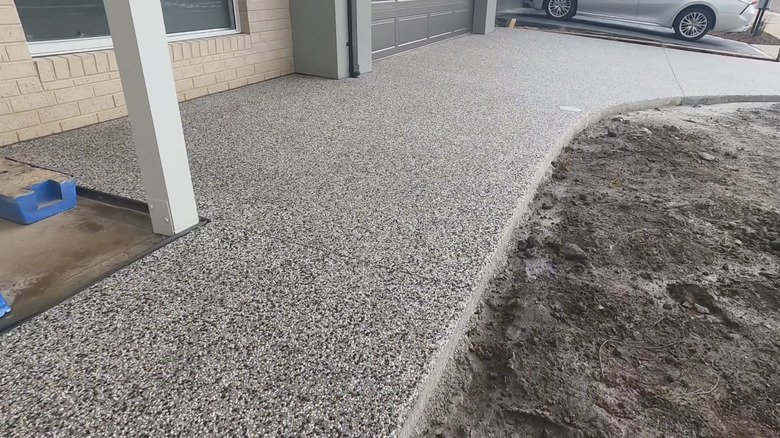
Another durable alternative to asphalt driveways is exposed aggregate. They're made by first pouring concrete into the area, before removing the top layer in order to expose the aggregates contained within it. The resultant look is both rustic and more natural than regular smooth concrete and asphalt. Not only that, but the concrete can contain aggregates of various colors and types, both subtle and bold. Oh, and since it is, after all, concrete, driveways of this type are exceptionally strong, making them a great choice for those who want to lay the driveway once and enjoy it for decades.
This is an important point. Properly-installed concrete can last upwards of 30 years, which often gives it the edge over asphalt, which typically lasts between 15 and 25 years. That is, of course, dependent on various factors, such as weather, traffic, and how well you maintain the driveway. But, on busy properties, the likelihood is that concrete — and exposed aggregate, which is basically concrete — will outlast asphalt. In colder climates, that exposed surface can also prove useful by providing extra traction for both vehicles and pedestrians, which is good to know. Price wise, Homewyse averages the cost of exposed aggregate between $13.53 and $16.53, which is potentially much more than you'd pay for asphalt. However, the practical and aesthetic advantages that come with it could well make it worthwhile, depending on your budget and long-term goals.
Crushed stone driveways can be gorgeous, and are considerably cheaper than asphalt
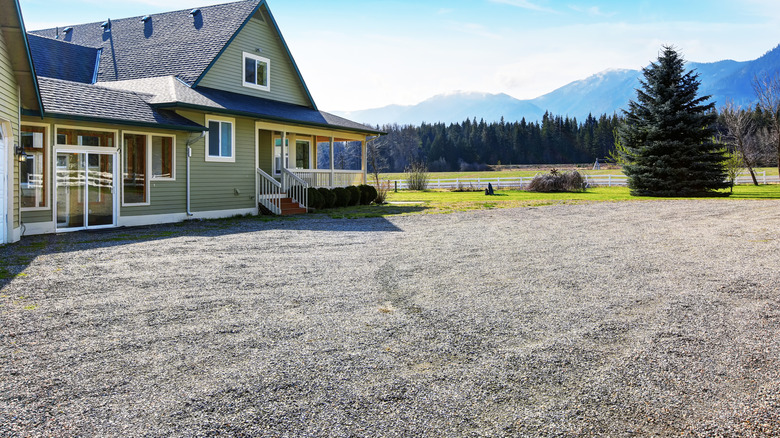
Providing relief to those resurfacing their driveways on a budget, crushed stone generally comes in much cheaper than asphalt per square foot. HomeAdvisor estimates crushed stone to cost around $30 per square yard (or $3.30 per square foot), which is reassuring. So, too, is the fact that crushed stones won't crack, like asphalt or concrete. It also drains well, and from an aesthetic perspective, it looks beautiful, since it's made from natural stone. You can specify your driveway in crushed granite, limestone, blue stone, and even marble, depending on the look you're going for.
Now, before you ditch asphalt for this cheaper, crack-proof, good-looking alternative, it's important to bear in mind its drawbacks. Yes, it's cost-effective, and yes, crushed stone looks absolutely beautiful. However, unlike asphalt, it's far more prone to weeds, which raises the stakes as far as maintenance is concerned. You may also need to top-up the stones from time to time, since heavy traffic and bad weather can cause displacement over time, leading to patches and bald spots. One way to mitigate this somewhat is to install reinforced grids beneath the surface, which can help to keep the stones in place. This will add to the overall cost of your driveway, although it should mean that you need less gravel, which could help to balance your budget.
Install a crushed shell driveway for a coastal vibe
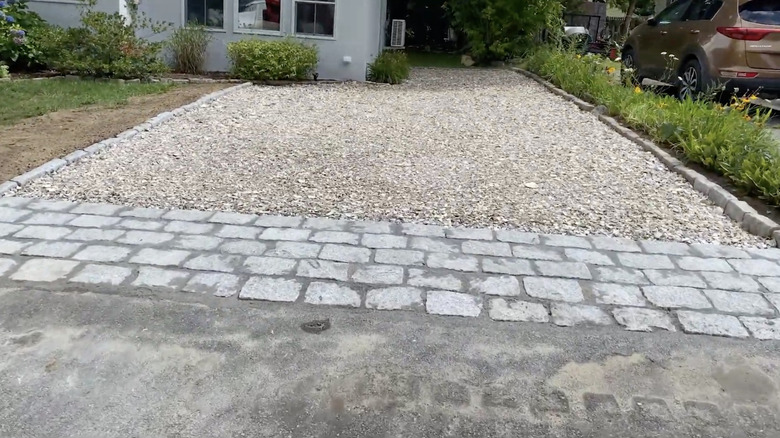
Crushed shells bring an altogether different look to driveways than asphalt. They're a superb driveway alternative for those seeking a coastal vibe, bringing natural beauty from the vibrant and manifold shapes, sizes, and colors of different shells. They drain very well, which is great if you're installing your driveway yourself and want to minimize the amount of extra work to ensure proper water run-off. They're also much cheaper than new asphalt and other alternatives like concrete, averaging, according to HomeAdvisor, around $0.60 per square foot.
One thing to bear in mind with crushed shells is that, like crushed stone, they can become displaced over time with traffic and weather. Not only that, but the shells, being organic, decompose and will become more compacted and even finer with use. That means you'll need to top them up from time to time. You may also need to weed a crushed shell driveway more than an asphalt one. Again, like crushed stones, weeds can become a problem as organic debris blows onto the surface and breaks down, creating a happy home for seeds to germinate.
Wood chips are a cheap up-front route to a rustic, beautiful driveway
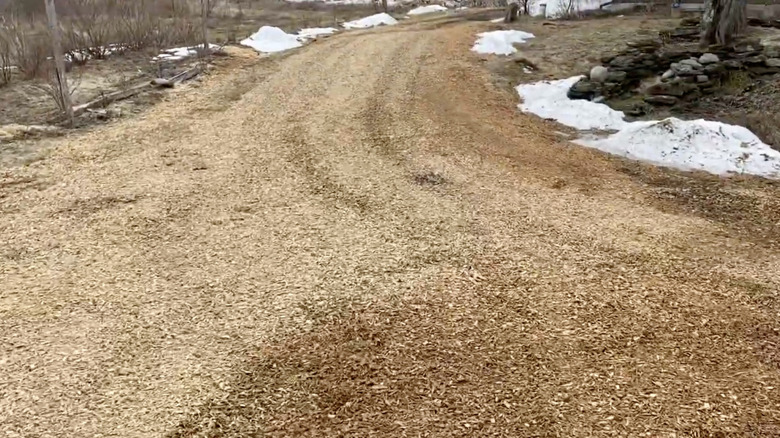
Wood chips are an excellent alternative for a more rustic driveway aesthetic. Firstly, they're completely natural, which suits them well to homes in the countryside, or those hoping to imbue a more "countryside" look. They're sustainable, too, which is reassuring for those who want to reduce their environmental footprint at home. Not only that, but because they're absorbent, they change in color depending on the weather — darkening in the wetter months before drying out and lightening in the summer. They also tick a big box for those hoping to DIY their driveway, since they can be spread easily much like gravel, provided the base is properly prepared. They're also much cheaper than asphalt.
The material costs alone are cheaper, especially if sourced locally from a sawmill or other supplier. You may even be able to get them for free with services like ChipDrop, which pairs arborists who need to dispose of wood chips with those who have use for them. However you get them, just remember that wood is an organic material. In other words, it will eventually break down, which means your driveway will need topping up from time to time. Wood chips are also lightweight, so they're more prone to displacement in areas with high winds than heavier materials such as crushed stone.
Grass paver and grass-strip driveways look far more natural than asphalt
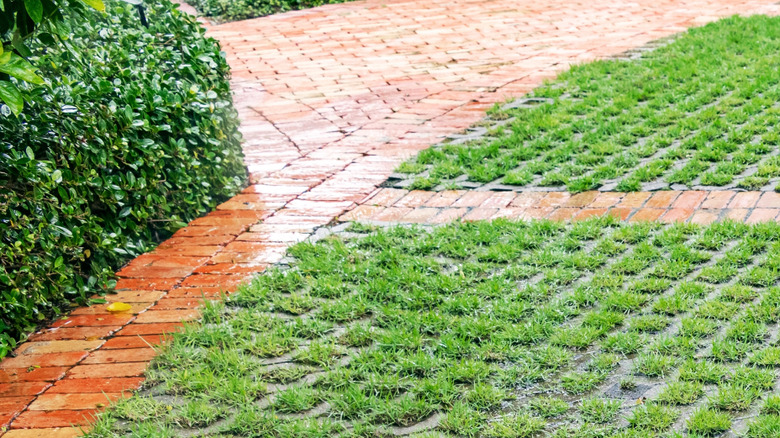
Another gorgeous alternative to asphalt is to seamlessly integrate your driveway with your lawn. Of course, you wouldn't want to just drive your car onto the grass and hope for the best, especially when it's wet. However, with a reinforced paver system, you can easily use it year-round without tearing up the grass. Such systems feature grids, which provide sturdy underground support for heavy loads. You plant your lawn in the holes between the grids, and once it starts growing, the grids help to protect the soil and root systems beneath, thus keeping your lawn in fine fettle. Costs for such systems vary, but as an example, Landscape Discount offers 40 square feet of grass pavers for less than $550.
Another way to do this is to install a grass strip driveway. This can be done with pavers, concrete, asphalt, or even gravel. It essentially involves running a strip of grass down the middle of your driveway, with flanking strips of your chosen hard surface on either side. Doing it this way helps to break up the monotony of all-out asphalt driveways, while also cutting down on the material costs — since you'll need to pave less of your driveway. Just make sure that your paved strips are wide enough to accommodate your vehicles, especially if you choose not to reinforce the grass in the middle.
A tar-and-chip seal driveway is durable, rustic, and cost-effective
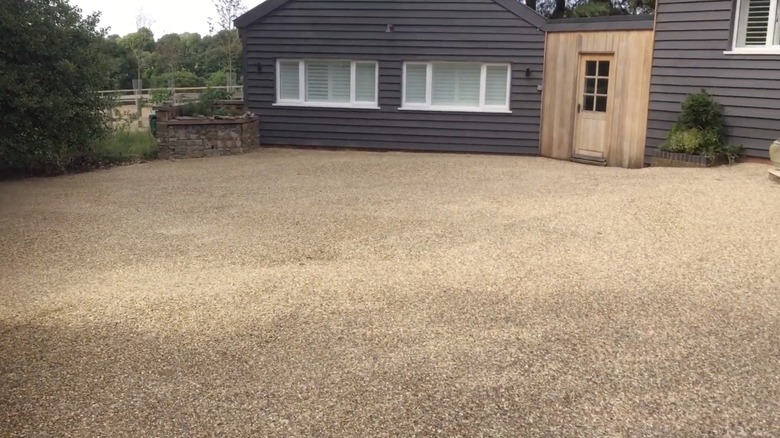
Laid by first applying a tar binder, and then spreading aggregate chips over the top, tar-and-chip seal driveways are another popular choice for those who need long-term reliability. They're a rustic and more durable alternative to gravel driveways, typically lasting for up to 10 years without the need for much maintenance. Such surfaces drain well, and importantly, they're usually cheaper than asphalt, ranging between $1 and $5 per square foot according to HomeAdvisor. As for looks, the crushed stone aggregate gives the surface a beautiful, rustic aesthetic that's customizable by specifying different stones.
Now, if durability is your ultimate concern, then it's important to shop around to get the best possible price. While a 10-year lifespan is pretty good, asphalt can last up to 20 if properly maintained. Not only that, but chip seal driveways rely on a number of important layers working well together to ensure durability. If one fails, then it can call the rest of the surface into question. With that being said, it's worth remembering that, per Angi, asphalt can cost $13 per square foot at the higher end. In other words, even if you paid the upper end for a chip-seal driveway, you could theoretically install the driveway twice for less than you'd spend for an asphalt driveway. That's why shopping around is key. If you can score a decent chip-and-seal driveway deal, then there are real savings to be made, all while enjoying the rustic aesthetic of your chosen aggregate material.
Natural gravel looks earthy and rustic, and it's cheaper than an asphalt driveway
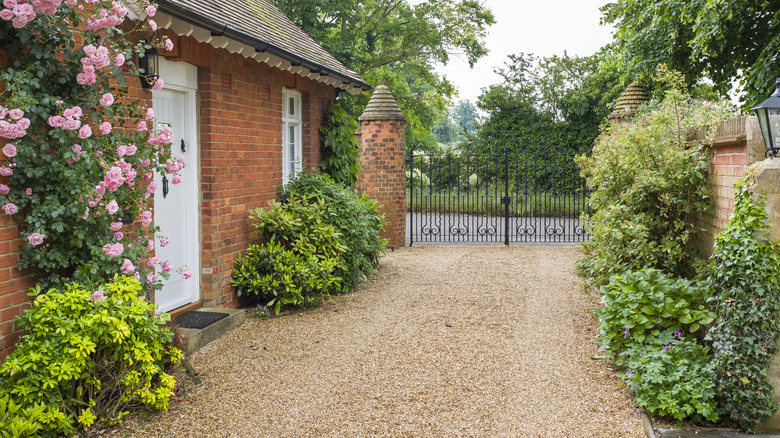
Gravel is a timeless choice for a driveway, for good reason. Installing one can be very DIY friendly, and provided that you include a decent sub-base — perhaps with some grids to keep the stones in place — it can last a long time, too. Gravel drains really well, which is helpful in rainy climates, and it's easily repaired, often requiring little more than a rake across the surface and the occasional top-up. Most importantly in the context of this guide, gravel driveways look great! Gravel is, after all, made up of naturally occurring stone, which lends the kind of rustic beauty to the front of a home that asphalt simply can't compete with.
As you might have come to expect by this point, there are some disadvantages of gravel driveways. They may need topping up from time to time, especially if you don't reinforce the driveway with grids to keep the stones in place. While gravel costs less up front than asphalt, those savings could diminish over the years as you pay for extra gravel to keep the drive in good shape. It's also important to choose the best type of gravel for your driveway. For DIY installations without a grid system to keep the stones in place, you may be better off sticking with angular crushed stones, since they lock together better than smooth stones, thus preventing excessive migration. But if you're happy to go through the prep work necessary to lay your subbase and grids (and ensure a grade, to aid drainage), pea gravel could well be a good choice. It's certainly a beautiful one, and your feet will thank you for using smooth stones should you need to dash out to catch the courier!
Recycled concrete looks good, performs well, and is more sustainable than new asphalt
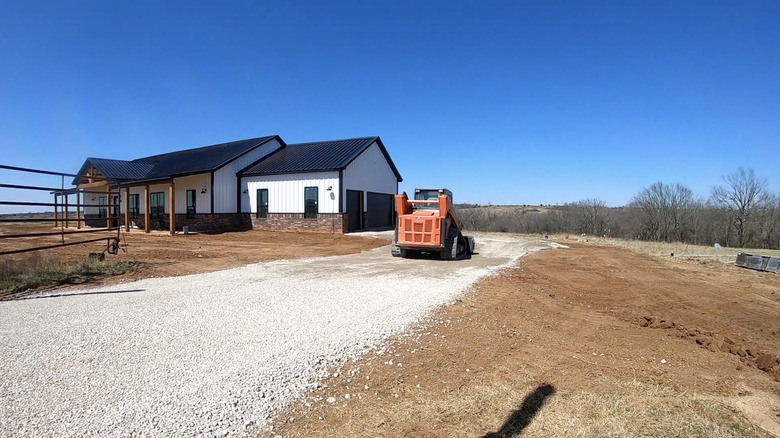
If you're toying with the idea of concrete, but it irks your sustainable sensibilities, recycled concrete could be the affordable, eco-friendly driveway solution you're looking for. Like gravel and crushed stone, it has an aggregated look that's more rustic than smooth concrete. It's more environmentally friendly than fresh concrete or asphalt, too, since it uses up old concrete that would otherwise be relegated to the skip. It's laid like an aggregate and then compacted to form a solid, reliable surface. Driveways made from recycled concrete are very strong, but they're also highly permeable (which is good for drainage). They come with the added benefit of low costs, too — certainly compared to asphalt — with Angi averaging the cost at around $2.50 per square foot.
That's cheap enough that you may be able to overlook some of this material's less advantageous properties. Since the material is crushed, it lacks that smooth, sleek appearance of asphalt and newly-set concrete. It may also be more prone to shifting, since it's incredibly porous and therefore more susceptible to excess rainfall and extreme freeze-thaw cycles. However, that last point is also an advantage, since the material's porosity can actually help to mitigate against flooding. Not only that, but any holes, ruts, or cracks that do form are easy to repair by yourself, which can further reduce the ongoing costs of maintaining your driveway.
Resin-bound stone driveways are strong, permeable, and look great with little maintenance
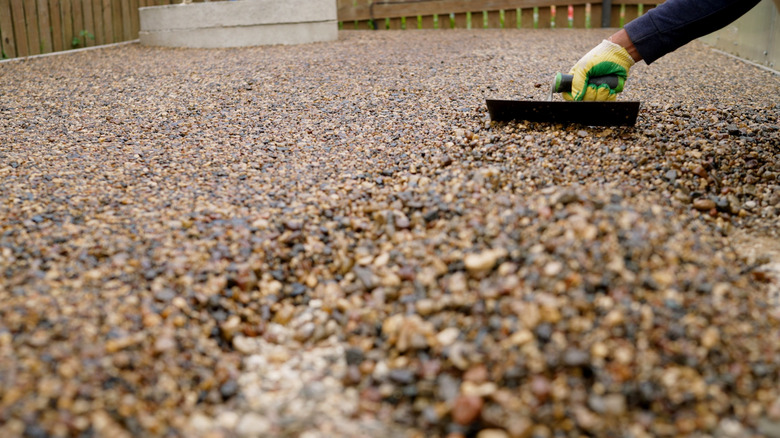
Resin-bound driveways are very similar to stone or gravel driveways. Only, instead of using grids to hold the stones in place, or relying on angular stones locking together, the aggregate is literally bound in place with resin. It's a simple upgrade to improve a steep gravel driveway, but honestly, it's a beautiful alternative to asphalt at the front of any home. The immovable, yet flexible, surface blocks weeds, while flexing under heavy loads without cracking. The resin is permeable, too, which is good for drainage. And since the aggregate beneath the resin is natural stone, which in turn is available in myriad colors, it can also look absolutely stunning.
Another bonus of this driveway type is durability. With proper care, resin-bound surfaces can last for up to 25 years. As for what "proper care" means, they're actually quite low-maintenance, requiring little more than a regular brush and the occasional pass with a pressure washer. Just know that they can be quite expensive, and that the cost depends, to an extent, on the aggregate you choose. A resin-bound gravel driveway, for example, might cost between $18 and $24 per cubic yard, according to Angi. Swap out gravel for crushed limestone, however, and it could cost you anywhere between $30 and $115.
Interlocking pavers are strong, safe, and available in a variety of styles
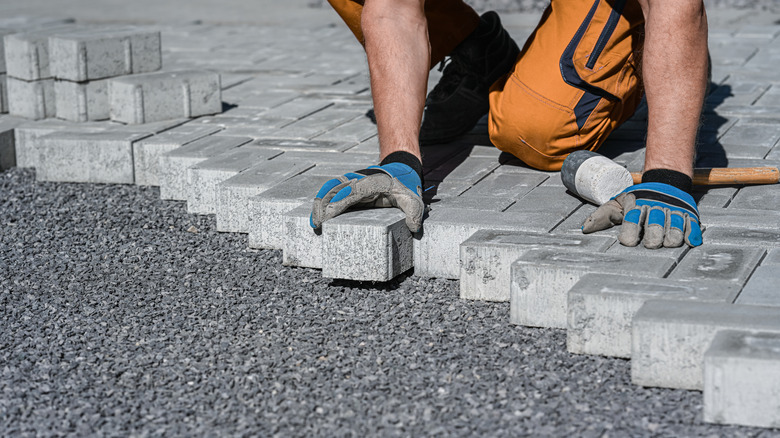
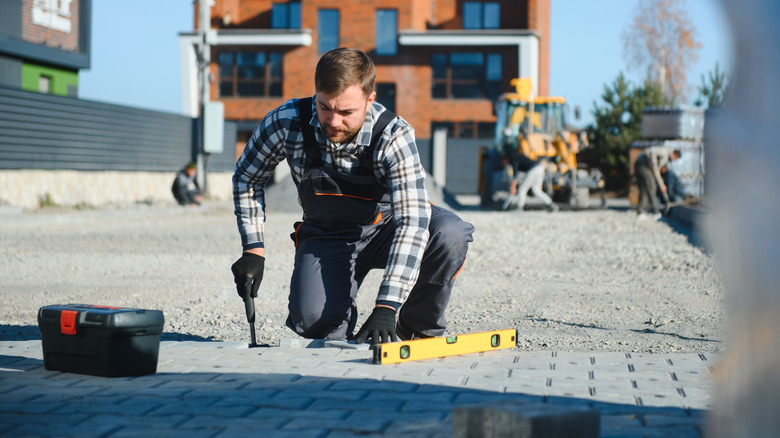
Our final alternative to asphalt driveways actually comes in a variety of types. We're talking about interlocking pavers, which can be specified in various materials and sizes, and which therefore stand to bring a many different finishes to your home. You could choose red bricks, for example, or for something entirely different, you could specify concrete pavers. Not only that, but you can also get super creative with your pavers' layout, like installing a herringbone design, much like you might indoors with parquet flooring. Or you could have them arranged in an intricate circular design. It really depends on the shape of your driveway and what most appeals to your inner driveway designer.
Regardless of the design, interlocking pavers work together to spread heavy loads, which means they're exceptionally strong. They're also among the most permeable driveway paving types, since there are gaps between each stone that allow water to easily drain. Importantly, those gaps are filled with sand, rather than solid mortar or cement. This allows the pavers to move and flex, thus mitigating damage from freeze-thaw cycles and heavy traffic. Even if one does become damaged, you can simply remove the paver in question and replace it, rather than having to treat or resurface the entire driveway. The main disadvantage lies in the cost. Upfront, per Angi, they generally cost more than asphalt, averaging between $5 and $50, depending on materials and labor costs. That may not be a deal breaker if aesthetics are your main concern with asphalt. But it's worth factoring in if you're resurfacing your driveway on a budget.