

Not Typical Concrete Pavers: The Swap To Make For A More Unique Path Design That Holds Strong
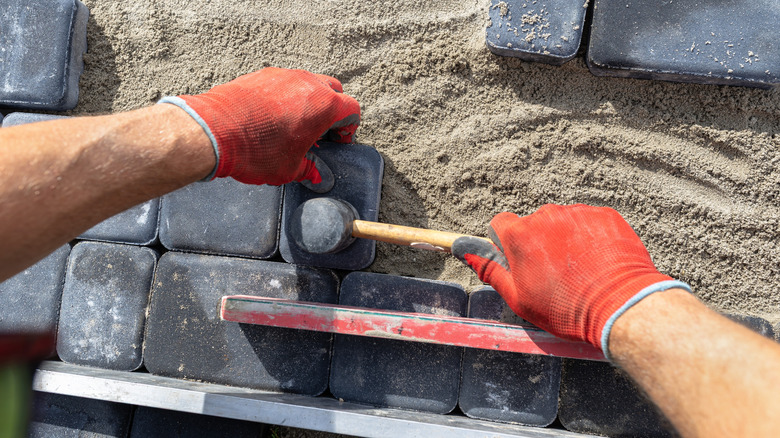
While you'll find that there are numerous innovative walkway designs that could spice up your backyard, a lot of people turn to typical concrete pavers by default when building a new garden path. A type of pre-cast concrete, pavers are relatively affordable and easy to install. However, there is another option that offers excellent durability and has a variety of customization options to create a more unique design: cast-in-place concrete.
Rather than laying a collection of pavers, cast-in-place concrete pathways are made by building forms, mixing the cement on site, and then pouring the resultant concrete into the forms. Mesh or rebar can also be added inside the concrete to increase durability and allow for larger slabs. The concrete is then left to harden and cure before the frames are removed. You'll just have to remember to factor in enough time for the concrete to cure, which can be a challenge in inclement weather.
While cast-in-place concrete paths may not offer significantly greater strength over pavers because the slabs can be prone to cracking on shifting soils, installation is often much faster, easier, and more customizable. In most cases, the path is poured in sections, but slabs can either be butted up against each other or placed with gaps in between, allowing for interesting stepping-stone-style walkways. If you have a sloped yard and want to incorporate stairs, you'll find that cast-in-place concrete's self-leveling nature will fit your yard's unique needs better than pavers or pre-cast concrete steps would. You will also find that cast-in-place concrete pathways can give you the unique design elements you may be looking for, such as variations in slab shape, color, and texture.
Why cast-in-place concrete can give you a more unique path design
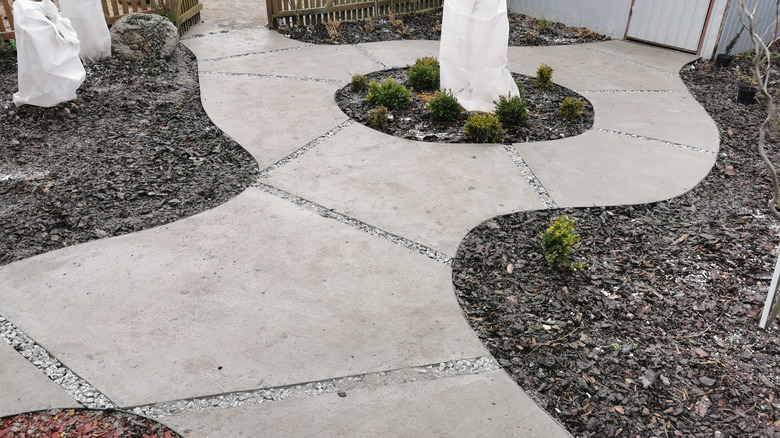
One of the major advantages of installing a path using cast-in-place concrete is that you can customize both the shape and the aesthetics of the finished product. To start with, the concrete can be poured in nearly any shape configuration that you desire, as long as you can create the form to hold the concrete until it hardens. This allows you to design and lay beautifully curved paths around existing garden beds, for example. The concrete can also be interspersed with bricks, gravel, or soil in the gaps. Growing a creeping ground cover between the slabs is a clever upgrade that can make your yard more inviting.
With this type of installation, you also don't have to be stuck with the standard gray color of pavers. A cast-in-place mixture can be colored before it's actually poured into the forms. You could even dye the slabs that make up your path in alternating complementary colors. Having the concrete stamped or textured after it's been poured is another unique way to add dimension to your hardscaping. If you want a less smooth surface, consider a DIY rock salt finish or adding some exposed aggregate to the concrete slabs to give your walkway that bumpy pebbled look. On top of this, it's a good idea to apply a sealer, which will not only add to the durability of the path but could give it a nice finished look as well.