

He Uses Quikrete To Create DIY Tie Dye Pavers That Give His Patio A One-Of-A-Kind Look
We may receive a commission on purchases made from links.
Is your patio due for a makeover? Or, maybe you've considered a number of trendy ideas for designing your perfect patio, but none of them seem to be exactly what you're looking for. Essentially, you want something that's quite unique but matches your personal style. That's exactly what artist Carlson Hatton had in mind when he created his tie-dye pavers using Quikrete and showed the process in an Instagram clip. It's actually easier than you might first think, because all you need is a mold for making the paving stones and colored concrete for the tie-dye effect.
By definition, tie-dyeing is normally used to create random colored patterns in fabric by tying up portions so that some parts can accept the dye and others are left original. Hatton manages to achieve that same random flow of color by using two batches of Quikrete in each mold, both of which vary in shade. And you can actually replicate this method to create your own one-of-a-kind patio that will ultimately be admired by whoever sees it. All you need are molds for your pavers, a few bags of Quikrete, buckets for mixing, vegetable oil, and some Goodtake Concrete Pigment Powder or liquid cement dye in your color of choice. You can either make your own molds using scrap wood for budget-friendly pavers, or you can purchase ready-made plastic molds, like this SwiftPulse 6 Pack or these Betonex stamped molds.
How you can DIY your own tie-dye pavers using Quikrete
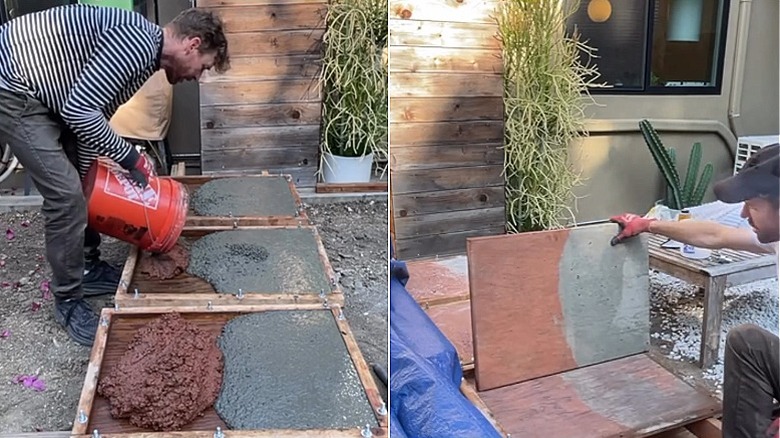
Before you mix up your concrete, make sure that you cover the inside of your molds liberally with vegetable oil. This will ensure that you'll be able to remove the finished pavers without breaking them. Make up your first batch of Quikrete following the instructions on the bag. You want to end up with a spreading consistency that's not too runny. Pour this into a portion of each mold and smooth over the top. You'll get a better effect if you do this randomly in each mold rather than making them all the same. Make sure you tap the molds on a hard surface to remove any air bubbles.
For your next batch of concrete, you want to add the pigment powder to get your desired color. Use this to fill the remaining portions of each mold, and then grab your trowel to smooth the surface. Once your molds are filled, you want to leave them at least overnight until the concrete is completely dry. Covering the concrete-filled molds with damp towels should stop them from cracking as they dry. This is especially important if you leave them outside and they're going to be exposed to sunlight.
When the pavers are dry, you can carefully take them out of their molds and admire your handiwork before using them on your patio. If you wanted to add even more aesthetic beauty, you could make additional pavers using two different colors and then mix them up to create a very unique design that's all your own. Finally, if you have any Quikrete left over, you can use it to transform plain glass jars into unique lighting for your distinctive new patio.