

Don't Trash It: The Fall Flower To Add To Your Compost After It Dies
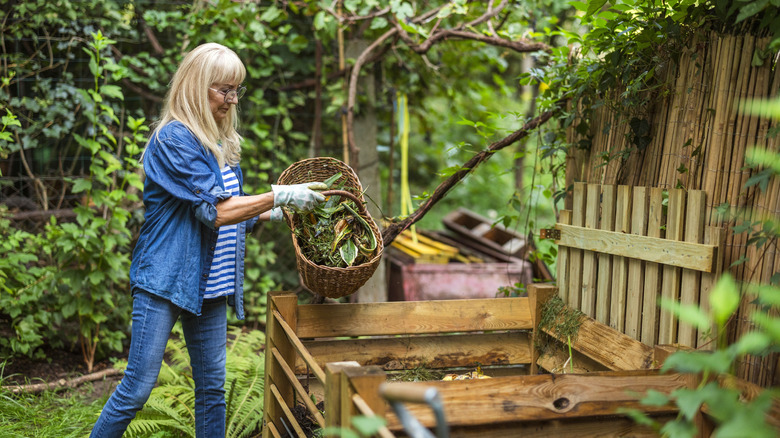
Late-season florals are a great way to bring some color to your space as the leaves start to fall, but once their blooms start to fade, it's time to say goodbye. Mums, in particular, are an especially popular selection — their bushy growth makes them a fantastic pick for autumn — but unless you're willing to put in the work to keep mums alive year-round, they usually start looking a bit rough around the edges after the first few freezes. Rather than dumping them in the trash can, try adding them to your compost pile. These flowers can act as both green and brown material, depending on how fresh or dry they are. So regardless of what your pile needs, they're likely to be a welcome addition.
If you're more of a fan of decorating your house with cut flowers, we have good news: This bit of advice applies to cut mums displayed in vases, too. Of course, regardless of how your flowers were displayed, it's important to make sure that you're not accidentally tossing anything inorganic into your compost pile. Make sure to remove any tags, netting, rubber bands, styrofoam, wire, or ribbons that were a part of the arrangement before dumping your flowers in the compost. In the proper conditions, this plant material will break down fully after around three months, giving you more than enough time to boost your supply of compost before it's time to start planting again in the spring.
How and when to compost your mums
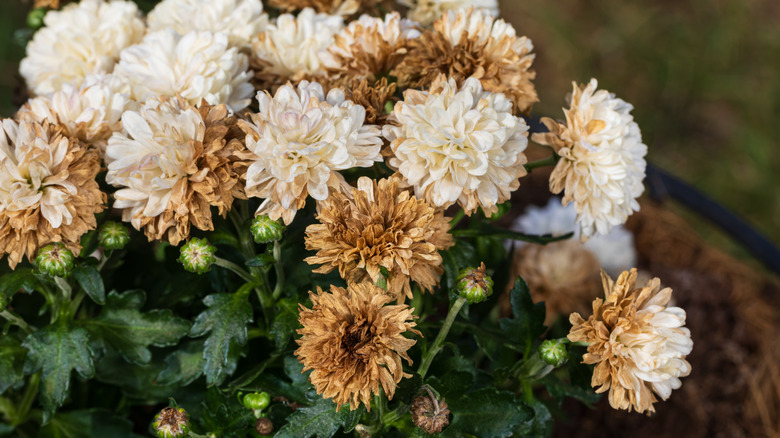
As mums dry out, they transform from a "green" material rich in nitrogen into a "brown" material rich in carbon. Because of this, you have two choices for when to compost your mums, depending on what your compost pile is in need of. The best green/brown ratio for compost is one part green to two to three parts brown, so keep this balance in mind while you're deciding. If you need more greens, compost your mums right as they start to fade, while there's still a solid amount of moisture in the leaves and petals. If you're lacking browns, allow them to naturally dry out for a bit.
The actual composting process can be as simple as dumping the entire plant into your bin right out of its container, especially if you're working with cut flowers or a smaller potted mum. But if you're dealing with a larger container and looking to save some soil for future planting, lift out the plant and shake off the root ball before adding it to your pile. If you want to speed up the breakdown process or your compost bin requires smaller pieces, use some pruners or garden shears to cut the plant into more manageable chunks. After mixing your compost pile regularly, maintaining a healthy amount of moisture, and keeping the balance of greens and browns in check, you'll be left with a ton of nutrient-rich material that can be a major help for your future plants.