

Furniture Restoration Vs Refinishing: What's The Difference?
We may receive a commission on purchases made from links.
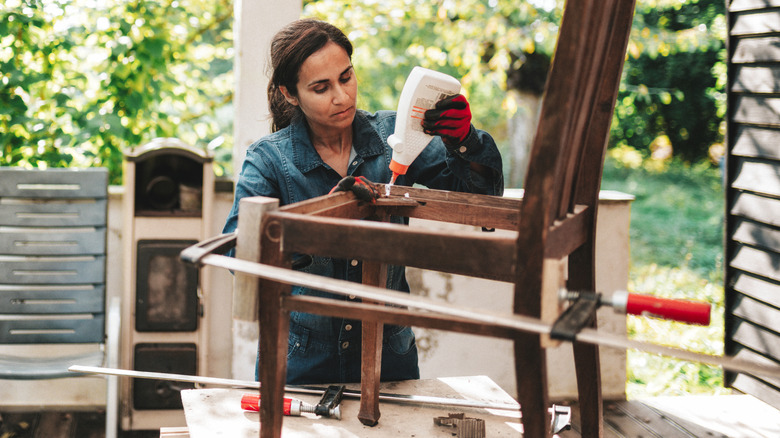
Furniture restoration and refinishing are often seen as interchangeable, but when it comes down to it, they're actually very different processes. While they both allow you to successfully flip thrifted furniture and each seeks to create a more desirable final product, they differ in their overarching goals. Furniture restoration is all about bringing pieces back to their original state — correcting damage and replacing missing features while keeping the final product as close to the designer's intended look as possible. Refinishing, on the other hand, involves removing the existing finish on an item and giving it a new coat of varnish, paint, or stain.
While it might sound like refinishing can only be used to give a piece a new look, that's not always the case. If you go for a finish that's close to the original piece's appearance, this step can be a part of a wider restoration DIY. These strategies can be used independently or together, but the best option for your project will depend on your goals and the specific type of damage, if any, that a piece has.
As a general rule of thumb, simple refinishing comes in handy if you're working with a piece that's in overall good structural shape but needs a bit of an upgrade — think outdated wood tones or paint colors that no longer match your desired aesthetic. Restoration, on the other hand, is perfect for bringing vintage or structurally damaged pieces that have seen better days back to their former glory. If you come across a piece with good bones, there's no reason to leave it behind, as both of these strategies are great DIY options that can help you transform trash into treasure.
What's involved in refinishing furniture?
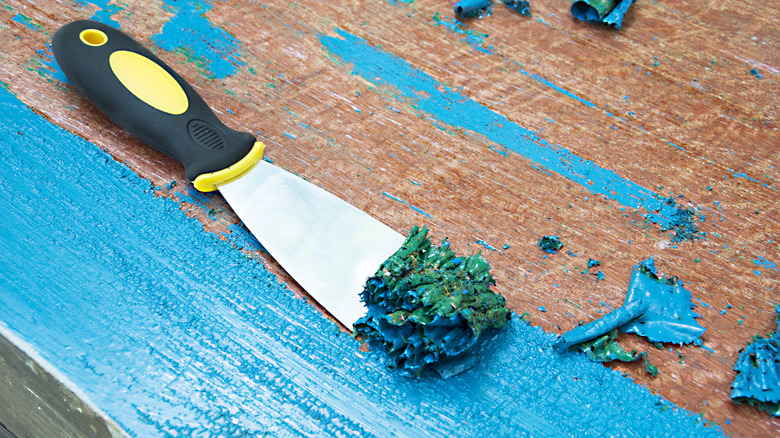
Refinishing furniture involves two main steps: removing the existing finish and adding your own. Unfortunately, this first process isn't very easy. There are two main ways to strip furniture, and both involve quite a bit of time and effort. Sanding with an orbital sander is the less intimidating strategy, but the second, applying a chemical stripping agent and scraping off the existing finish, can help to speed up the process quite a bit. It's also common to combine both of these methods, going in with a chemical product first and following up with the sander to get off that last stubborn layer and ensure you're working with a clean surface.
Once the old finish is gone, the bulk of the hard work is done. From there, you get to go in with your paint, varnish, or stain of choice. A simple change in the color of stain is a great way to update a product that feels dated or make it fit in better with your existing decor, while paint is more commonly used if you're working with a piece that isn't made of the best quality wood. Of course, this is also the point where you can opt for a more restoration-focused strategy. If you like the original paint or stain color but it's a bit too banged up to salvage with spot treatments, stripping the piece and refinishing it with a similar-looking product can help to bring the item back to its original look.
Strategies for furniture restoration
Restoration is a wide-ranging umbrella, and in many cases, it's a multi-step process to fully bring your furniture back to life. Simple fixes include removing water marks with petroleum jelly, using epoxy resin to repair nicks and chips, replacing broken or missing hardware, and scraping off stubborn surface imperfections. Products like Restor-A-Finish or even a simple penetrating oil can also be applied to give wood furniture a smoother and refreshed look without going through the full refinishing process. If you're lucky, all your restoration will require is a deep clean and a few of these simple fixes, but it may be more comprehensive.
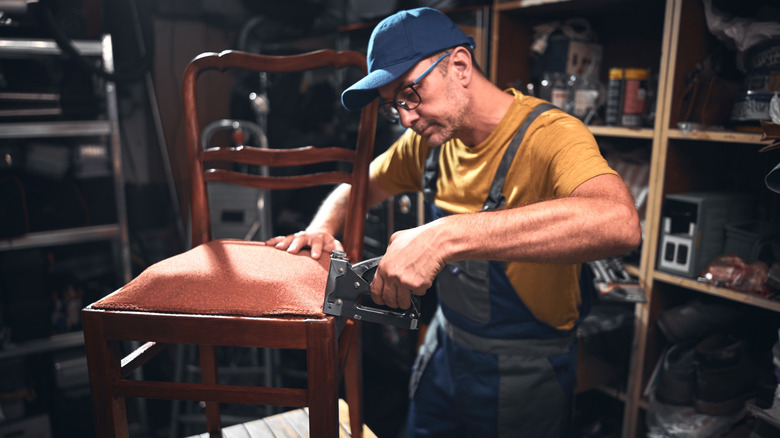
More involved restoration work might include reupholstering items, performing structural repairs, or even completely rebuilding and reassembling a piece. Generally speaking, stripping, a necessity for full-scale refinishing, is seen as a last resort when it comes to restoration projects. It still might be necessary in extreme cases, but you'll much more frequently see spot treatment and color-matching in an effort to maintain the item's original look and hard-earned patina.
While these restoration strategies vary widely, the overall goal remains the same: bring the item back to what it looked like 30, 80, or 150 years ago. This process requires caution, careful work, and often a bit of historical research, but stunning results can be accomplished on your own if you're willing to put in the effort.