

How To Use A Moody Color Scheme In Homes With Low Ceilings
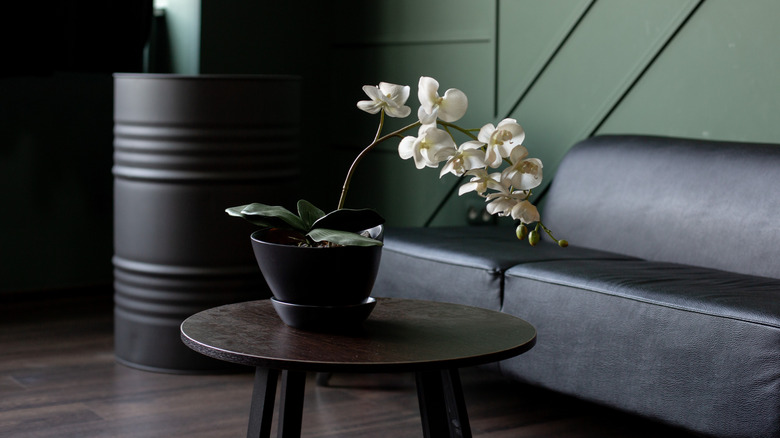
Think of moody colors, and you'll probably assume they only work in wide open spaces with high ceilings. There's a common belief that intense hues can make a space look small. So, if you have low ceilings, the worry is that these colors will be too much. But there are actually plenty of ways to implement dark paint colors into your home without overwhelming a smaller space, and much of it comes down to understanding the moody color scheme.
These palettes explore shades that are darker but also contain rich tones that bring depth and interest to a space. Color psychology also comes into play here, with many darker colors inspiring positive emotions. For example, dark blues are calm and relaxing, reducing tension. A moody interior is one that feels sophisticated as well as welcoming, with a touch of drama added in. Creating this vibe in a home with low ceilings just takes a little creativity. Embracing these colors alongside clever touches can stop your room from looking too cramped and give it a dramatic, yet balanced, look.
Emerald greens and gold accents
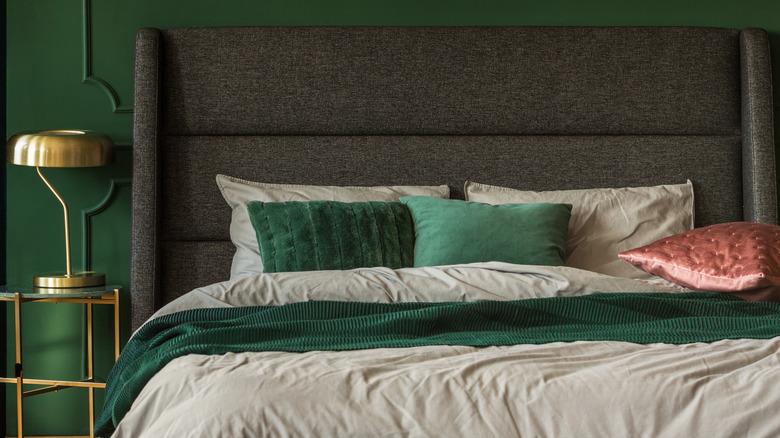
Emerald greens work well in spaces with low ceilings. The color's jewel tones are still bright enough to prevent its intensity from overpowering a smaller area. There's also a note of decadence and luxury with this color that adds glamour to a compact room. If you're wondering what color palette to use if you're featuring emerald green, consider adding touches of gold. This metallic element helps to reflect the light particles in the paint and instantly brightens up the room. This little touch of sparkle will also prevent a space from looking oppressive.
Lighter shades of moody paint colors
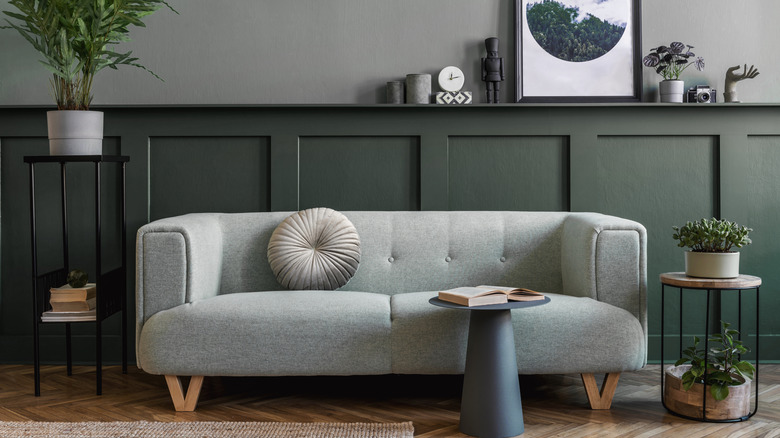
Moody paint options don't just encompass the darkest shades of the colors. You can still embrace the look with lighter shades of bold hues. Think moss greens, muted yellows, charcoal grays, and terracotta. These will still give you a moody aesthetic, but are easier to use in homes with low ceilings. These slightly more subdued colors still pack a punch but won't make a smaller space feel too cramped.
Moody feature wall
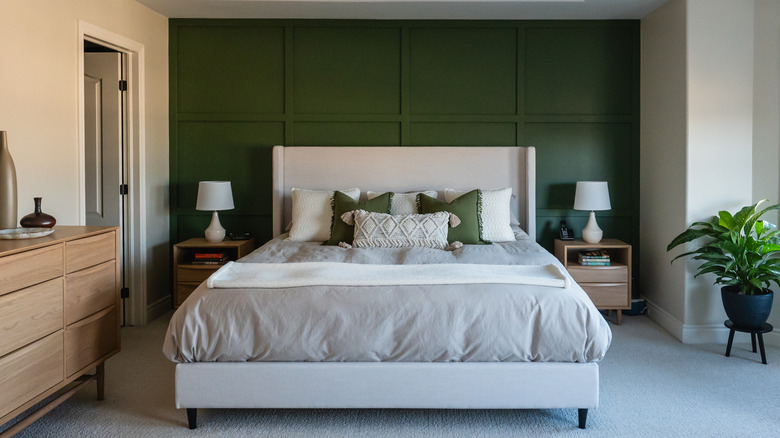
If you're worried that painting an entire room in a moody color will be too much with low ceilings, you could start by painting an accent wall. This is where you choose one wall to paint in a moody color, while keeping the other ones neutral or in a lighter version of your chosen shade. The softer colors will stop your room's walls from looking too short. Make sure you also choose an accent wall and design that fits your style. Otherwise, it could look glaring amongst your furniture and the other pieces in a room.
Dark blue bathrooms
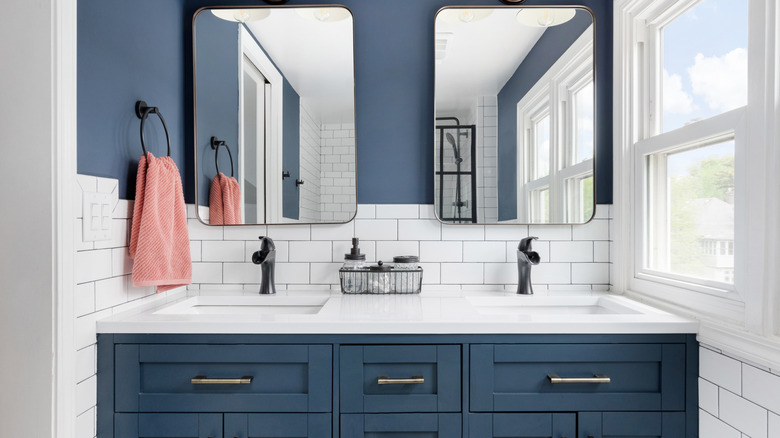
Blue is the perfect color for the bathroom, evoking a sense of calm and peacefulness. Be bold and choose a dark blue color with inky undertones and you'll also make the space feel cocooning and inviting — a perfect spot for a long soak in the bath. Bathrooms feature various fixtures and often other surfaces like tile. So, choose lighter shades for these to stop the darker blues from becoming overpowering. This will create a sense of balance and harmony in a space with low ceilings.
Pairing moody colors according to their undertones
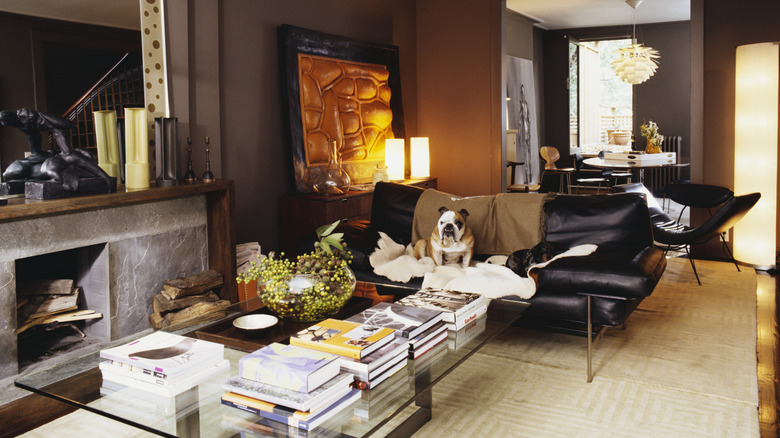
Every paint color has a warm or cool undertone. So, to stop a room with a lower ceiling from feeling cramped, pair your paint color with accents, textiles, and furniture with a similar undertone. These could be other moody colors or neutrals. Sticking with consistent undertones helps a space look seamless and cohesive, which is important if the ceilings are lower.
Think about paint finish

Choosing the best finish when using a darker paint is as important as the color itself. It's important to match the right finish to your style and home, whatever height your ceilings are. Otherwise, the results can look jarring. For older homes and antique styling, matte finishes will look more timeless. But if your tastes are a little more glam, you may want to consider a higher sheen. Glossy paint is more light reflecting, but matte paint can work particularly well with warm lighting to create a cozy feel.
Add florals
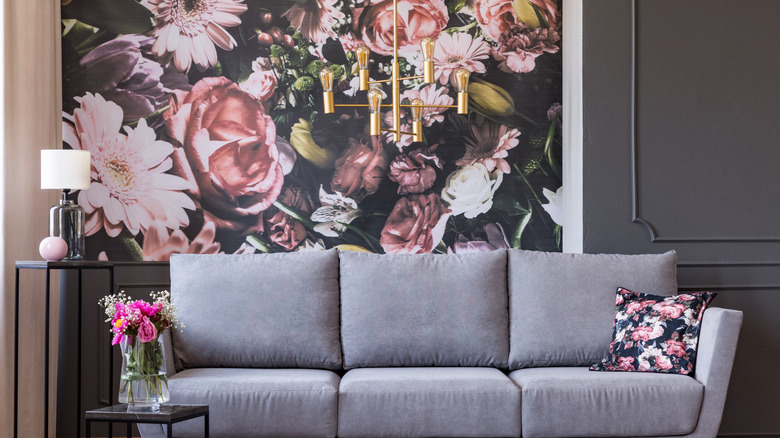
Flowers brighten up any space. So, why not incorporate them into your moody color scheme to stop your low-ceilinged room from looking too dark? A bold, floral-patterned wallpaper makes a real statement when paired with charcoal paint. However, if that's too much for you, try adding in floral prints, accessories, or fresh flowers. This still gives a moody aesthetic but breaks up the intense hue and prevents the room from looking excessively dim.
Incorporate brighter textiles
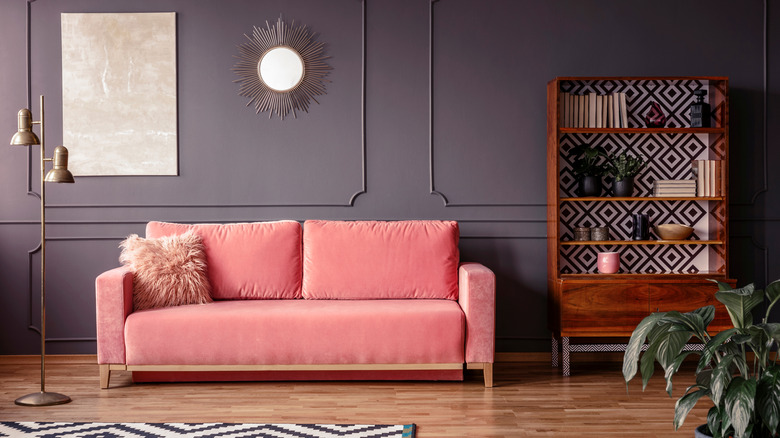
An easy way to stop a moody-colored room with low ceilings from feeling too dark is to add lighter textiles. Depending on how brave you're feeling, you can really change the look and vibe of a space with bright furniture and decor. Think about pairing colors to create interesting contrast. For example, gray works surprisingly well with pink and gold.
Think about the natural light
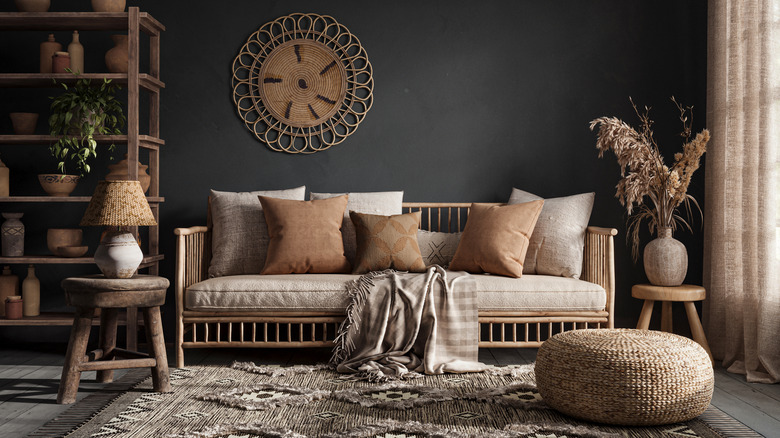
Not thinking about the natural light that comes into a room is one way that people fail at implementing a moody color scheme. And this can be particularly important in rooms with low ceilings that may already feel a bit dark. A south-facing room will get more light into it during the day, which will help to make moody paint colors appear to have more depth, as well as bring out their intrinsic tones. A north-facing room with low ceilings could run the risk of moody colors looking flat and uninspiring. So, testing your paint color and checking it out at various times of the day is an important step in the process.
Embrace low ceilings
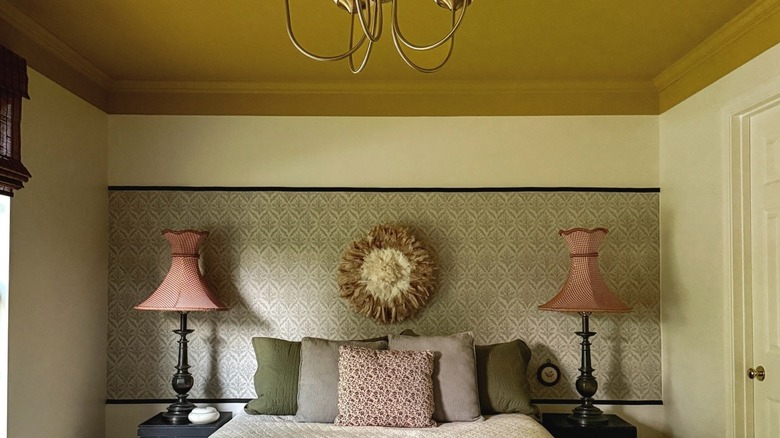
Low ceilings aren't generally seen as a positive in interior design, thanks to their ability to make a room look smaller. But instead of seeing this as a negative, why not embrace it instead by making it a feature? Choose a moody and darker tone for your low ceiling, which can help to make a room feel more cozy and cocooned. By emphasising the ceiling and drawing attention to it in this way, you're making it eye-catching without being overpowering.