

15 Pros & Cons Of Tile Drenching, And Why It's Bigger Than Ever
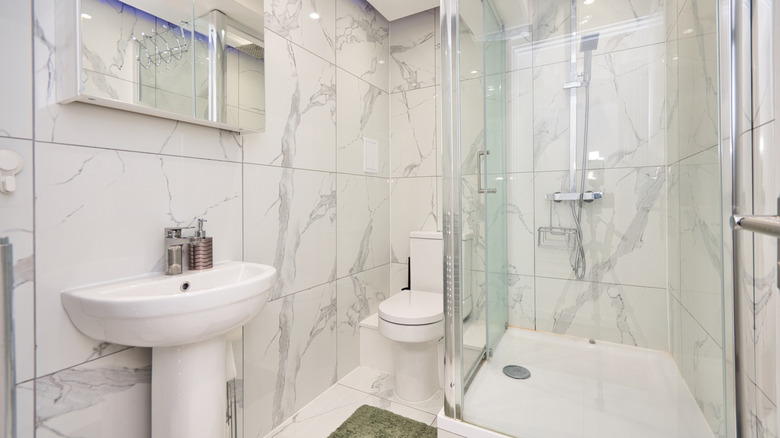
Tile pops up everywhere throughout home designs — whether it's large, textured tiles for a slip-resistant floor or colorful glass tiles for a decorative touch. But some designers go beyond a little tile here and there with a technique called tile drenching: the practice of covering most of the surfaces in a room with tile. In the bathroom, that looks like covering the shower, bathroom walls, and floor in tile. It's a dramatic way to add luxury to a space. And with so many tile options, it's a versatile option, whether you go minimalist or bold.
Part of learning everything you need to know about tile drenching is understanding the pros and cons. It plays off of color and pattern drenching trends while adding texture, making it an of-the-moment renovation. Covering surfaces with tile also offers practicality, like protection from water and easier cleaning. However, it can be a costly design choice, so you'll want to make sure you're committed to it before undertaking the major project.
Play on the trend of color and pattern drenching
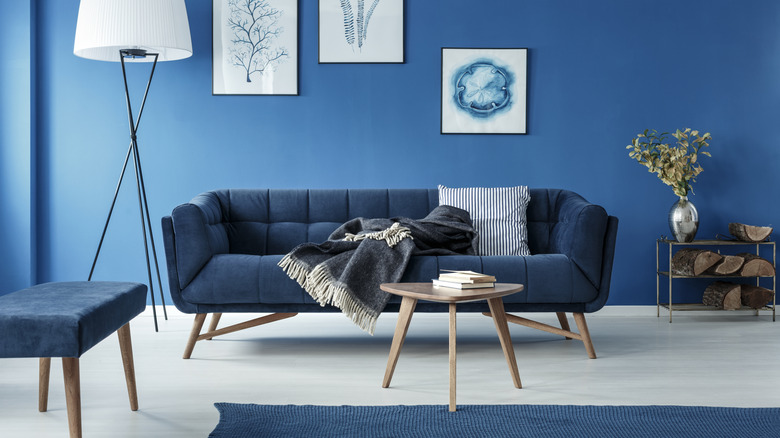
One major reason tile drenching is bigger than ever is because it finds inspiration in the popular color drenching and pattern drenching trends. Color drenching is the painting trend that can boost the tranquility of your room by eliminating sharp visual breaks between the wall, trim, and other elements. Meanwhile, pattern drenching is the new modern twist on vintage and creates a bit of fun and depth in your decor. These drenching trends have been popular for a few years and create a stylish, opulent look.
But the color drenching trend isn't just for paint — do it with tile to embrace the popular design element while also adding the texture, shine, and pattern. To take color drenching to the next level with tile, choose a material that has some variation, whether it's a marbled color, a rough surface, or an embossed finish to give it dimension. Since tile lasts a lot longer than a coat of paint, make sure you choose a color scheme you'll want to live with for a while.
Reduce the amount of decisions you have to make

Redoing a room, even a small bathroom, can feel overwhelming when you're choosing flooring, wall colors, tile accents, tub materials, and all of the other elements that go into interior design. In some spaces, you'll have more than one wall covering — like wainscoting on the bottom and wallpaper on the top. Not only do you have to choose all of those materials and colors individually, but you also have to make sure they coordinate. This planning can result in decision fatigue from facing too many choices, and you may second guess yourself throughout the process.
Tile drenching eliminates many of these decisions. Sure, you still have to pick the tile that you'll use — and sometimes you might choose a few different types of tile to create your desired design. But choosing one general color scheme and tile type with some variations, like matte and glossy finishes, helps you simplify the design process.
Allow for a lot more versatility than you might think
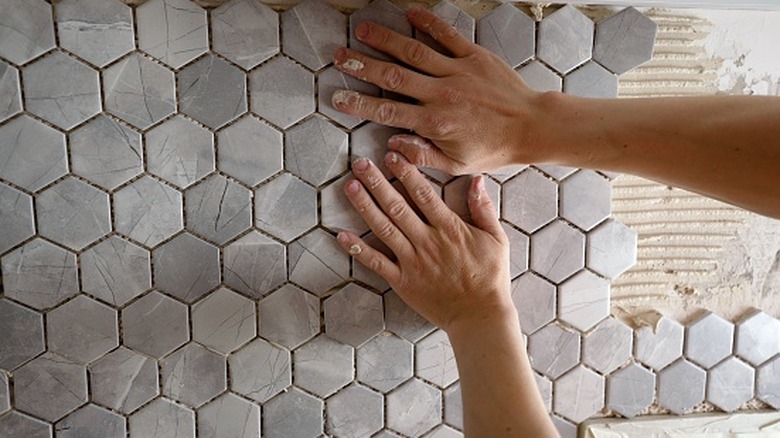
The versatility that tile drenching offers is another reason why this trend is bigger than ever. While covering a room in tile might seem limiting, there are many ways to adjust the trend to your preferences. Go subtle with a single neutral tile throughout, or create a bold jewel box look with richly colored tiles wrapping the room. Fully tiled rooms blend well into modern and industrial designs, but they can also recreate retro looks. For example, Art Deco tile designs were prevalent in the 1930s, often incorporating geometric patterns, such as hexagons, or subway tiles grouted in a contrasting color.
Choose your overall design scheme first, whether that's a minimalist look with soft neutral tiles or a loud design with the tile making a statement. The material affects the look — raw stone infuses the room with rustic, earthy vibes, while glass mosaic tiles evoke playfulness and dazzling color. Eco-friendly tile choices are also available to support sustainability. Tile sizing is also a factor in creating the right look — medium to large tiles often work best for tile drenching for any style.
Last much longer than paint, wallpaper, and other wall finishes
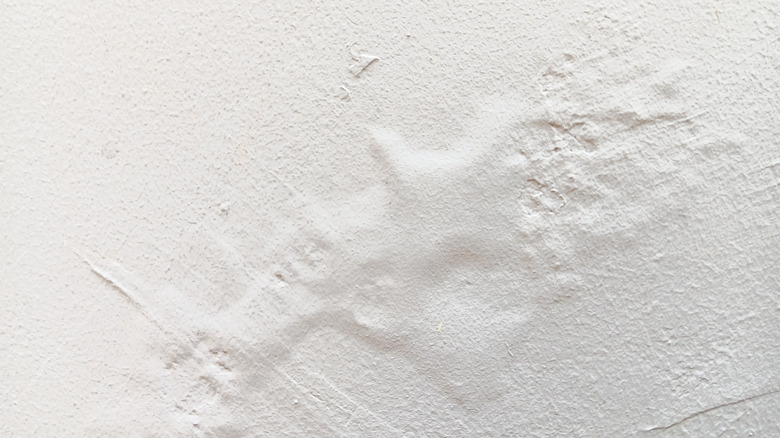
Tiles are durable and long-lasting, especially compared to drywall, which is another pro of tile drenching. You can install the tile once and enjoy the beauty for decades. How long tiled shower floors and walls typically last can depend on the tile material and how well you take care of it. Ceramic and porcelain tiles, which are popular and affordable options, often have a lifespan of 20 to 50 years. Tile is a good choice for high-traffic rooms due to their resilience. And unlike drywall, it won't be weakened over time by high moisture levels.
Tile drenching is particularly well suited to rooms with high humidity levels, like bathrooms, laundry rooms, and utility rooms. In those same areas, painted drywall sometimes bubbles, or the drywall itself can warp and crack with repeated moisture exposure. To get the most life out of your tile-drenching project, ensure you choose tile that's appropriate for all of the surfaces. Some tiles meant for walls won't hold up to the foot traffic on the floors, for instance. If you can't find a single tile that will work on all surfaces, choose similar options in the same color to maintain cohesion.
Protect against water damage to reduce mold and mildew risks
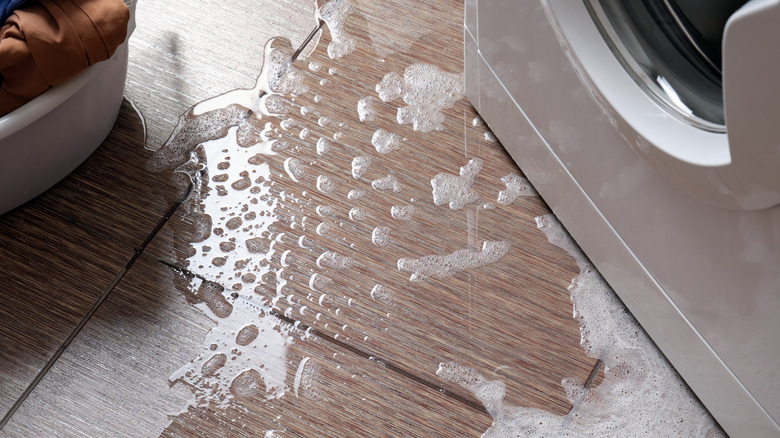
Tile is not only beautiful but also practical, especially in your bathroom, laundry room, kitchen, and other spaces where spills and humidity are an issue. That's why it's commonly used on floors and shower surrounds. Drywall and wood materials used in those same humid areas could suffer from major water damage or eventually become covered with mold and mildew.
It's important to remember that tile materials vary in how much water resistance they offer. If you choose naturally porous materials, like natural stone, you'll need to seal the tiles regularly to help them resist moisture damage. That can create a lot of extra work, especially when you cover an entire room in the tile. Porcelain tile is the best when it comes to moisture resistance, but glazed ceramic tile is a close second. It's also important to use waterproof materials underneath the tile to prevent hidden water issues. Sealing your grout regularly (or using epoxy grout) is also crucial for creating a tile-drenched room that holds up well to moisture.
Offer a more sanitary surface that you can clean easily
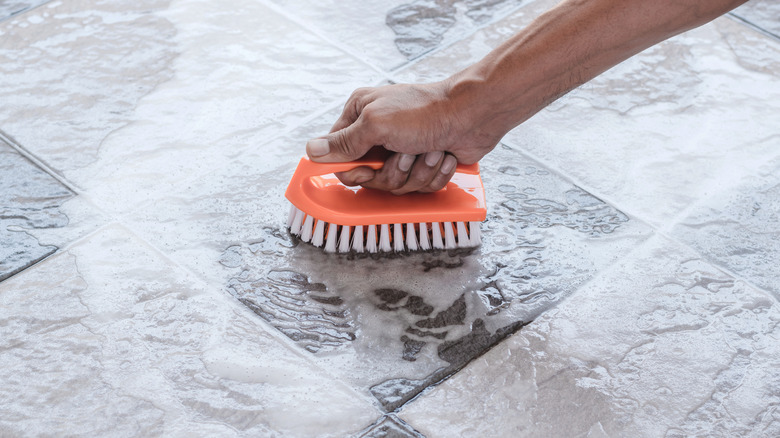
If you've ever tried to clean a spot off of a painted wall, you know how quickly scrubbing can cause damage. Tile is a much easier material to clean, making it a lower-maintenance option that can keep up with your busy schedule. You can also cut down on the number of cleaning supplies and tools you need, since most of the room consists of tiles. And, you won't have a bunch of wood trim pieces that collect dust.
While tile is generally easier to clean than other materials, your choice in tiles and grout can impact that convenience. Larger tiles are typically less cumbersome to clean because you're not dealing with as many grout lines — the grout is more difficult to clean than the tiles themselves. Smooth tiles are also easier than textured surfaces because there are fewer places for gunk to build up. And while matte finishes aren't necessarily easier to clean, they will help hide little spots and streaks better than glossy tiles.
Transform a boring space into a showpiece that wows guests
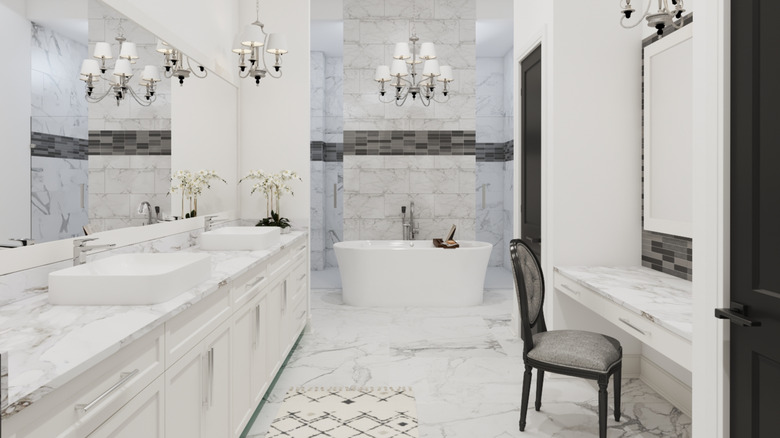
Tired of builder-grade boring? So are other homeowners, which is another reason why tile drenching is blowing up right now. Painted walls and tiles on the floor and shower are standard for a bathroom. In kitchens, laundry rooms, and utility rooms, you might see tile on the floor and possibly a backsplash. But full walls covered in tile? That's something unique that stops you in your tracks. It's creative and bold, infusing the room with the look of a luxurious spa while still appearing effortless. At the same time, a tile-filled room is still very practical and functional, so you're not sacrificing usability for luxury. It truly gives your same old bathroom a completely renovated look without a full remodel.
Think of tile drenching as a way to give your room personality. It's a way to break free from the cookie cutter look and move toward a space curated to reflect your style. If you're going for sleek and spa-like, opt for neutral tones. For something unexpected, consider deeper tones like emerald green or eggplant.
Create a cohesive design throughout the space

Even if you don't get design fatigue from choosing lots of different colors and materials, you might still struggle with creating a design with elements that actually look good together. Pinterest can give you some inspiration, but it's still not always easy to coordinate several different materials, patterns, and colors into one coordinated design — even with tips on creating a cohesive color palette for your home.
Tile drenching ensures the walls and floors go together because you're using the same tile everywhere in many cases. The consistent look on all surfaces makes the design feel intentional. Even if you opt for two or three different tile types or finishes, you're still coordinating fewer individual components. And sticking to a consistent color palette makes it easy to put together a seamless look. Remember, you don't need a lot of accessories when you tile drench a room — keep the additional fixtures and accents minimal to maintain the flow of the room.
Allow the tiles to take center stage
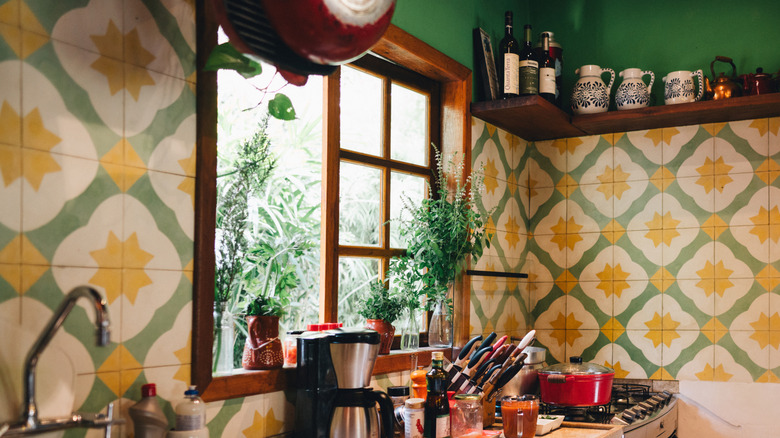
Picking the perfect tile for a backsplash or shower surround isn't always easy. You could spend days or weeks mulling over the decision until you land on one that expresses your style with just the right color, shape, texture, and sheen. It's frustrating to spend all of that time (and money) on your tile selection, just to have it get lost among the many other finishes, fixtures, and features of the space. Because the material covers almost every surface in the room, tile drenching ensures the porcelain, ceramic, or natural stone you choose gets noticed.
Even though the walls, floors, and maybe even the ceilings will be covered in tile with the drenching technique, it's still possible to detract from them. That's why it's important to choose all of the other elements, from the cabinets and sink to the hardware and lighting, to complement rather than distract from the tiles. Using coordinating colors for softer elements, like rugs and window treatments, can help you achieve this. The finishes on your fixtures should also enhance the tile design to avoid clashing or competing with it.
Immerse yourself in the luxury and whimsy
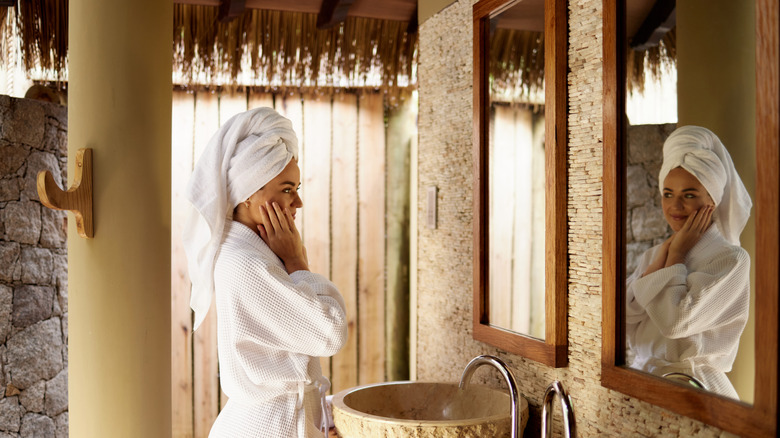
Sometimes it's the small changes that'll make your home feel more luxurious. Other times, it's a bigger project, like covering every surface in tile. A bathroom that's drenched in tile naturally takes on a spa-like, luxe look — it's an immersive experience. You don't just notice a few tiles on a backsplash or above the tub; you're surrounded by a consistent yet unique material.
To amplify that spa-like, cocooning feel, stick with a single color choice to reduce contrast and increase the harmony of the design. Large tiles in lighter colors often fit the relaxing spa style the best — large sections of tile and fewer grout lines create that seamless look that envelops you in luxury. Other simple spa features, like plush towels and simple hooks to hold a cozy robe, enhance the sumptuous effects of tile drenching.
Reduce visual clutter for a minimalist, clean aesthetic
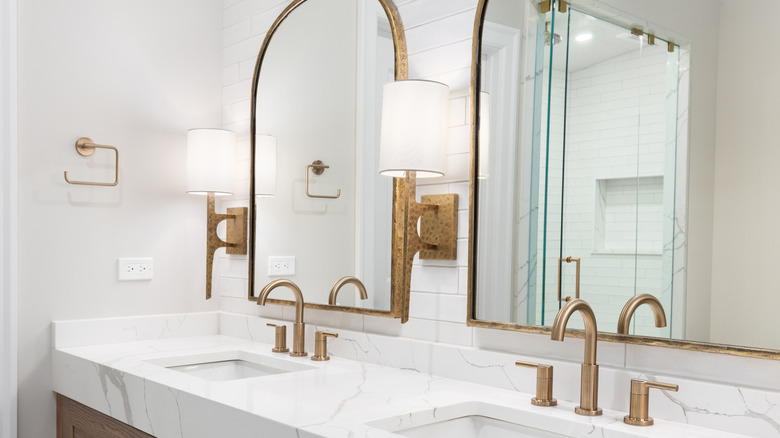
Minimalism in home design focuses on clean lines and simple designs, often using neutral colors to achieve that streamlined backdrop. If installing full walls of tile seems like the opposite of minimalism, you might be surprised at how well it works for creating a minimal look. The continuity of the same tile across the whole room lends itself well to minimalism. Partaking in this pared back style doesn't mean your space will be boring, though. In fact, adding the texture of tile is one trick to mastering the minimalist trend without making things boring. A simple tile delivers depth and visual interest while removing the often sterile look of plain painted walls.
If you're going for a clean, understated look, stick with simple, light-colored tiles to minimize the visual clutter. Darker colors and patterns create a loud, bold look — the opposite of minimalism. Continue the minimalist look by choosing simple cabinetry, hardware, fixtures, and other design elements.
Add texture and shine to spaces that need a boost
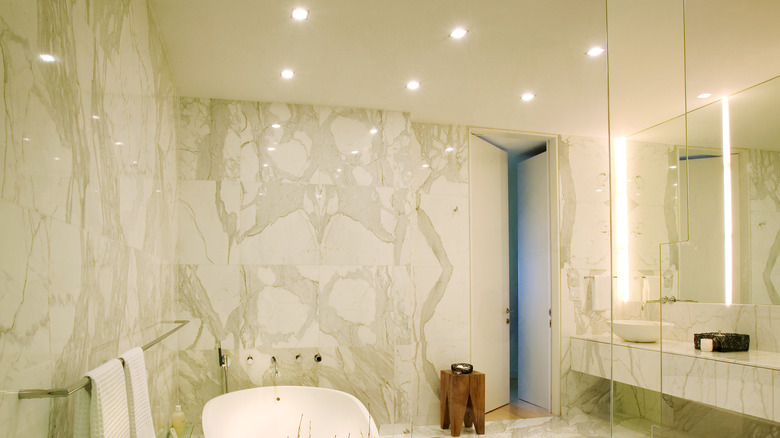
Painted rooms can sometimes fall a little flat and feel one-dimensional. That can be especially true when you're dabbling in color drenching — if everything is painted is the same color, it can feel a little boring. Incorporating tiles also lets you add dimension to the space, even when the tiles are all the same color. Glossy finishes can also enhance your space. Not only does the shine draw your attention, but the sheen also helps reflect light, which can help brighten a dark room.
The tiles themselves naturally incorporate more texture and shine, but you can adjust those choices to fit your desired look. For example, a mix of glossy and matte tiles in the same color maintain the cohesive look while delivering subtle dimension. Playing with the grout color can change the overall aesthetic and either enhance or minimize the tile lines. A contrasting grout color highlights the layout and tile shape, which works if you choose uniquely shaped tiles that you want to emphasize. Meanwhile, matching the grout to the tile contributes to a clean, seamless look.
Give the illusion of a larger space
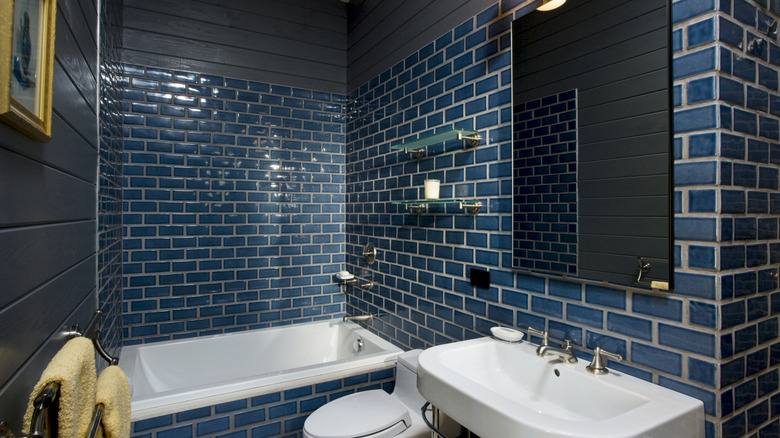
Is your bathroom a good candidate for tile drenching? When tile drenching is confined to a small room, it creates one dramatic, stylish space in your home that makes a strong impression. It can even make it look bigger by eliminating visual breaks between tile and drywall, wood paneling, wallpaper, or other finishes in the room. In fact, tile drenching can lose the enveloping effect in larger spaces.
When tiling a small space, large-format tiles work well to make the space feel larger, since there are fewer grout lines to break up the look. While consistency is key, you can add some variation with different finishes in the same color to maintain the visual consistency. Lighter colors also help make small spaces feel larger. The room also feels airier with more natural light or supplemental lighting and glossy tiles to help reflect that light. Take the tile to the ceiling to make the room feel taller — your eyes will naturally follow the tile upward.
Tile drenching is an expensive endeavor

Tile drenching is an expensive version of color drenching, compared to paint. How much does it cost to tile a bathroom? That depends largely on the size of the room and type of tile you choose, as well as if you install the tile yourself. The average cost for materials and installation is between $10 and $35 per square foot, which adds up quickly. Even if you've tackled small tiling jobs in the past, you may want to hire a professional installer for tile drenching — straight lines, precision installation, and proper grouting are essential. Professional tile installation will increase the cost of your project overall.
Tile selection is a key factor in saving money — ceramic and porcelain are the more affordable options while still offering plenty of styles. Another affordable option is vinyl tile. Choosing a small room for the treatment helps since you'll need a lot less tile (and fewer labor hours for installation). Or, opt for a condensed version where you run tiles from floor to ceiling in one section of the room, such as around the shower in a bathroom or behind your washer and dryer in the laundry room.
Tile drenching is not as easy to change as paint or wallpaper
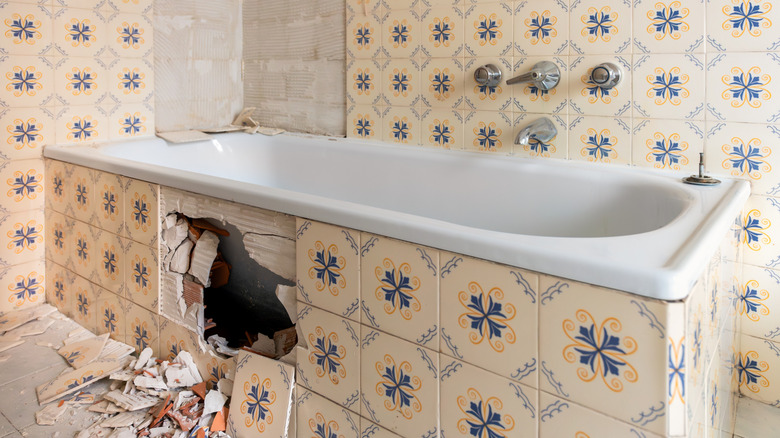
Tile can last for decades, but you might not want it to. While you can make a tile-drenched room look timeless, you may decide you want a change long before the tile wears out. Removing tile is no easy job — it involves removing the grout, prying off every tile, and removing all of the remaining adhesive. If you hire someone to remove the tile, you can expect to pay between $2 and $7 per square foot. Even if you keep the tile, you may need to remove and replace tile grout at some point, which can also be a big, messy job.
Before tile drenching a room, make sure you're committed to the look. If you're someone who likes to change the look of your space frequently, fully tiling a room might not be the best option. Sure, you can change the accessories, but the tile is the focus and will be there for a long time. If you want to use this technique, choose a timeless tile design that won't go out of style quickly.