

Ditch Hardwood: The Durable Alternatives You Should Consider For Your Deck
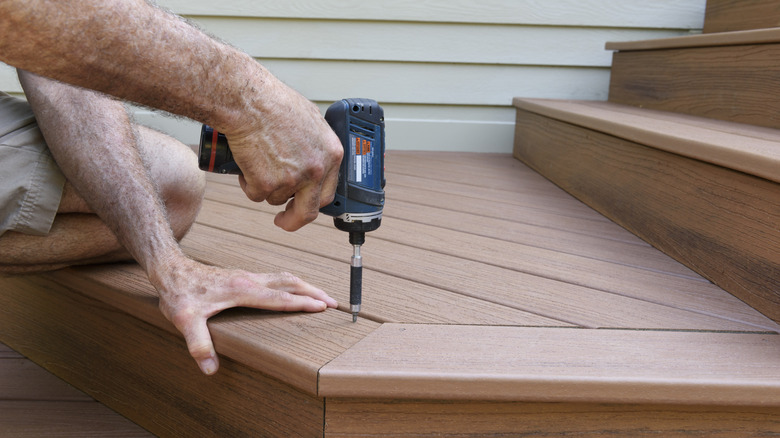
If you're taking the first steps towards designing a new deck, then tread carefully. Choosing the wrong boards is one of the biggest mistakes to avoid when designing your new decking. Hardwood is of course a solid choice (pardon the pun). But there are lots of alternatives on the market today that are every bit as durable as hardwood — some considerably more so. Various plastics, metals, and even mineral-based boards make for great options, depending on your needs and budget. And while nothing quite compares to the natural grain of wood, you might be surprised at how close some modern alternatives come to emulating the real thing.
Below, we've identified 11 durable alternatives to hardwood. Each is worth consideration, and each comes with its own distinct benefits. Some harness the natural beauty of real wood fibers while benefiting from a composite blend with tougher, more resistant materials. Others are notably impermeable to insects and weather. Of course, as you might expect, some come with increased costs upfront versus traditional hardwood boards. But then again, some are surprisingly cost-effective, often helping homeowners to recoup their investment in fairly short order.
Wood plastic composite requires installation, and that's about it
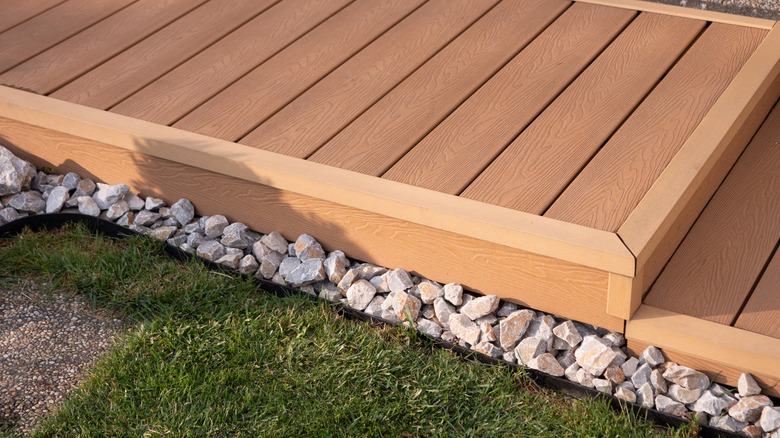
Per the name, wood-plastic composite decks blend a little bit of natural wood, and a little bit of plastic. The wood fibers contained within the boards give the decks the grain that's characteristic of the real deal. But the plastic that they're bonded with makes the boards pretty much impervious to the privations of exterior conditions. Things like rot, mold, and algae all have a very tough time making themselves at home in wood-plastic composites. So, too, do common deck-damaging pests like beetles and termites, who are likely to bore their way inside real wood — especially if it's not properly treated.
These types of deck boards are also somewhat safer for decks in damper climates. They're more slip-resistant than natural wood, which has a tendency to become slippery after long periods of inclement weather. And as for price, wood-plastic composites tend to be considerably cheaper than quality hardwood in the long run. Upfront, the cost of composite decking versus hardwood is often comparable. But the money you'll have to spend — and the time you'll need to dedicate — to maintain composite decking is considerably less than hardwood. The main maintenance task is to clean the boards with soap and water. Added to the fact that high-quality composites look close, if not identical, to the real deal, and honestly, it's hard to discount their suitability as a durable deck alternative.
PVC decks are waterproof, insect-proof, and resistant to fading and staining
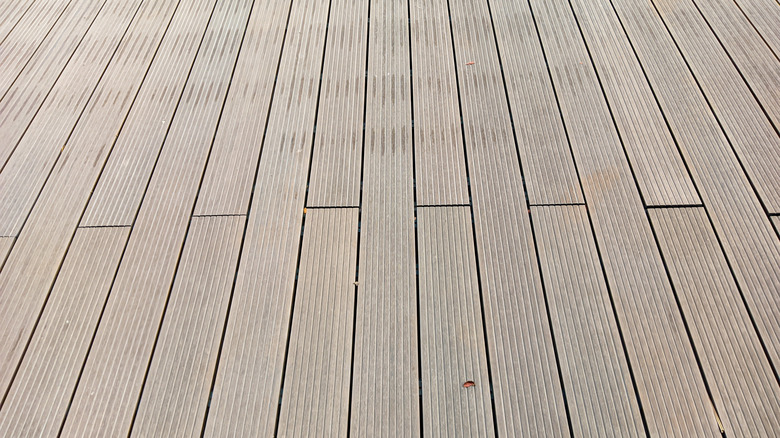
Like wood-plastic composites, PVC decks are incredibly durable. They stand up well in the face of even the most inclement weather, and since they're plastic, they're also highly resistant to fading and staining. Nor are they ever phased by insects that might otherwise cause structural headaches in hardwood decks, like woodworm, termites, and boring beetles. The thing to remember, though, is that while it's very hardy, PVC decking lacks any kind of organic fiber. In other words, any wood-grain patterns laid into the plastic are entirely manufactured, and PVC planks won't feel like a traditional, hardwood deck underfoot.
On the plus side, if you're willing to wave goodbye to classic wood decks and opt for this durable alternative, you'll find yourself with considerably less maintenance to manage. PVC decking is designed to do away with most, if not all, of the typical upkeep that's required to maintain wooden decks. They clean much more easily than wood, especially wood that's been allowed to grow mold and algae. And they don't splinter, which makes them far safer for kids and pets who refuse to use shoes when gallivanting around the garden. Just know that PVC decks can get hot during the height of summer, especially if not protected by shade. They can also expand and contract more than other deck types, like composite, especially if exposed to intense sunlight for long periods of time — which can lead to warping.
Mineral-based composite boards show little movement during large mercurial swings
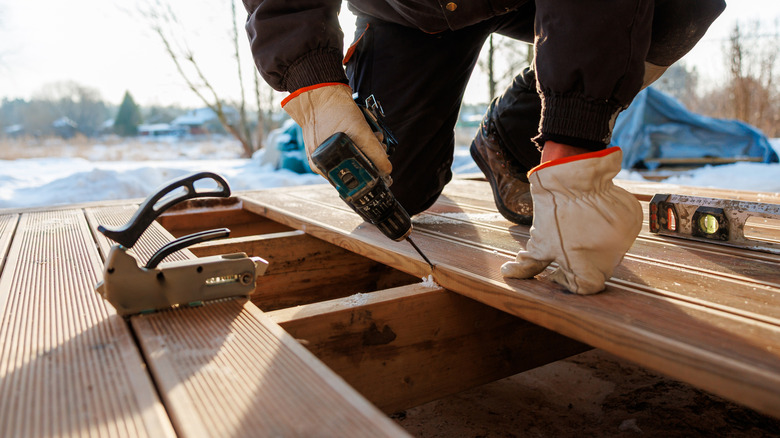
If you need something that demonstrates minimal movement when temperatures start to swing, mineral-based composites are a good option to consider. As the name suggests, mineral-based composites are made from a mix of durable minerals, plus a blend of plastic polymers. These are stretched to produce the fibrous material that lends the boards their strength. And since they're made from inorganic, naturally resistant materials, you shouldn't have to worry about maintaining a weathered deck, aside from the occasional clean. Insects rarely pose a problem to mineral-based composites either, and these planks are not usually impacted by stains or fading.
These deck board types are especially popular for homeowners who crave the natural wood "realism" of composite, with the lightweight build and easy installation of PVC. Like both materials, mineral composites are highly durable. And despite their lightweight build, they're also able to bear impressive amounts of weight without cracking or sagging over time. All of this makes them an excellent alternative to hardwood for decks that are designed to entertain and house heavy furniture and appliances.
Aluminum deck boards are lightweight, versatile, and weather-resistant
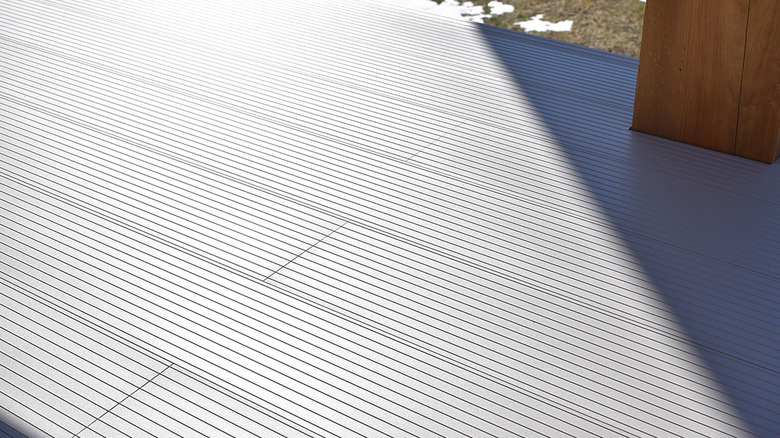
Given its ubiquity in the world of sturdy, modern furniture, it'll come as no surprise that aluminum is now among the most durable deck materials on the market. It's certainly a viable alternative to hardwood. In fact, Consumer Reports lists aluminum as its most highly-rated decking material. Boards made from aluminum benefit from the metal's natural strength and durability. They demand less in the way of maintenance than traditional timber, requiring little more than a decent scrub once every now and then. And from a design perspective, aluminum boards lend themselves extremely well to sleek, modern spaces.
There are a few downsides to consider with aluminum. One is that they tend to be more expensive upfront than standard wooden boards. This is partly due to the cost of the boards, and partly due to the complex nature of the installation, which requires specialist tools and training in order to ensure a professional fit. Aluminum decking also tends to get hot in direct sunlight. And while available in various styles, aluminum options are more limited in terms of color versus wood, which can be stained or painted in virtually any shade that you like.
Thermally-modified timber is more resistant to rot, insects, and warping
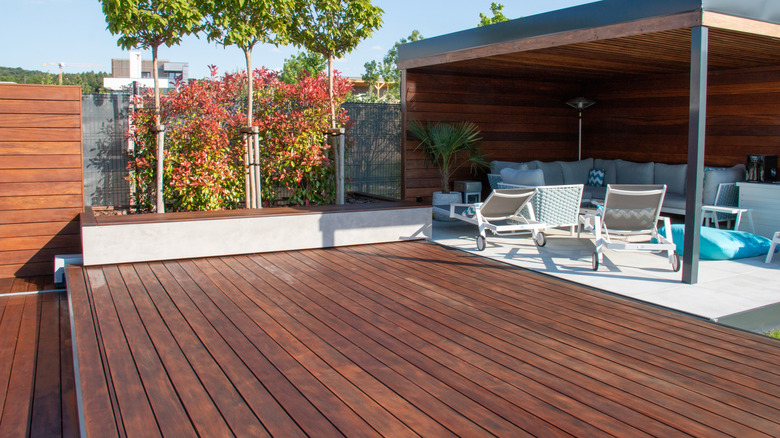
Thermally-modified timber undergoes heat treatment at between 320 and 430 degrees Fahrenheit. This essentially alters the timber's internal structure, reducing moisture content and thus leading to several key benefits. The resultant boards are much stronger, for starters, and considerably more stable, since they lack the moisture content that can lead to expansion and contraction. They are also less susceptible to rot, fungi, mold, and insects. Ultimately, thermally-modified boards are designed to last for decades. And even when they eventually need replacing, their chemical-free production means that they won't leach harsh chemicals into the environment.
While thermally-modified timber requires less maintenance than standard timber boards, it's important to remember that thermally-modified wood is still an organic material. In other words, it's not maintenance-free. You may need to sand it from time to time to eliminate snaggy splinters. And while the planks don't need staining, since they've been altered at a cellular level to resist common organic ailments, you may still wish to. This type of decking naturally silvers over time, and while that natural patina can be attractive, it may not tie in with your chosen decorative scheme. If you do want to treat the planks, then it's important to choose the right stain for your deck. For thermally-modified timber, it's usually better to use a UV-resistant pigmented mineral oil. If you use organic oils, they can provide a source of sustenance for things like mold, thus nullifying one of the key attributes that makes thermally-modified timber so attractive.
Bamboo decking is dense, durable, and sustainable
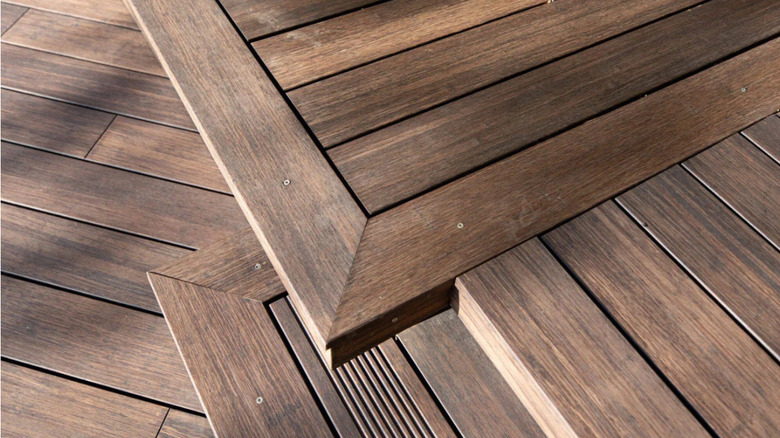
Bamboo is one of the most eco-friendly alternatives to hardwood deck boards. As a material, it's highly regenerative — just ask anyone who's ever had to deal with running bamboo in the garden how quickly this stuff grows. Because it grows back so fast, it's considerably more sustainable as a building material than slower-growing hardwoods. It's not only used for decking, either. It's used in everyday household items, like laundry baskets, furniture, and even kitchen cabinets. What makes it so useful, especially outdoors, is that it's both strong and highly durable, often lasting up to 50 years. It typically comes in two forms: bamboo composites, which are made with bamboo fibers and resins; and straight-up bamboo boards, which are made with either laminated layers or bonded woven fibers.
Price-wise, bamboo decking is often comparable to hardwoods, like ipe, although installations usually waste less bamboo since offcuts can be reused elsewhere in the build. However, since it's an organic material, it does require more maintenance than, say, aluminum or mineral-composite boards. This is especially true in areas with heavy rain, snow, or high humidity, as without proper sealing, the boards can warp and become damaged. It should also be noted that the quality of bamboo decking is often highly dependent on the manufacturing quality and the adhesives used to bind the layers together, in fact, poorly-manufactured boards can actually delaminate. That said, provided that you shop around for a reputable supplier, and that you ensure your boards come with a decent warranty, you should be able to assuage any concerns around quality.
Fiberglass-reinforced planks are extremely durable, but with a slight dip in appearance
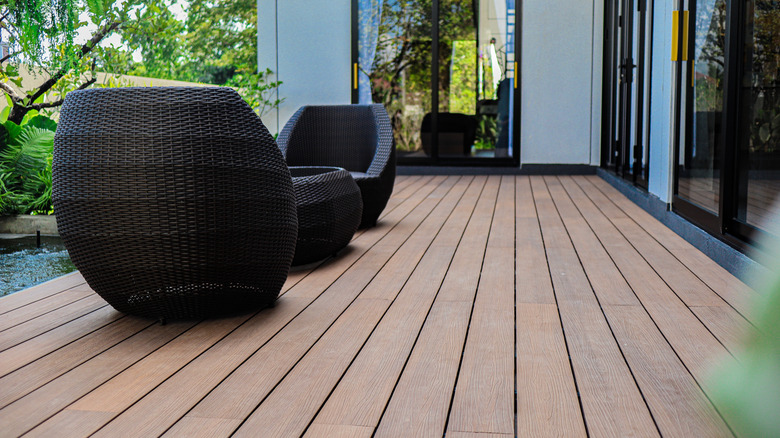
Otherwise known as "glass reinforced plastic" (GRP), this hardwood alternative is a high-performance composite that's built for strength and durability in the long-term. It's typically made with a core of PVC plastic and fiberglass, the latter of which adds strength to the final product. It's often manufactured to look just like real wood, but its construction helps to prevent expansion and contraction, which is a common downside to other materials. It also lends to increased durability. In fact, this material even has advantages over steel.
For example, it manages to bear impressive amounts of weight, yet it's also very lightweight — often up to a quarter the weight of comparable quantities of steel. Thanks to its material make-up, GRP is also incredibly resistant to corrosion, as well as common decking ailments like rot, mold, algae, and insect damage. And since it's so strong, it can withstand severe loading from furnishings and outdoor entertainment appliances, and doesn't suffer permanent distortion from heavy impacts. It's generally quite easy to install, offers excellent slip resistance, and as for its durability, you can expect it to last for up to 50 years.
Pedestal-mounted pavers are adjustable to ensure a perfect, level surface
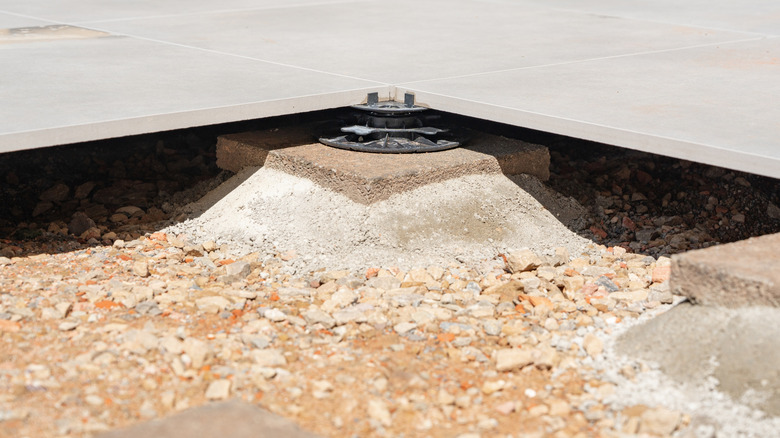
Pedestal-mounted systems offer a more DIY-friendly means of mounting your deck versus more traditional foundations and sub-frames. In fact, these systems do away with the need for these altogether. Each support is adjustable, which allows you to level the surface over uneven or sloping terrain. And since the pavers or boards are mounted, there's a cavity beneath, which means that the final surface drains very easily. That floating floor also makes hiding service lines easy without the need to route cables and pipes.
These systems can be used just about anywhere you'd like to install a patio, doing away with the need to dig foundations and build frames. However, they're especially popular on balconies and roof terraces, since they can be easily leveled while reducing the need to add weighty mortars and sub-bases. They also support a variety of surface finishes. You can choose regular paving slabs for more of a "patio" vibe, or if you're determined to build your dream deck, you can also use a variety of decking boards, including composites.
Porcelain decking resists staining, fires, moisture, and fading
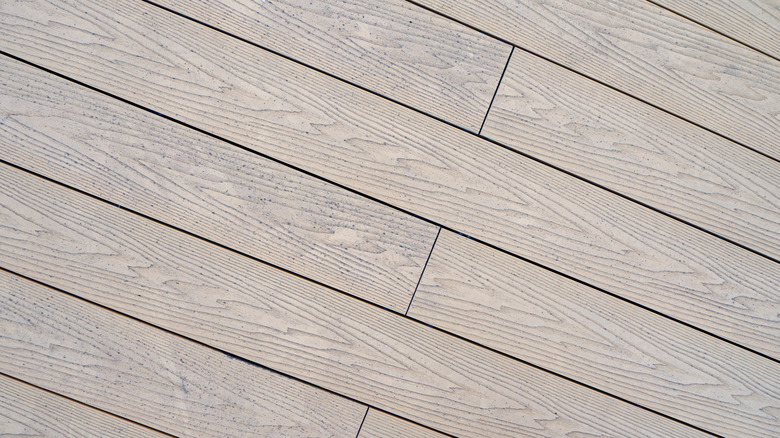
You may have already been considering hardwood alternatives like composite and PVC planks, but did you know that porcelain could also be an option? There are various systems available for installing rectified porcelain tile decks, including the ones that utilize pedestal supports. If outdoor tiles/pavers aren't the look you're going for, there are also wood-effect porcelain planks and tiles available. These are etched with realistic grain-like grooves, bringing wood's natural look to outdoor spaces. However, porcelain is much more durable than wood at resisting various common ailments like staining, moisture ingress, and even fire. It's also highly resistant to insect damage, and if you live in a sunny climate, you can expect your porcelain planks to stay vibrant for years without fading.
The most common methods for installing outdoor tiles (in a wood-look or otherwise) include mounting them on adjustable pedestals, or pouring a concrete deck base. However, there are some systems that even allow you to install them directly onto standard deck framing. Mbrico is one example. The primary downside is that porcelain decking tends to be more expensive upfront than other materials. But since it can last for decades, it can end up paying itself off over time, versus natural materials like hardwood, by negating the need for ongoing maintenance.
Steel-framed decking is as durable and robust as you'd think
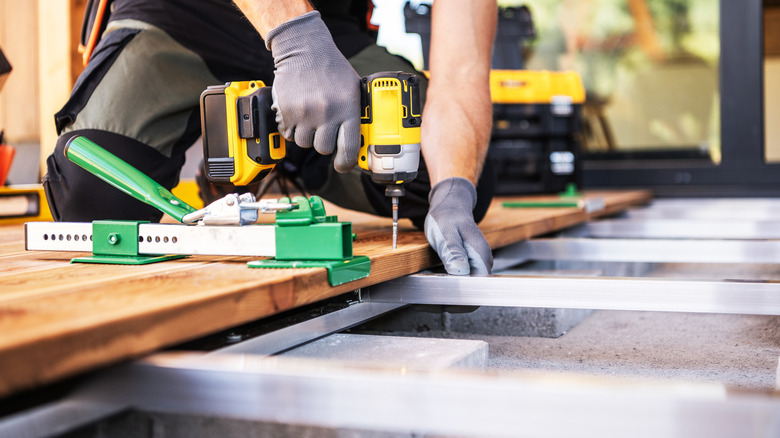
While you're thinking about material alternatives for the boards beneath your feet, can we ask: Have you also thought about the sub-frame? Most decks are raised, for which a sub-frame is usually required. And while there are various materials available to build them with, wood is perhaps the most common. However, it's just as susceptible to the weather, insects, and organic ailments like mold as the boards laid on top of it, which is why a steel frame could at least be worth considering.
Now, we're not saying that those who use wood for their sub-frames are doing it wrong. It's a tried and tested method — one that's proven effective for decades. All we're saying is that wood needs maintaining. And since much of the frame is only accessible by either crawling beneath the deck, or removing some of the surface boards, maintenance is often easier said than done. Steel, on the other hand, is naturally strong, durable, and stable, and it requires very little maintenance to keep it that way. It's compatible with various surface materials, from wood, to composites, to PVC, and more. And it's also easier to install with service lines and utilities, which can be housed safely within the framing.
Of course, as with any material alternative to hardwood, steel has some downsides. The primary point of contention is that it's usually more expensive than wooden frame materials. Steel framing is also vulnerable to corrosion, making it unfit for coastal areas. However, in environments that don't have salt-laden air, it will almost certainly last longer without maintenance than wood, meaning you stand to save on both time and money to keep your deck standing strong.