

11 Dining Room Trends That Are Out In 2026
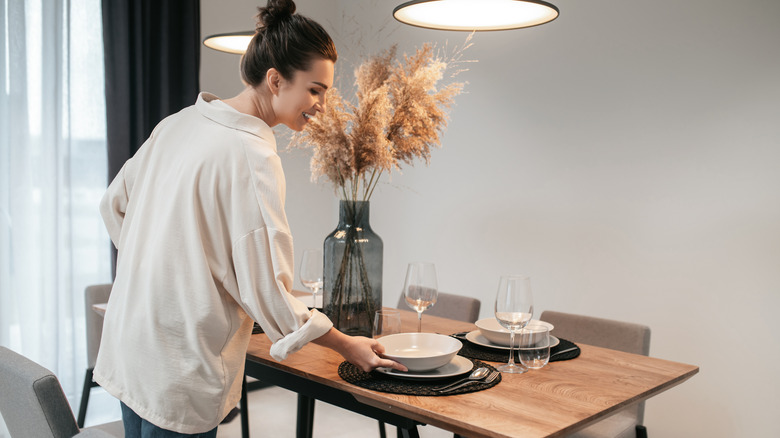
For those of you wanting an interior design refresh, the good news is there are lots of ways to make a statement with your dining room. The bad news is that knowing what's hot and what's not is easier said than done. Of course, you could go by what you read in magazines or by what's trending on Instagram, but ask yourself this: By the time the paint dries in your dining room and your gorgeous new farmhouse dining table arrives, are you sure they'll still be relevant? Unfortunately, fashion is fickle. Trends come and go, and it's no less true in the world of interior design as it is on the catwalks of Milan. That's not to say that you should cower in the corner of your outdated dining room and make do with what you've got. Far from it. But you do need to tread carefully.
To help, we thought we'd compile a list of outdated dining room trends. We'll start out with some basic color choices that could leave your dining space feeling cold, instead of cool. Then, while we're on the topic of austerity, we'll highlight why it's best to avoid industrial decor. Next, you'll find some remarks on why minimalism has finally maxed its credit, and if you suspect that your dining table is too big, you'll learn that you are, broadly speaking, probably right. And in case this all has you feeling confounded and confused, don't worry — we're not here to leave you high and dry. We'll also offer some tips and guidance to help ensure that whatever makes the cut on your mood board, will have you relishing, not regretting, your dining room choices.
Stark white dining rooms no longer feel chic
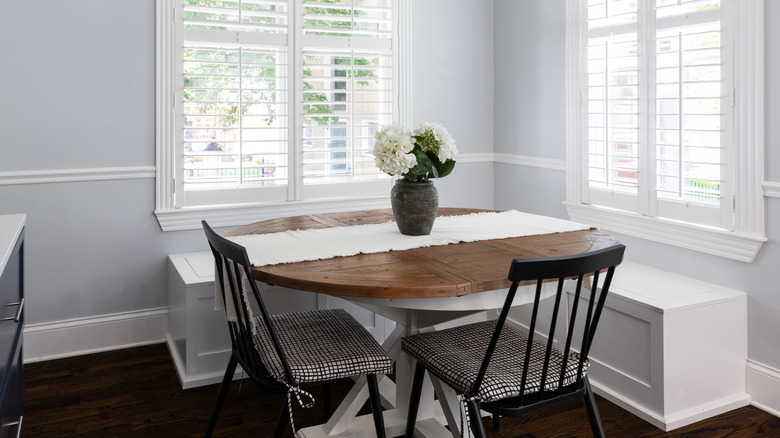
To those of you who are tired of seeing the same old sterile-white dining rooms adorning your Pinterest feed, this should come as no surprise. For a long time, stark (and, let's face it, sterile) white has dominated the palettes of home designers. Admittedly, it looks clean and crisp in pictures, and provided that you can actually keep it that way, it can still look good in places. But while it retains a place in current palettes, it's one of the home design trends that simply hasn't made the cut in 2026. The reason for this is that it lacks warmth. It's also decidedly lacking in character. Instead, homeowners are moving towards moodier, earthy tones, along with softer textures, to inspire relaxation.
This brings us nicely on what to do instead. And don't worry, you needn't replace that white set of dining chairs or entirely repaint your walls. Instead, you can easily bring your space up to speed by mixing in various materials and textiles. Dining tables can be dressed with table cloths in muted tones, for example. Or, if you keep your meal seasonings on the table, the addition of a wooden caddy can lend the natural texture and warmth of wood to your space. Finally, if your walls are all white — and you're game for a day of DIY — you could soften the aesthetic of your dining room by playing with a more texturized wall covering. Wood paneling, for example, could give your space an instant dose of "cozy." Alternatively, for something less daring, yet equally effective, consider limewashing one of your walls. It's subtle, but when it dries, limewash calcifies, adding the kind of depth and texture that's hard to replicate with a basic coat of paint.
Industrial fixtures and fittings struggle to suit domestic settings
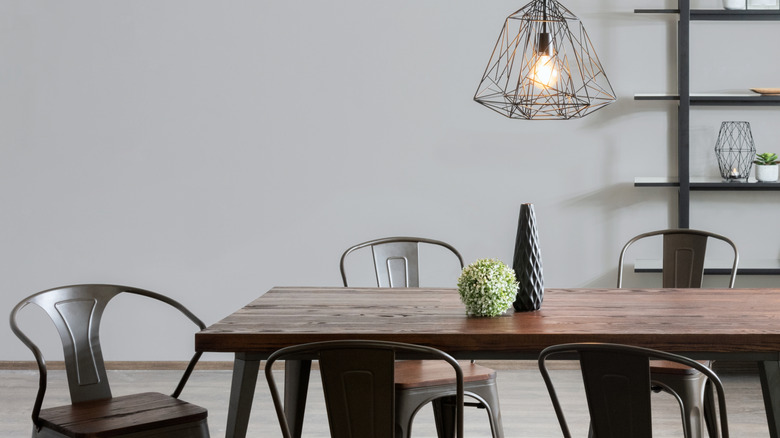
Another trend that exploded onto the interior design scene in recent years is the industrial design aesthetic. It's been popular for decades, pulling together a strange (and strangely effective) mix of rugged materials, vintage decor, and modern simplicity. It's a distinctly "urban" look, one that is, by its nature, heavily reminiscent of industrial and commercial spaces. And it's been so influential that many hallmarks of industrial design have seeped their way into other more transitional modes of design. Exposed bricks and concrete, for example, have found a place well outside of industrial homes. So, too, have accents like Edison bulbs and metal pipe shelving.
The issue in the dining room is manifold. Edison bulbs, for example, can feel harsh if used to light a space that's geared towards relaxation. Similarly, cold concrete and exposed metal pipework are highly austere. At a time when dining rooms are increasingly leaning towards softer, textural forms and warmer, earthier colorways, pinning these industrial ideas to your mood board is a risk. And it's not only us who think so. As principal designer of Button Atelier, Brittany Button told The Spruce, "Unless you're creating a live-work space where an industrial modern [feel] is prevalent, it's a definite pass!"
Matching everything is a mistake
Nowadays, it's easier than ever to find a matching table and chairs on sites like Amazon, Costco, and Home Depot. It's equally easy to find sideboards and other furnishings to match with them. Unfortunately, this idea of matching furniture, while convenient, lacks the character that designers are now craving. It's part of a movement away from "fast furniture," which we'll get to later. But it's also part of a desire to make dining rooms, and indeed other spaces, feel more collected, lived in, and personal.
Instead, designer Betsey Mosby told Southern Living that it's better to mix and match your furnishings. This, she explained, helps to prevent a design that looks like everything was bought at the same time. As for how to do it, that's up to you. Mosby said, "I love using an antique table and mixing in a different wood or even a paint color on a sideboard to add interest and to keep everything feeling collected." Really, the key is to not worry so much about what matches, and instead look for pieces that genuinely stand out to you. You don't need to replace all of your furniture, either — which is nice to know if you're on a budget. Instead, look for a couple of accent pieces, like a chair or even some new upholstery for your existing furniture. And don't be afraid to buy secondhand. You might just be amazed by the character contained in a choice piece of thrifted furniture.
Minimalism comes at the cost of character
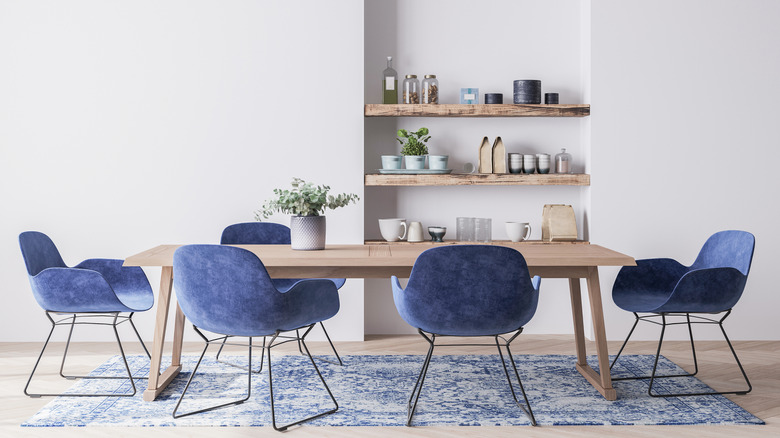
If you're starting to get the picture that less is no longer more when it comes to dining room design, then you're spot on. Minimalism is among the home trends that are best to avoid in 2026, just like industrial design or those stark white-painted walls. It's out of touch with current home-design sensibilities, and lacks the warmth that's so sought after by style-savvy homemakers. So said interior designer Barrett Oswald, who, when speaking with The Spruce, explained that paring things back can actually work against you. In other words, sleek is no longer chic.
In Oswald's own words, "All-white, minimalist dining rooms are out. Warmth and saturation are returning, and you can incorporate this by layering natural wood tones, moody hues, and textured accents." Once again, though, you don't need to decorate your entire space in order to bring things up to speed. Even just a few small touches can add up to more than the sum of their parts. A new, textured area rug, for example, could make a dramatic visual difference. Alternatively, if you have all-white walls, consider using one as an accent. You could paint it, or easier still, use peel-and-stick wallpaper. Either way, treating a single wall will help to create a sense of contrast with the rest of the white.
Gold and brass are making room for more modern metals
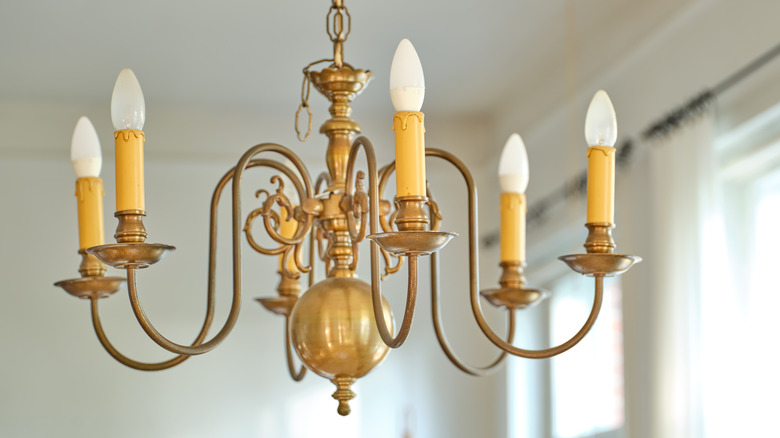
As is the case with other rooms around the house, the hardware in your dining room plays a big part in how you layer your overall scheme. Handpulls on your dining room, for example, add color and texture, and the same can be said for your lighting fixtures. Get it right, and they can tie the space together. In recent years, gold and brass have been highly popular. Brass, especially, is long loved for the patina it develops with age. It's a metal that feels "inherited," so to say that it's out seems somewhat strange given the movement towards more collected interiors. Instead, it's merely moving up and making way for a wider mix of metal finishes.
Used sparingly, gold and brass pieces catch the eye and stand out. But when everything is brass or gold, they begin to fade into the background. Instead, designers are moving away from single-metal schemes and instead choosing to mix things up. Chrome, for example, can be interwoven into your design, adding contrast to the antique charm of gold and brass with its sleek, almost futuristic sheen. The good news is that you don't need to spend a fortune to mix metals in your home decor (although that is entirely possible). Instead of investing in a new chandelier (and then needing to have it installed), look instead for easier, cheaper switches, like handpulls and doorknobs.
Table runners are running out of track
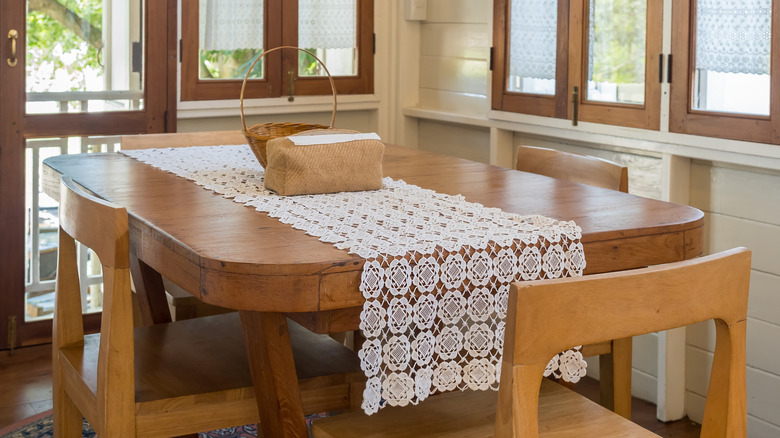
Whether you're wondering how to decorate your dining table for Thanksgiving or need to liven things up for the day-to-day, textiles can play a big part. There are various ways that you can use them, although they primarily boil down to tablecloths or table runners. The latter have proven especially useful in more minimalist design modes, adding just the right amount of interest without overpowering more streamlined schemes. But do you remember what we said about minimalism? As we look to add more texture and life to our spaces, interior designer Chloe Judge told The Spruce, "I can see tablecloths making a comeback."
While they had a place in those sparser scenes of yesteryear, Judge added that understated table runners no longer do dining rooms justice. Tablecloths, however, especially those with opulent and comforting designs, can add dimension. That extra fabric makes the whole room feel more inviting by covering the hard and often highly-sheened surface of the table, thus softening the overall vibe. Even in spaces that currently lean more minimalist, a full-sized tablecloth is an easy win to add interest and texture, especially if you take Judge's advice and opt for something with ruffled or tiered edges.
Single-purpose dining spaces may lack the functionality that smaller homes require
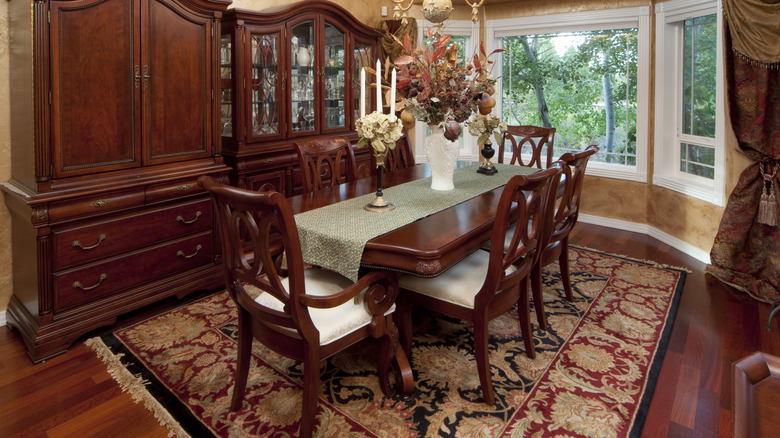
Formal dining in a dedicated room is a luxury not everybody can afford. Especially in modern households, where each and every family member has their own hobbies and interests, smaller spaces need to work double as hard to accommodate our domestic lifestyles. For this reason, co-founders of Re-Find, Natasia Smith and Sandy Baisley, told Homes and Gardens that they're seeing a shift towards multi-purpose dining spaces. In their own words, "As homes prioritize efficiency and flexibility, especially in smaller footprints, dedicating an entire room solely to formal dining no longer makes sense for many families."
One of you may need a place to work from home, for example. Equally, you may also need a space for crafts, for the kids to play, to roll out your yoga mat, and to entertain at Thanksgiving. In any case, it's okay — you don't need to choose just one. Instead, look for ways to make multi-functionality easier. Benches that slide beneath the table, for example, can help free up space when it's needed. An extendable table can also free up space, while offering extra seating when required. Lighting that adjusts to different moods will play a big part, and integrated storage that provides equal space for condiments, cutlery, and kids' toys will keep clutter from piling up.
Airy lightness is making way for darker dining room moods
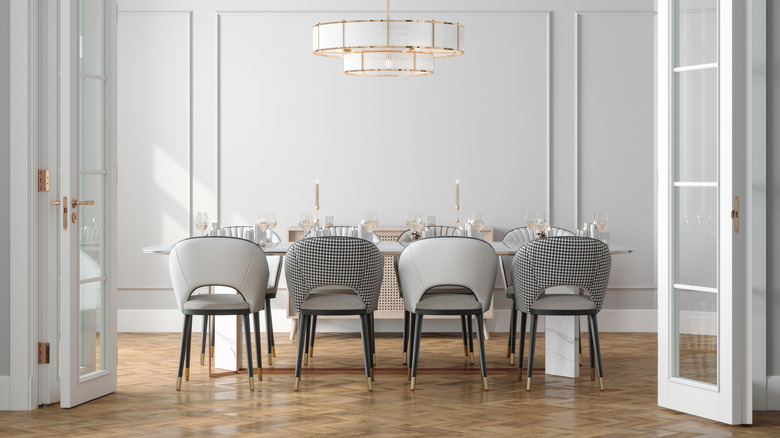
When you first viewed your current house, did the realtor by any chance describe the space as bright and airy? These words, or words to the same effect, have been used to appeal to the desires of homeowners for well over a decade. And in the wider context of minimalism, which has been popular for a similarly long time and which is largely defined by a sense of open spaciousness, it makes sense. But with the waning of minimalism in the minds of many designers, darker, moodier colors are beginning to feel more attractive. So what does this mean in your dining room? Should you simply switch from light to dark? Not necessarily.
Instead, Lauren Coburn, designer at NextHaus Alliance and owner of Lauren Coburn LLC explained to Homes and Gardens that dining rooms are simply becoming more atmospheric. "The biggest shift is towards spaces that feel moody, alluring, and designed for lingering rather than formality." In other words, it doesn't have to be dark to be trendy, but nor should your space feel so vacant" that you can't wait to retreat to your living room. In larger dining rooms, warm wooden flooring can help to soften the mood and inspire relaxation. In smaller rooms, dark wood accents, perhaps chairs or a sideboard, have a similar effect. You can also get creative with your lighting. Dimmers, for example, can help to naturally move the evening's mood from formal to relaxed once the plates have been cleared from the table.
Oversized, rectangular tables feel impersonal for daily dining
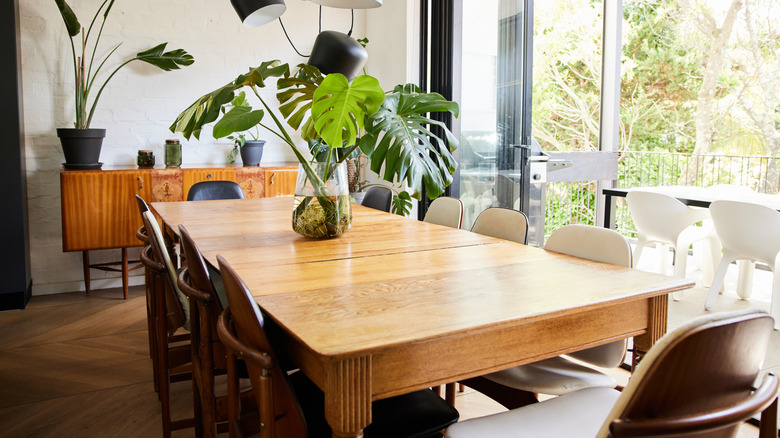
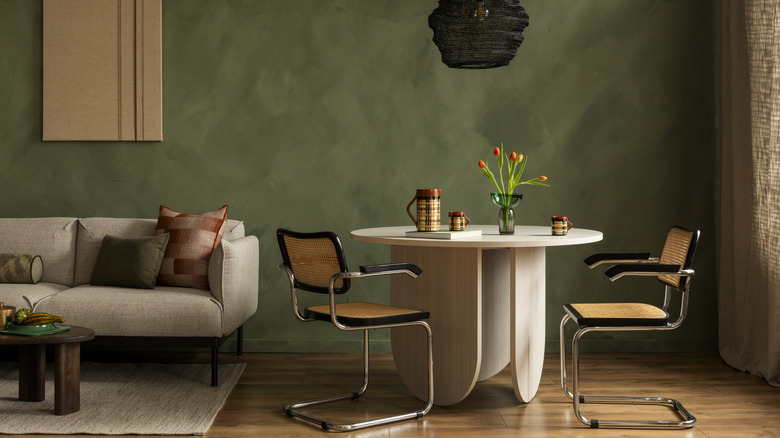
While large, rustic, and, especially, reclaimed tables have been popular since the 2010s, there's a growing movement towards more refined proportions. Of course, in some cases, a big table makes sense. In a larger room, for example, it's unlikely to cramp the space. It's also a good idea if you frequently have lots of family members to seat. But if it's just a few of you, it risks overcrowding your space, which is a dining room mistake that's all too easy to make. If this sounds familiar, then a smaller, rounded table may be the better option. Not only that, but it's actually where dining room design is trending. As Amanda Huber, creative director of The Dining Chair Company explained to House Beautiful, round tables bring softness and flow to dining rooms. As she puts it, "These silhouettes help to create interiors that feel calmer and more nurturing."
In fact, round tables lend dining rooms a number of practical benefits. Firstly, a rounder profile eliminates the "head of the table" dilemma, instead seating everybody on equal terms, which in turn can inspire more intimate conversations. They also make more sense in smaller rooms, since there are no sharp corners to catch yourself when moving around the space. Not only that, but the curved nature of round tables also satisfies the very current desire for spaces that are grounded in nature. Color plays a big part in this, and as we've seen already, earthier palettes are now very much en vogue. But furniture form plays an equally important role. As Huber pointed out, round tables offer "a welcome contrast to the clean, linear forms that have dominated in recent years."
Style-savvy dining rooms are trading false decor for forever pieces
Faux plants, cheap sculptural pieces, and low-quality dupes of designer furniture are all tempting, especially if you're on a budget. The thing is, authenticity is a big deal, and it's growing in importance. Instead of mimicking what they see on social media with wallet-friendly finds from Wayfair, style-savvy homemakers and interior designers now crave spaces that feel intentional and curated. They want them to feel collected over time, and as a rule of thumb, fewer items with more meaning is better.
Now, don't worry. You don't have to visit the antiques store and part with your life savings in order to adorn your dining room. But nor should you feel in a rush to make things right. Instead of buying mature (and often expensive) plants, consider getting them as seedlings, or growing them from scratch. When your guests later comment on the vitality of your plants, you can tell them just how hard you worked to grow them. Similarly, don't worry about spending a fortune on bonafide designer furniture. Instead, see which furniture items you can find at your local thrift store. You may just be amazed by the stories that some of those pre-loved furnishings have to tell.
Patina and personality are more important than perfection
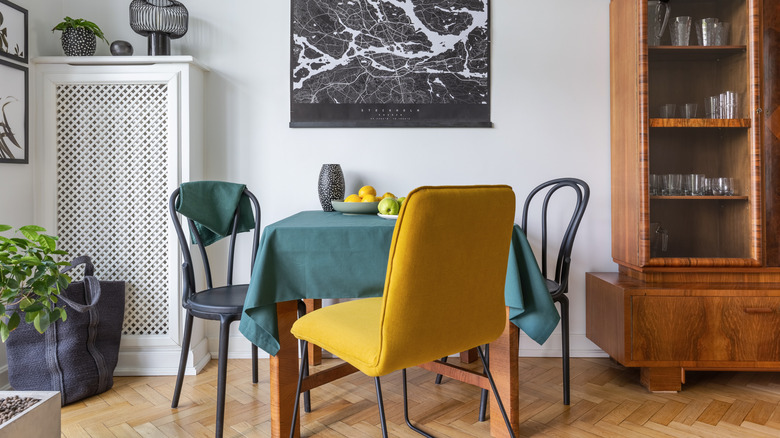
One commonly overlooked tip for designing a dining room is to stop worrying about perfection. That means not just designing it how your friends think it should look, or based on what's trending on social media. This is easier said than done, and it's fair to say that social media has had a big say on interior design over the course of the last decade. However, homeowners are increasingly less reliant on their social feeds than ever. Instead, they're looking inward for inspiration, and making design choices that reflect their own personal needs and preferences. As Rebekah Murphy told Homes and Gardens, "Instead of perfection, people want patina, warmth, and rooms that invite conversation."
This means hanging artwork because you, personally, like to look at it. It means choosing chairs because you actually find them comfortable, and specifying storage that's genuinely useful for your family. As for what your friends will think, don't be afraid to follow Murphy's advice and welcome conversations. The reality is that guests will question your design choices, regardless of how you made them. After all, it wouldn't do for us all to be the same, would it? But at least if there's a personal reason or story driving your decisions, you'll have something more interesting to talk about than if you merely pinched the idea from Pinterest!