

11 Modern Backyard Ideas For Adding Shade Cover With Style
We may receive a commission on purchases made from links.
If you've spent months and a small fortune designing your dream garden patio or deck, only to find that the sun in that spot is too hot, then you missed a key ingredient to outdoor enjoyment. Shade is just as important for us humans to spend time outdoors as the warmth of the sun, especially for outdoor spaces that get direct sunlight all day. In fact, especially in hotter parts of the country, it can be the difference between enjoying your patio and merely appreciating it through the kitchen window. Fortunately, shade is quite simple to achieve. Not only that, but there are various ways to add shade to your garden without compromising the style of your surroundings.
In this guide, we're going to walk you through just 11 of the many ideas that you could choose from. Some will help you to transform your backyard into a comfortable party space, and some will make those quiet, reflective moments by yourself feel more serene. Some, like installing a veranda, will probably require building permits and the help of a reliable contractor. Others can be stored quite neatly in the shed on days when they're not in use. There are shady solutions that'll also indulge your inner horticulturalist, and if you're tired of avoiding the eyes of your nosy neighbors, there are some that'll help block those out, too.
An umbrella is simple, stylish, and easier to manage during windy winters
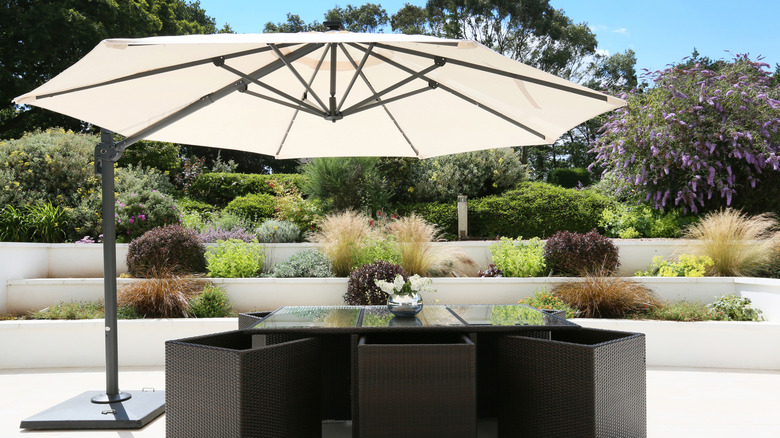
Time-honored, tried, and tested, a patio umbrella is one of the easiest and most obvious ways to add instant shade to your garden. You can source them in various sizes, too, which is handy for two reasons. Firstly, for larger areas, you can simply specify a larger parasol, thus affording you and your guests a reprieve from the sun's rays without the need to buy twice. Secondly, for gardens where storage space comes at a premium, you can also buy space-saving umbrellas for smaller gardens. Depending on the size of your shed, these could simply be stowed under cover for the winter months. Alternatively, some are also designed to either be folded down, collapsed, or simply covered, meaning they're easy to maintain and protect from the elements.
From a stylistic point of view, umbrellas come in a whole host of trendy colors and patterns, meaning you can easily match them to your outdoor patio's wider design. Not only that, but they're also surprisingly customizable. For example, you can buy lights that fit to the pole of your umbrella, or alternatively, you could simply string some lights around it. Either way, this is a great way to add mood lighting to your patio whenever you're entertaining after dark. You can also buy cantilevered designs, like this 12-foot Round Umbrella from the Grand Patio Store on Amazon. Such designs are especially useful for outdoor dining areas, allowing you to suspend the shade over your table without needing to make room in the middle for a pole.
A retractable awning is ideal for seating areas right next to your home
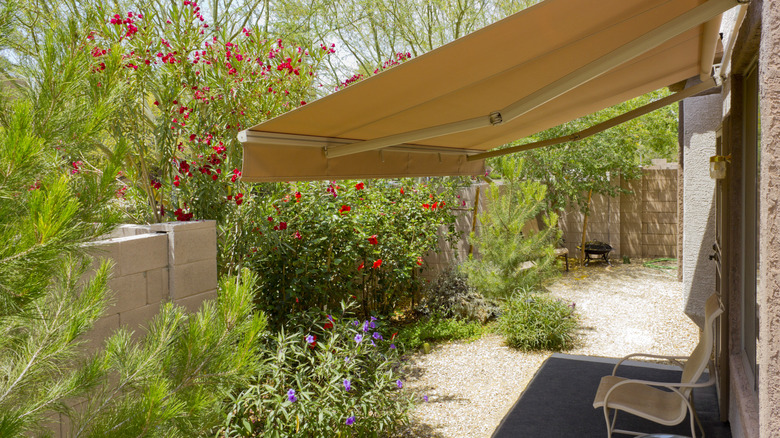
As a more permanent alternative to umbrellas, retractable awnings can be mounted to the wall and pulled out whenever you need to summon some shade. Like window blinds, they retract back into a cassette, and just like umbrellas, the awning fabric can be specified in an array of stylish colors and patterns. But it's that retractability that makes them so useful and versatile. Unlike umbrellas, which need to either be collapsed, covered, or manhandled into the shed, you can simply wind the awning back and let the sun shine.
As for the best places to install an awning, there are several. If your deck or patio extends directly out from your house, you could easily add shade by installing an awning to the wall of your property. You can also buy awnings to fit an existing pergola, if you have one. And wherever you install it, provided that your budget can stretch, you could invest in a motorized awning to make life even easier. There are several of these available on sites like Amazon, like Yoolax's Motorized Retractable Awning with Solar Power. Fixed to the wall of your house, it's powered by the sun, which means you needn't worry about hardwiring. And since it works via remote, it's easy to extend or retract your awning however the weather dictates.
Pair climbing plants with a trellis or pergola for natural shade
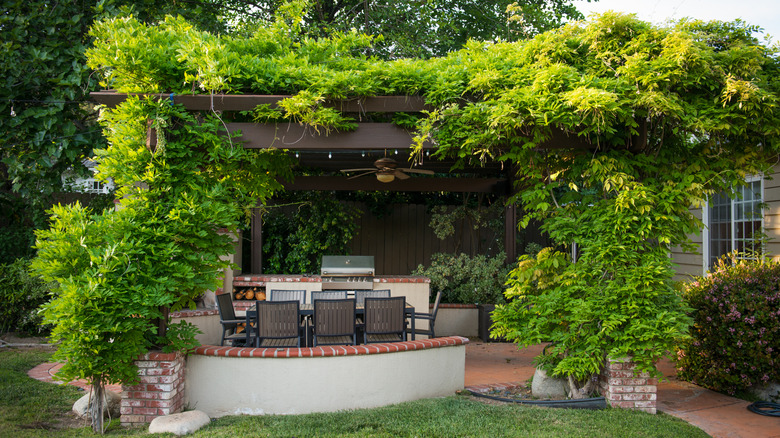
Dressing up your garden patio with beautiful plants is one of the most rewarding ways to make your backyard feel like a resort. But if you choose the right plants, and pair them with an appropriate structure, they can also lend serious shady appeal to your space. For example, while it may require a little patience, you could train climbing plants to grow around the uprights and cross-bars of your pergola. Trumpet Honeysuckle (Lonicera sempervirens), for example, is known for its dense, leafy growth habit, and if allowed to establish properly, could help to dampen the sun's rays while you sit beneath it. Its striking, tubular flowers are also particularly popular with pollinators, including hummingbirds. That's worth knowing if you want to encourage more wildlife to visit your garden.
As an alternative for those who don't have a pergola, you could always use a trellis instead. You can buy garden planters with trellises built in, like this 6-foot tall Metal Planter Box with Trellis from MTART on Amazon. Like your pergola, the trellis can be used to support climbing plants, and if you position it strategically — on the sunward side of your furniture — it could provide some welcome shade when the sun's at its strongest. Look for a trellis with a fairly tight "weave" to ensure you get shade while the plants grow. Alternatively, look for fast-growing, bushy plants that'll quickly establish themselves. Passion flower (Passiflora caerulea), for example, grows quickly and develops the most beautiful blooms (just be careful where you plant it, as it can outcompete native flowers). Admittedly, it needs plenty of sunlight to do this, but since its job in this case is to absorb the sun, that needn't be a problem.
Using trees to your advantage ties nicely with current trends
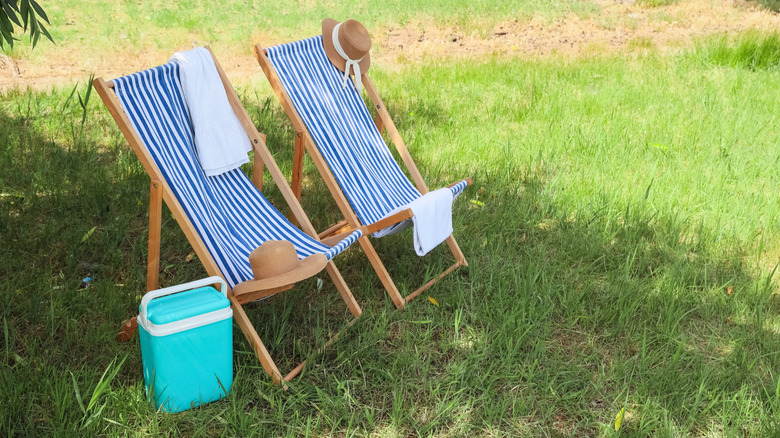
Since you're wanting to add some "style" to your yard while also enjoying a spot of shade, bearing current trends in mind can go a long way. In times gone by, heavily manicured lawns and crisp, perfectly pruned petunias were the hallmark of a graceful garden. Nowadays, homeowners are adopting a wilder approach to outdoor enjoyment. They're doing away with strict formality and allowing gardens to grow more wildly. Importantly, they're looking for ways to immerse their outdoor seating areas within the landscape, instead of gazing at it from afar. With that in mind, instead of looking for something "man-made" to shield your family from the sun, why not simply embrace the natural structures already in your yard? Specifically, if you have a tree that throws shade over a generous portion of your garden, why not find a way to make the most of that?
Planning a seating area beneath a tree is a fantastic way to guarantee shade without the need to buy or install extra fixtures (though hanging lanterns like these Janchs battery-powered string lights can dress up a tree cheaply). A few reclaimed pallets can make for an easy DIY patio beneath your favorite tree. Or, if you have a patio but no trees to hide beneath, worry not. There are various fast-growing trees that can add shade to your yard. Of course, we're talking about trees here. "Fast" is a relative concept. But with certain species like hybrid poplars (Populus) growing up to eight feet per year, it may not actually take that long for your planting to start bearing fruit.
Pop-up canopies could be a simple, shady solution for renters
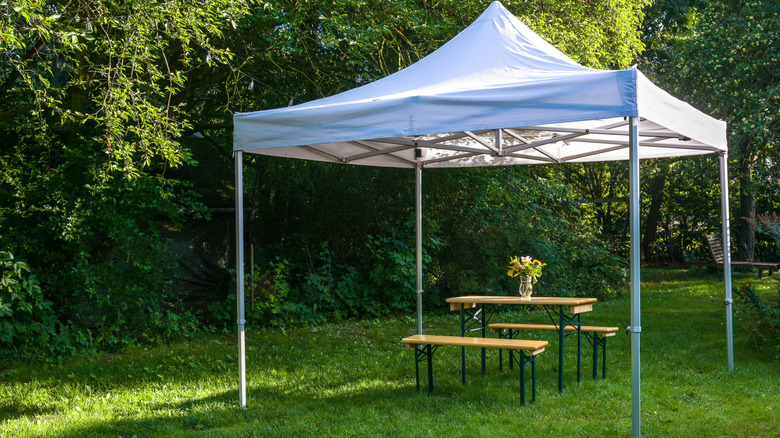
If you liked the idea of an umbrella but worry that it wouldn't provide enough shade, and you'd rather forgo the hassle of drilling into your home to install an awning, consider using a pop-up canopy. They don't require footings or permanent installation, which makes them ideal for renters who aren't allowed to add fixtures to the property. They're also fairly lightweight and can pack down nice and small, making them easy to stow in the shed.
Pop-up canopies also come in an exciting (and trendy) range of styles, designs, and sizes. If maximum space is most important, you could use a car port canopy to add shade in your backyard. Alternatively, for something a little more futuristic, you could opt for something like this Pop Up Screen House Tent from East Oak, which has insect netting plus space inside for your dining set. Just bear in mind that such solutions may not be as stable as more permanent fixtures when the wind picks up.
Use your boundaries to fence off unwanted sunlight
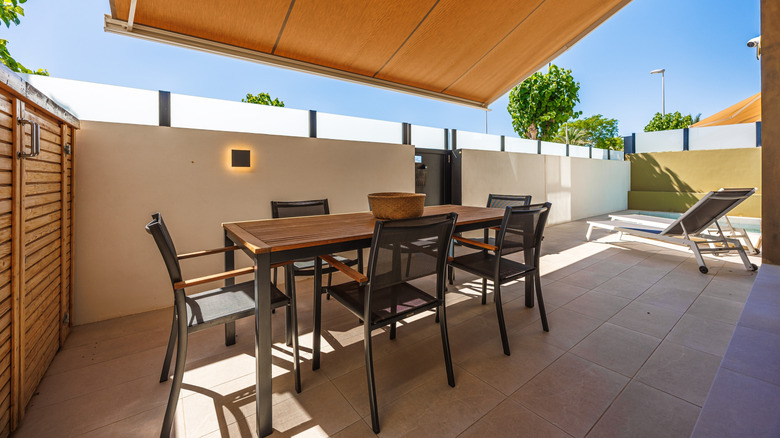
Another area worth close examination when it comes to shade is your yard's existing boundaries. You can use your metal or wood fencing as a privacy screen, or you can use a "green screen" from dense-growth conifers. There are plenty of ways to do it, but the key to getting shade out of this solution is to plan your seating next to it. Of course, doing this depends on where those fences are and how that pertains to the sun's position at any given time of the day. But if there's a boundary that offers shade at the hottest part of the day, then building a floating deck, patio, or simply placing some furniture on the shady side could help to provide some relief.
Depending on the height of your fence, and the material that it's made from, you may also be able to bolster your shade with other solutions featured so far. For example, an awning affixed to a high fence could be pulled out to extend the hours of shade. Similarly, you could use an umbrella to add more shade when the sun inevitably arcs beyond the protection of your fence panels. And if you decide to go in for a floating deck, you could combine the existing shade of the fence with the addition of a pergola or gazebo. The point is that by planning your seating area next to a pre-existing structure, you won't have to work as hard to hide from the sun when the mercury starts to spike.
Achieve shade with a sail
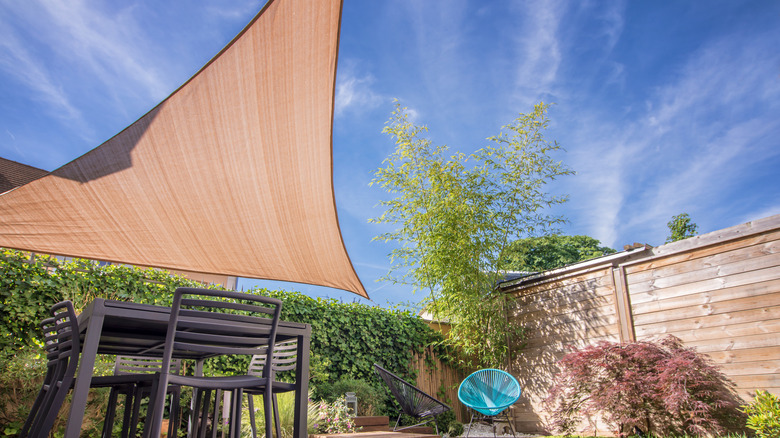
Offering a much cheaper solution that other ideas featured up to now, sail shades need little more than a place to hang. They can be strung between various manmade or natural structures, including trees, fences, and pergolas, and provided you position them properly, they provide reliable shelter from the sunshine. Like umbrellas and awnings, they're also available in various modern and trendy colors and patterns, and since they're relatively cheap, you can get creative with your shade's layout.
For example, you could hang a single, large sail, like this Sun Shade from Amagenix. Priced at $62.99, it provides a large amount of coverage for considerably less than you'd spend on a motorized awning. Alternatively, you could suspend several smaller sails, creating "zones" of both sun and shade. This is especially recommended if you like to sunbathe and then retreat to the shade for a brief cool-off period. The key to durability is ensuring that you choose the right fabric. Dedicated outdoor sail shades are designed from weather-resistant fabric, but it's easy to source your own if you'd prefer to customize your design. Look for products made from High Density Polyethylene (HDPE), like this Sun Protection Fabric from Coolaroo. HDPE is both breathable and durable, sometimes lasting up to 15 years. Importantly, it's also designed to block out UV rays.
Install a gazebo in the wildest corners of your garden
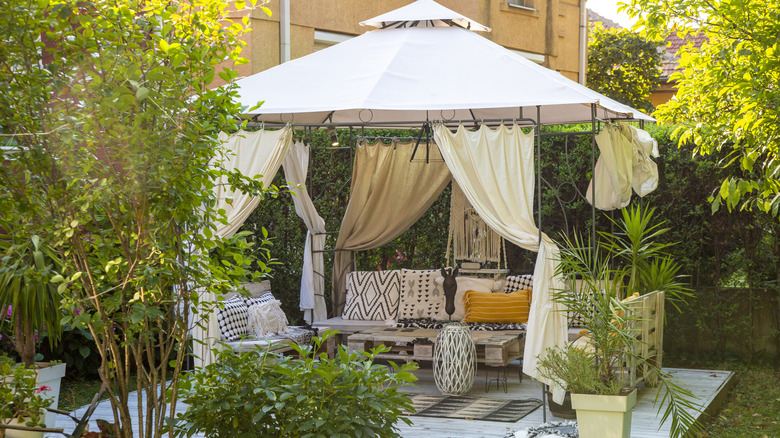
With a roof and, depending on your chosen design, open sides providing views of your surroundings, a gazebo is a fantastic way to add shade to your garden. Those open sides allow you to feel immersed in your garden, provided that you install it in your yard's wildest corners. Not only that, but in areas with trees, shrubs, and plenty of plants, the air will naturally feel cooler compared to a sun-drenched deck or patio, where heat-absorbent materials and furniture can quickly soak up the heat.
As for style, if you head over to somewhere like Home Depot or Costco, you'll find there are plenty of stylish designs and structure sizes to choose from. Which brings us onto cost. Unfortunately, the cost of installing a gazebo or pavilion is unlikely to be anywhere near as cheap as, say, a sail shade. You'll need to pay for the structure itself (or, at least, the materials to make it). If you're not comfortable erecting such a permanent structure, you'll need to pay for a contractor to help out. And don't forget that, depending on the size of your shelter and the rules in your local area, you may also need building permits. With all of that being said, it could well be worth the trouble and expense. With the permanent roof in place, you can simply set out your furniture as you'd like, safe in the knowledge that the structure will take care of the shade.
Enjoy dappled shade with freestanding decorative screens
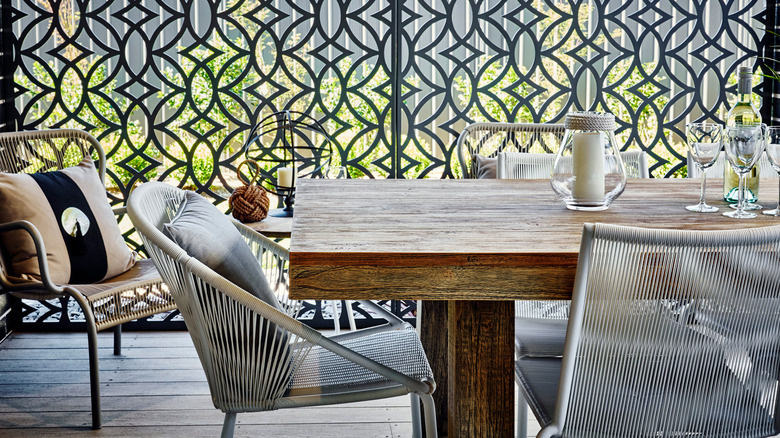
Working in much the same way as a trellis, freestanding screens can be positioned strategically around your seating area to block the sun. The key difference is that, since they're not weighed down by a planter full of soil, you can reposition them much more easily. This means that, on stifling summer days, you can keep moving them around to ensure you're nicely shaded. They're also among the more affordable ways to add privacy to your garden, which is a bonus. And since they're available in various designs and materials, the lower price point needn't limit your ability to style your shading.
For example, you can buy freestanding screens with intricate patterns cut out of the material, like this 72-inch Freestanding Metal Privacy Screen from TALLYVER. Designs like this one "dapple" the sunlight, lending shade without completely blocking out the sun. Alternatively, if you want a screen that blends more easily with your garden's natural surroundings, look for products in natural materials like wood or bamboo. This 74-inch Wooden Privacy Fence from VINGLI is more than tall enough to lend some shade, and it's available with either a stand or stakes, making it useful on the patio as well as on softer surfaces like your lawn.
Add curtains to your pergola
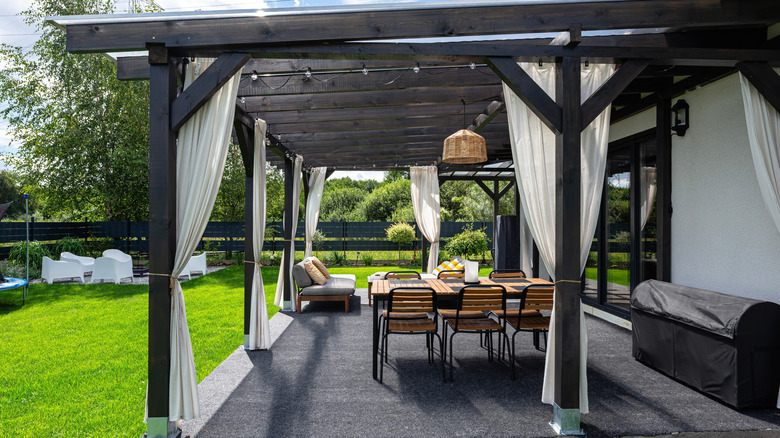
If you already have a pergola in your garden, then you're already well on your way to better shade. As we've seen already, you can train plants to grow over the beams and thus block out the sun. But if you don't have time (or, indeed, the inclination) to grow climbing plants, you could simply hang some curtains instead.
Like screens, curtains will afford your space both shade and privacy. Since you can pull them back whenever you want, you can easily give yourself a break from hot or windy weather (or the nosy eyes of your neighbors). Not only that, but textiles like this can lend a refined, resort-grade look to your pergola, which is great if you're entertaining and want your space to both look and feel inviting. You can also style them however you like, choosing from various colors and thicknesses. Heavier-duty curtains can help to fully block out the sun while standing up to wet weather, like these Thermal Outdoor Curtains from DIVA EN CAMINO on Amazon. Alternatively, for something that feels a little more "breezy" while still cutting out the harshest sunlight, look for curtains with a touch of transparency, like these White Outdoor Sheer Curtains from HolidayIdeas, also available from Amazon.
Turn your deck or patio into a veranda
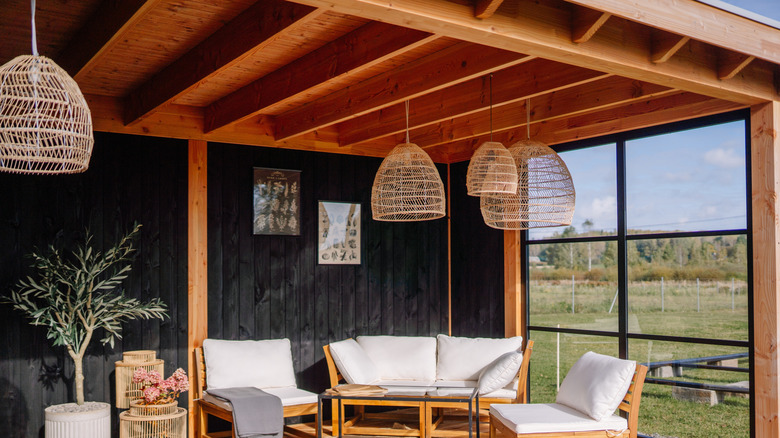
One of the best ways to transform your patio into the ultimate outdoor entertainment space is the inclusion of a veranda. You may well need to secure building permits, and if you're uncomfortable with construction work, you'll need to pay for a contractor. But if you already have a deck or patio directly outside your home, it could make sense to go to the trouble. The reason we've included it in this guide is that the roof of your veranda will create plenty of shade. However, the benefits of a veranda go well beyond sun protection.
It will also protect you from the rain, allowing you to use your space more easily throughout the year. As for style, having a roof over your head opens up a world of exciting possibilities. It enables you to seamlessly transition from your patio to your home's interior, bringing the outdoors in while allowing some of your indoor comfort spill out onto the patio. You can run lights on the underside of your roof, thus making it easier to use your space after dark. You could also install patio heaters to extend your outdoor entertaining season. And with the protection of the roof, you can get super creative with things like chairs, tables, and even soft furnishings like outdoor rugs. In other words, while it's hardly the cheapest idea for adding shade to your backyard, the addition of a veranda is among the most versatile.