

No More Boring Bathtub Curtain: The Chic DIY Alternative No One Will Guess You Made
We may receive a commission on purchases made from links.
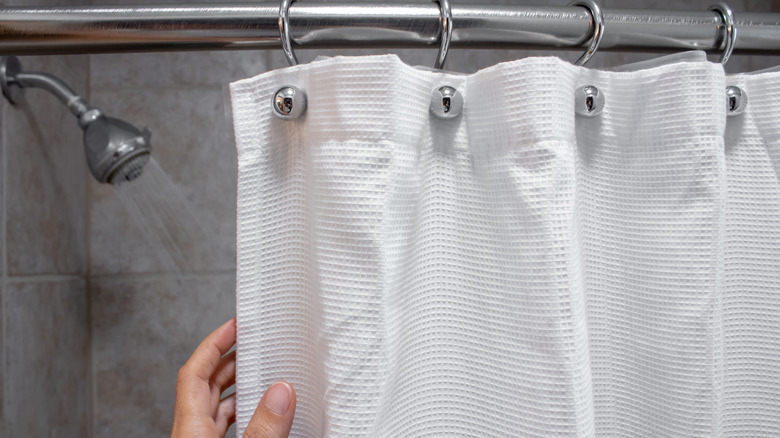
Bathrooms don't usually have much going for them. Builder-grade fixtures, plain tile, and simple accents all combine to form a clean-but-boring design. This can easily be remedied with a couple of stylish additions like interesting wall art, moisture-loving houseplants, or colorful rugs. But there's one major opportunity for decor that's often overlooked: shower curtains. These are usually kept low-profile and simple. But if you're craving some texture, a DIY macrame curtain cover is a fantastic way to create some privacy and protect your space from water without sacrificing style.
Heavy, dense fabric isn't the best choice for bathtub or shower curtains due to the fact that it can harbor moisture. Cotton, however, is a popular pick when paired with a liner. By knotting natural cord together to block the view of your bathtub and pairing it with a liner, you're taking this cotton curtain idea to the next level. The best part? It's incredibly stylish. Macrame is a trademark of bohemian decor, but it's also a great way to add texture to a space regardless of your go-to aesthetic. The natural material and neutral coloring of the cord ensure that it can play nice with everything from an eclectic, vintage design to a spa-inspired bathroom that feels like a retreat. With string like Noanta Natural Macrame Cord and your shower curtain rod, you're ready to get to work.
How to create a DIY macrame curtain
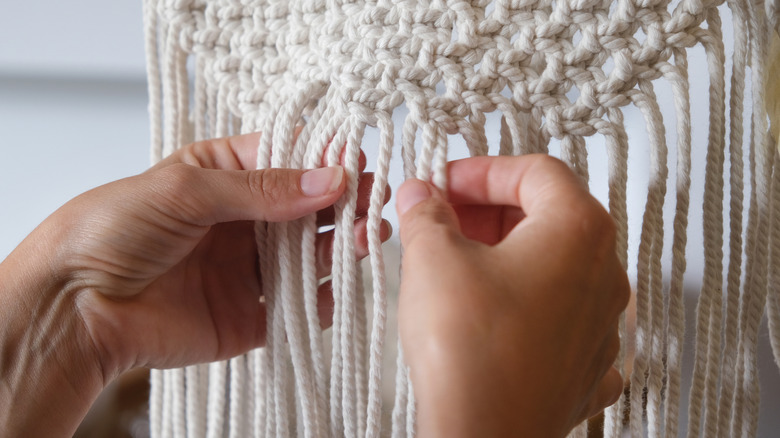
Before you decide on a design for your macrame curtain, it's important to be honest with yourself about your skill level. Macrame doesn't have a very high barrier to entry. It doesn't require many materials, and the only tools you need are some scissors and your hands. Plus, if you mess up, you can easily undo your work and try again. It is, however, a fairly involved craft, and makers build their skills up over years. So if you're just starting out, you'll want to stick with a simpler design that will allow you to familiarize yourself with common knots and patterns.
Regardless of the design you decide to go with, you'll begin by filling the length of your shower rod with basic lark's head knots. This is a simple securing method that requires you to create a loop behind your rod and pull the two strands of your cord through it. Make sure your strands are much longer than the space between the ceiling and the floor. You'll trim them when your curtain is done, but all the knotting and weaving will eat up quite a bit of material. Basic designs often utilize a simple pattern of square knots, leaving the ends free to dangle. You also might come across spiral knots, half hitch knots, and their respective variations.
Unless you're feeling particularly creative, the best method for creating your own curtain is to find a pattern or tutorial online. YouTube and blogs are great free resources, but patterns are available for purchase from sites like Etsy. Crafting books are also wonderful for in-depth tutorials, and you'll likely be able to find plenty of designs through your local library.
How to style your macrame bathtub curtain
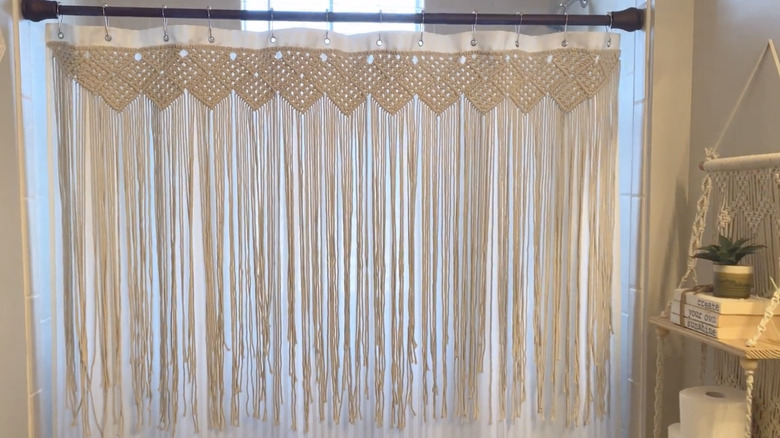
One of the best parts about making your own shower curtain is that it's already guaranteed to fit. Because you build it directly on a curtain rod, installation is as simple as hanging the rod back in place. If you don't already have brackets installed or you're looking for a renter-friendly DIY, utilize a tension rod to create some more privacy without having to drill into the wall.
Depending on your chosen design, your macrame curtain can help obscure the view into the bathtub even with a clear liner. However, if you want more privacy, consider either layering it with a more opaque plastic liner or adding a plain fabric curtain and using the macrame layer as a topper. A matching natural white tone will create a cohesive look, but this is also an excellent opportunity to add a pop of color that will peek through your woven fibers.
Once everything is hung up, all that's left to do is finish styling the space. Organic materials and neutrals are natural pairings for macrame. So decor made of bamboo, wood, or rattan is sure to shine. Add in a few more macrame accents, like JaneBeauties Over-the-Door Organizer, to really complete the look and tie everything together. After brushing up on your skills with the curtain, a DIY adjustable plant hanger or cute wall hanging will also be a piece of cake to complete.