

16 Hobbies That Will Leave You With Beautiful And Useful Home Decor
We may receive a commission on purchases made from links.
Hobbies might seem like just-for-fun activities, but they can inspire creativity, make dealing with stress easier, and help you connect with other people. Even better, many creative hobbies also allow you to create home decor — pieces that are truly unique because you crafted them. Hobbies like hand lettering, flower pressing, and gardening are beginner-friendly options that let you ease into your creativity. If you're up for a challenge, try ceramics, woodworking, or quilting.
Start by thinking about your interests, the hobbies you've dabbled in previously, and the supplies you already have on hand. If you have an extensive collection of paints and several blank canvases, painting could be a good starter hobby. Maybe you have an old sewing machine collecting dust. Many hobbies can be self-taught using books and free online resources. Joining a local class or signing up for lessons can help you learn from experts to accelerate learning. We've created a list of 16 hobbies that could result in beautiful home decor.
Decoupage to apply decorative finishes to items
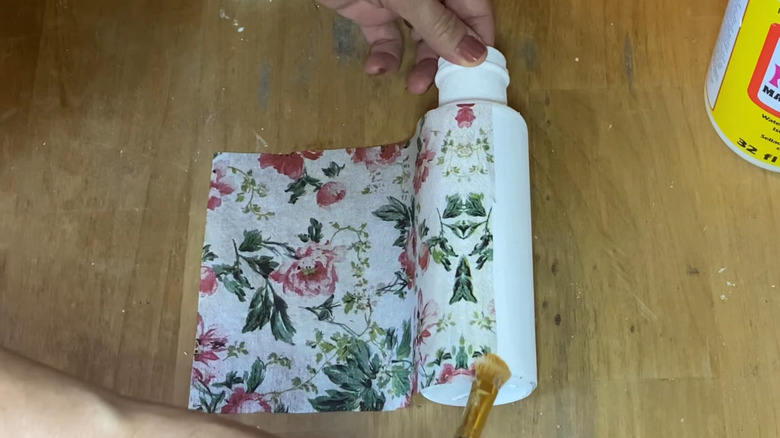
Ever see something, like a decorative napkin or scrapbook paper, that's so beautiful you wish you could incorporate it into your decor? That's exactly what decoupage does. You use special decoupage glue — Mod Podge is a favorite — to stick an image onto an object. You can use the technique on many surfaces, including wood, ceramic, metal, and glass. And while the decorative elements are usually paper, like napkins, photos, and magazine pages, you can use other thin items, such as fabrics. It's an inexpensive hobby because all you really need is some decoupage glue and a paintbrush or another applicator. The basic process is to spread the glue on the surface, press the decoration on top and smooth it, and then apply another coat over the top to seal it in.
There are many creative ways to use decoupage in your home. Some common projects include embellishing decorative trays, candle holders, books, lamps, and shelves. It's a great way to update home decor pieces you already own. Many people also thrift objects to decoupage or pick up inexpensive items, like trays and vases, from Dollar Tree for decoupage projects.
Flower pressing to preserve flowers and create wall art
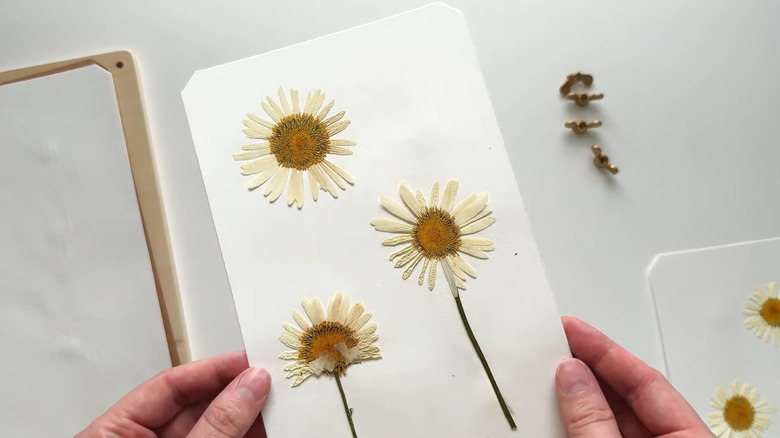
Flower pressing might be rooted in the Victorian era, but it's one of those grandmacore hobbies that are once again gaining popularity. A search on TikTok provides many results for pressed flower projects. This is another beginner-friendly hobby that doesn't require a big investment. While you can buy special equipment, like this Aboofx Flower Press Kit, you can just as easily sandwich flowers between parchment paper or coffee filters and press them under a pile of books. It's also a decorative way to preserve the flowers you grow in your garden or special bouquets you receive.
Learning how to press flowers and ways to use them for decor can open up a world of fun projects for your home. Because the process flattens the flowers, you can easily frame them and hang them on the wall — this option can create meaningful wall art for flowers from a celebration of life, wedding, or other occasions. You can also use the pressed flowers in resin projects, ornaments, and candles.
Hand lettering to customize home decor signs
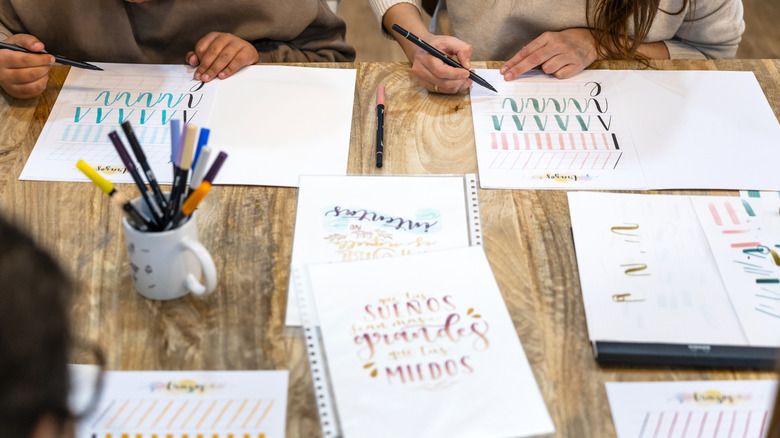
Hand lettering is essentially drawing letters in fancy ways, similar to calligraphy. However, when you hand letter, you have a lot more creative freedom when it comes to the detailing, sizing, and style of the letters. You'll find a wide range of styles, from classic, scroll-like letters to funky modern shadow letters. Practice books, like "Pretty Simple Lettering," make it easy to work through various styles of hand lettering. Brush pens are often used to draw letters on paper.
Your newly developed hand-lettering skills come in handy on all types of home decor, like DIY sign ideas to add whimsy to your yard. Instead of using pens on paper, you can use the same design ideas to sketch letters on a piece of wood or another home decor piece, like a wooden crate or shelf, and then paint over the lines. Or, you can create a template on paper and turn it into a stencil for your painted project. Of course, you could also frame your paper hand stenciling work for easy wall art.
Painting to create custom artwork
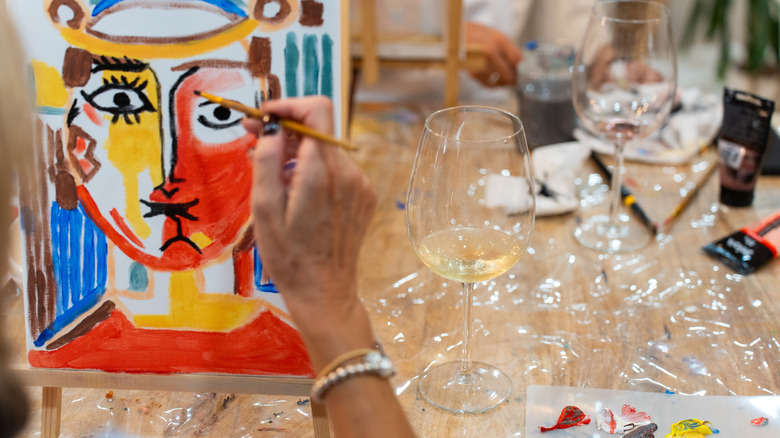
If you're looking at artwork in the store or a museum, you may think you could never create something that good. It's easy to let painting as a hobby intimidate you. But if you let go of the expectations, you might find that painting helps you gain confidence, increase creativity, and reduce stress, even if the results aren't museum-worthy, in your opinion. Acrylic painting is often recommended for beginners due to the affordability of supplies and the forgiving nature of the medium. Plus, it's easy to clean up. But you can also dabble in oil or watercolor paints.
If you're nervous to start with a blank canvas, dip your toe into painting with a kit, like this Prasio Paint-By-Numbers Floral Kit. Simply frame the piece when you're done. Or, sign up for classes at guided painting studios to gradually fill your home with canvas art, while learning in a fun environment. Local art centers or community education programs may offer ongoing art classes with the classwork doubling as home decor. Or, buy the supplies and start dabbling on your own.
Refinishing furniture to create custom pieces
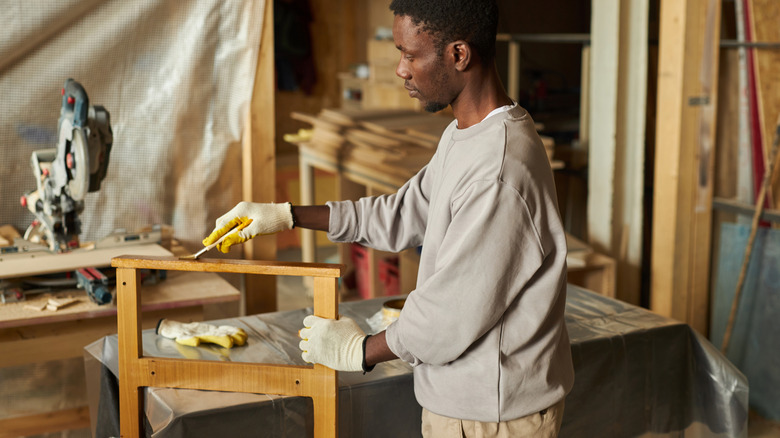
The next time you see a piece of wooden furniture on the curb for free, grab it to launch your new hobby of refinishing wood pieces. Learning how to sand, stain, or paint wooden furniture allows you to keep items out of the trash, save money, and end up with custom home decor items. It's a flexible hobby with the opportunity to change as much or as little about the piece as you want. While you can sand items by hand, having a power sander makes the hobby easier, especially for larger pieces.
Head to the thrift store to grab a few starter pieces for your home. Look for sturdy construction and a general shape that will fit your home, even if the piece's current state is unpleasant. Consider the types of furniture you need in your home while you're thrifting — an old curio cabinet could add the storage you need, for example. Refinishing skills also help you bring your furniture back to life if you have pieces that are lackluster.
Woodworking to build your own pieces

Woodworking might seem intimidating, but there are plenty of easy beginner projects — we've already covered 45 woodworking projects even beginners can do. When you first start out, stick to simple projects and use the tools you already have, even if that's just a few hand tools. You can slowly grow your tool collection and expand your woodworking skills if you want to stick with the hobby. If you want a more rustic wood art hobby, consider wood carving, with help from a Bluvizo Wood Carving Kit.
Even your beginning woodworking projects are worth displaying in your home to show off your hard work. A simple way to start, while having a home decor piece that you can display, is with precut woodworking project kits. For example, this Kreg Wine Rack Kit helps you get the hang of assembling wood pieces, and you end up with a stylish way to display wine bottles. Other easy beginning projects that you can make out of scrap wood or new lumber include shelves, cutting boards, benches, and coat racks.
Gardening and plant propagation to incorporate biophilic decor
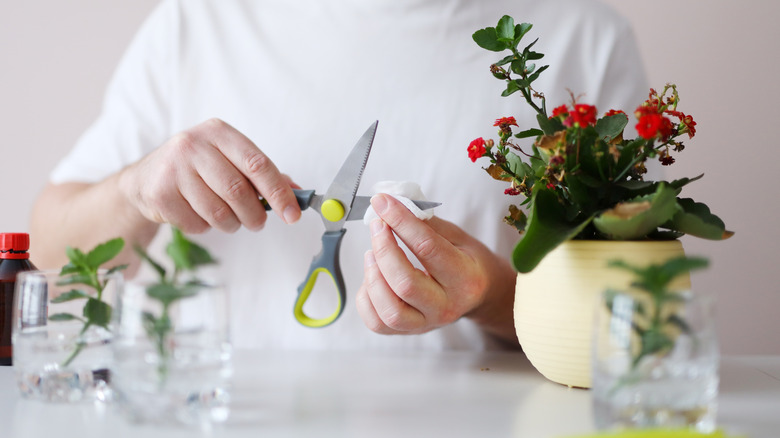
Growing plants is a hobby you can start at any time, even if you're convinced you don't have a green thumb. Start small with just one or two houseplants, so you can focus on their needs — the ideal amount of light, the right temperature, and the correct amount of water are all essential. Once you feel comfortable, you can take cuttings to propagate your houseplants to expand your collection. If you move your gardening hobby outdoors, choose plants that are suitable for your growing zone and match the type of soil and sunlight conditions your yard has.
Houseplants naturally add beauty to your space, especially if you want to lean into biophilic interior design. Start with the easiest houseplants to propagate to fill your home with free greenery year-round before advancing to more challenging species. If you grow flowers outdoors, cut them to bring inside to decorate, whether you display a fresh bouquet or dry them for a longer-lasting display. In addition to pressing flowers, you can also air dry them or speed up the process with silica gel as a drying agent.
Photography to create custom, meaningful wall art

You don't have to be a professional photography to take quality images for home decor. In fact, you don't need a big, fancy (and expensive) camera — newer smartphones offer a convenient way to take high-quality photos. YouTube videos and other online resources provide several tips for improving the quality of your phone images. If you decide you want to pursue the hobby more seriously, you might upgrade to a DSLR camera with separate lenses.
There are many stylish ways to add personality to your home with family photos and landscape shots you take. Starting with high-resolution photos is essential for quality printing. Print photos and frame them, or have your images printed on canvas, metal, or other materials to display in your home. Candid family moments and vacation memories make great artwork. Or, get creative by taking photos of your home from a unique angle or close-ups of little corners of your flower garden.
Candle making for aesthetics and scent
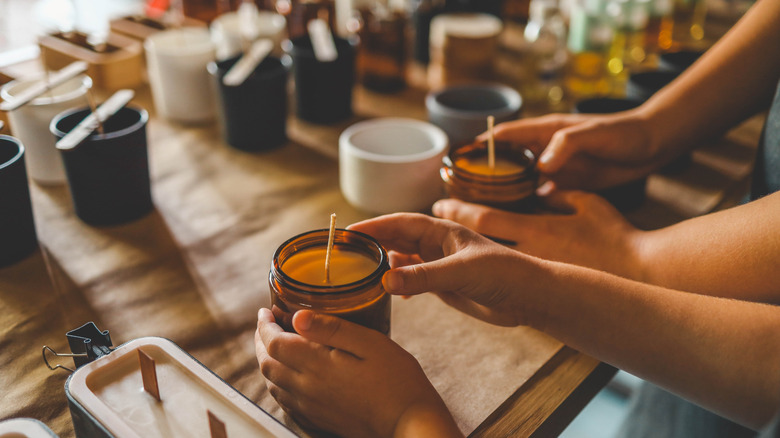
Mass-produced candles can be expensive, and it's often difficult to find a scent you really love. Taking up candle making puts you in control of the scents, containers, colors, and embellishments for the candles you display. The basic materials are the candle wax, which comes in several types, a wick, a container, and essential oils to scent the wax. Instead of pouring the melted wax into a jar, use candle molds. You can get the supplies needed in most craft stores or online — buy a small quantity to start until you're sure you want to continue making candles.
While candle making has a standard process, there's plenty of room for customizing them to fit your home. Perfecting the scent combination is one easy option. You can even reuse old spices to craft the best homemade candles for every season. Also, experiment with different types of waxes and wicks. To make the candles decorative, choose containers that coordinate with your decor, or add embellishments, like seashells, dried flowers, glitter, and gemstones, to the melted wax.
Beadwork to customize home decor accents
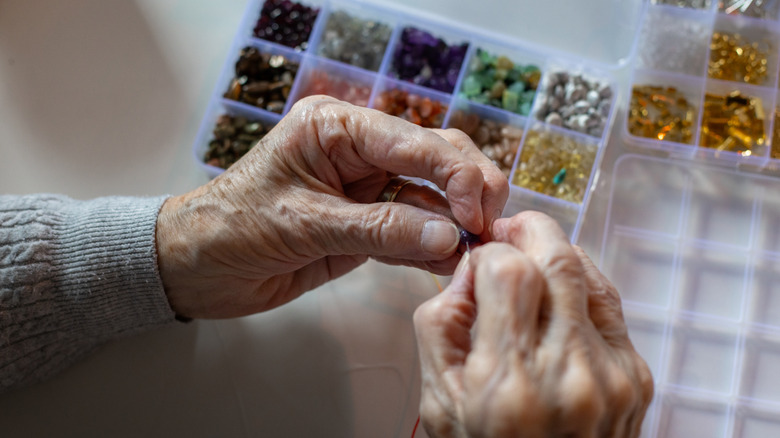
Beadwork dates back to the Middle Ages, often appearing on garments meant for nobility, but the hobby is accessible to everyone today, with a wide range of beads and supplies available. Two common forms of beadwork for crafty hobbies are stringing beads on wire and embroidering with beads by sewing them onto fabric. Some types of beadwork are associated with particular groups. For example, Native American beadwork often incorporates meaningful motifs and may appear on moccasins and medicine pouches. Whether you have a personal connection to cultural beadwork or simply want to experiment with creating with beads, this hobby helps you focus on your hand-eye coordination to manipulate the small beads.
There are plenty of ways you can integrate beadwork into your home decor. For example, you can make a boho-style lamp shade or chandelier with beads. If you don't want to mess with stringing beads, glue them directly to decor pieces, like photo frames, candle holders, and mirror frames. You can also stick beads onto throw pillows, table runners, and other fabric decor as textured detailing.
Embroidery to add classic stitched detailing
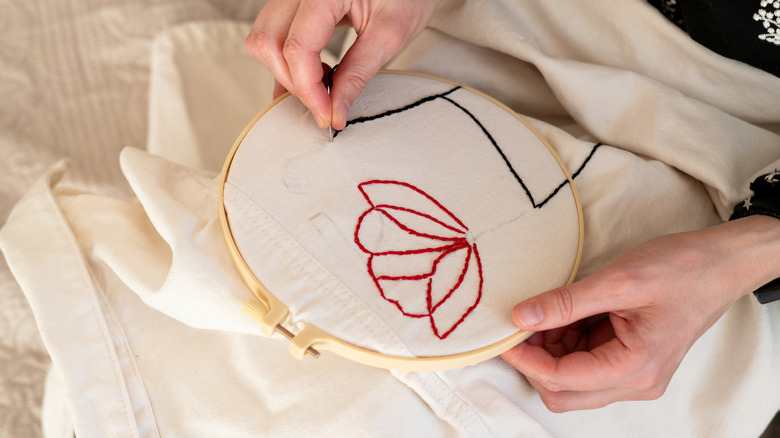
Hand embroidery is a fiber craft that you can do, even if you've never sewn anything before. The basics you'll need are an embroidery hoop, embroidery needles, embroidery floss, and fabric. Check the thrift store for embroidery hoops. There are plenty of ways to learn embroidery, but one easy option is a kit, like the Cyanfour Embroidery Kit, which has you practice various types of stitches. Once you master the basic stitches, you can move on to more advanced designs.
Once you get comfortable with this fiber art, you'll want to find ways to incorporate embroidery art in your home. You might start by making a wall hanging that fits the theme of your home. Some people hang their embroidered designs in embroidery hoops, or you can frame the image. Embroidery is also a way to add texture and design to things you already own, like towels, pillows, lamp shades, curtains, and table runners.
Quilting for custom blankets, pillows, and more
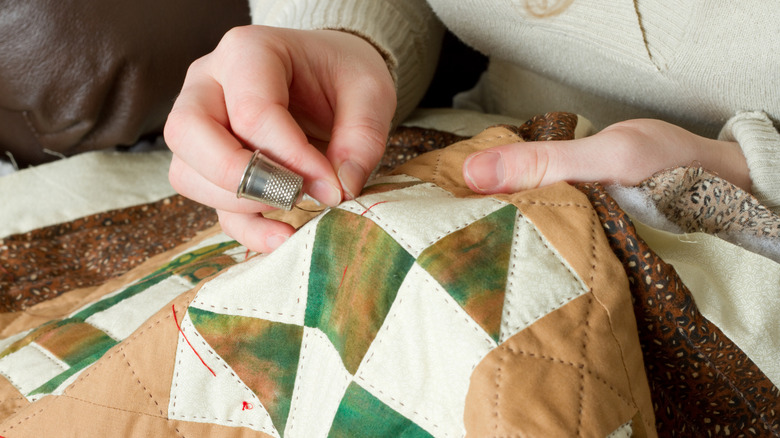
Quilting is one of those crafts that seems intimidating, but you can tackle a simple pattern, even as a beginner. While having a sewing machine makes the task easier, you can also make a quilted decor piece by sewing the fabric by hand. The basic idea is to cut out small pieces of fabric and sew them together into creative patterns, with various stitch types used to enhance the design. A layer of batting goes between the layers of fabric.
Like other projects, quilting is a hobby where starting small gives you a chance to learn the craft. A table runner or placemats are a good place to start for your home. Or, create a custom wall hanging, which is essentially a tiny quilt. Once you master a smaller project, work up to a larger quilt to use on your bed or in a guest room. Homemade quilts are also ideal for display on a rack or chair.
Macrame, knitting, and crocheting for textured decor
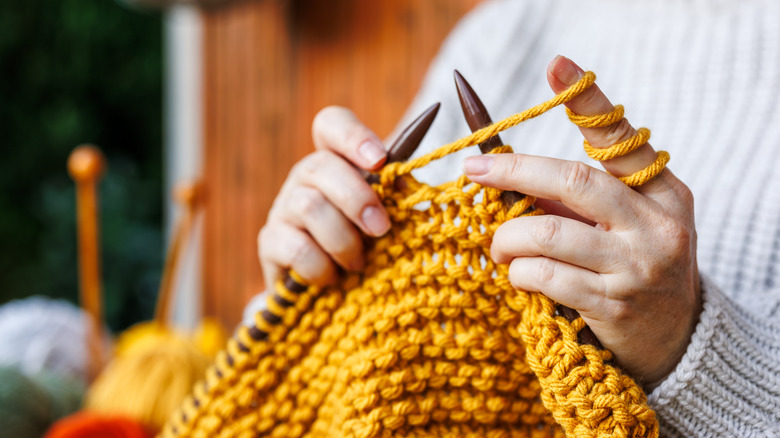
If you want a creative hobby that fully embraces grandma vibes, go for crocheting, knitting, or macrame. Knitting uses V-shaped stitches created with two needles, while crocheting is completed using one needle with a hook to create knot-like stitches. Meanwhile, macrame ditches all of the hooks and needles in favor of tying cord or string into knots. All of these options produce textured fiber items — and not just scarves, hats, and other wearable crafts.
If you're completely new to the craft, consider starting small with potholders. Then, move up to throw blankets, rugs, or other large items — the wide variety of yarn colors make it easy to coordinate with your decor. Knitted shapes, like plants, can also decorate your space beautifully. A common project for macrame is making hanging plant holders, which you can combine with a propagation hobby. Wall hangings are also a good option for macrame.
Paper crafts for easy, affordable decor
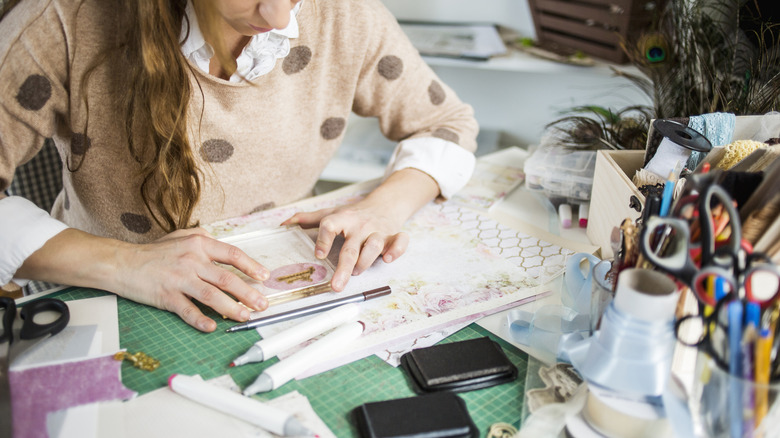
Paper crafts include a wide range of hobbies, from scrapbooking and card making to quilling and origami. Some of the options, like origami, seem more intimidating than others, but you might find that you catch on quickly and they become quite soothing. Try your hand at making custom paper, which you can then use for other projects. Regardless of where you start, paper crafting is relatively inexpensive, unless you buy lots of accessories and tools, like specialty cutters and scissors.
Incorporating your paper hobby into your decor depends on the specific art method you choose. If you try your hand at origami, your folded paper creations can decorate a mobile or sit on shelves as tiny, colorful accents. A paper quilling hobby allows you to make wall art with depth and texture, created with rolled and shaped paper strips. Getting into scrapbooking encourages you to move pictures from your phone into the physical realm to create a coffee table book that doubles as a decoration.
Resin art for modern accents
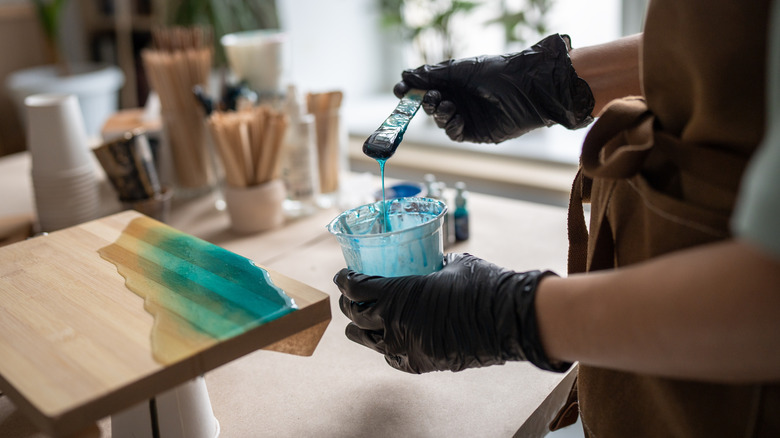
Resin is a flexible art medium that can create many unique pieces for your home. The two main ways to use resin are to fill up space, often with objects embedded in the resin, and creating a decorative, colorful coating over another object, like a table or board. The resin itself can get pricy, and the hobby can get even more expensive if you buy multiple molds or items to coat in resin. Starting with small projects can help you decide if resin art is a hobby you want to continue, before you invest too much.
An easy entry point for resin art that also dresses up your home is to make coasters. Since silicone molds come in a wide range of shapes, you can design coasters that fit the vibe of your room. Magnets are another small, manageable option. If you want to dabble in pouring epoxy as a coating, consider making a decorative cutting board or serving tray with the resin adding a shiny cover to the wood.
Ceramics for personalized clay decor
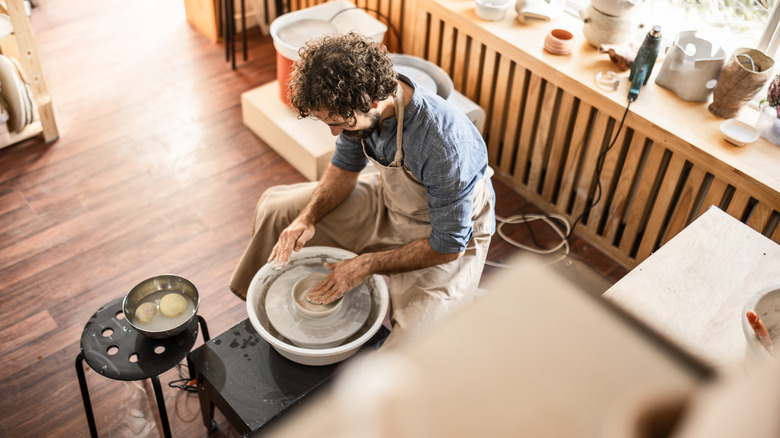
Ceramics and clay crafts encompass a broad range of activities suitable for all skill levels. If you want to focus on the painting aspect, take up painting ceramic figurines. An easy at-home option to get started with making your own clay creations is air-dry clay — it's inexpensive and allows you to use various hand building techniques, like sculpting and slab designs. If you want to make custom vases, bowls, and other ceramics, consider taking a pottery class where you can use a pottery wheel and have your creations fired in a kiln.
Painted ceramics are ideal for making custom holiday decorations for your home. You can go to a pottery-painting studio or pick up ceramic pieces to paint at craft stores. Custom magnets are a good place to start with air-dry clay — shape and paint it into a fun design, let it dry, and glue a magnet to the back. Pottery wheel classes may have prescribed projects, but some studios might offer open studio time where you can create custom decor for your home.